Wild Words

room 10 ECHOES

Location: Bristol, City Of Bristol, England, United Kingdom

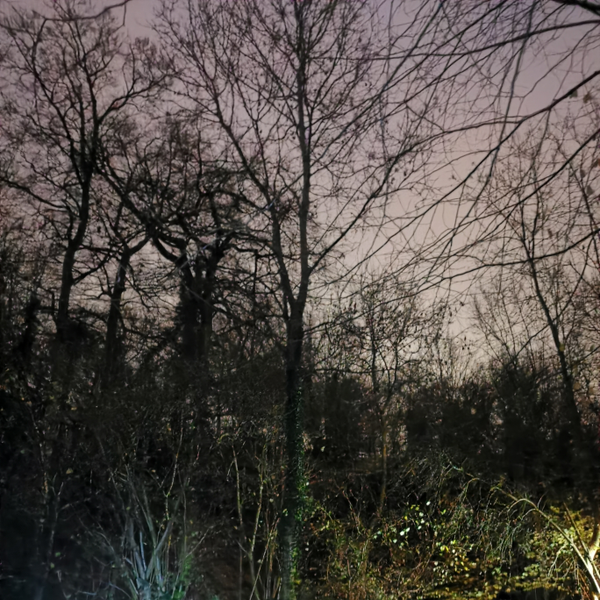
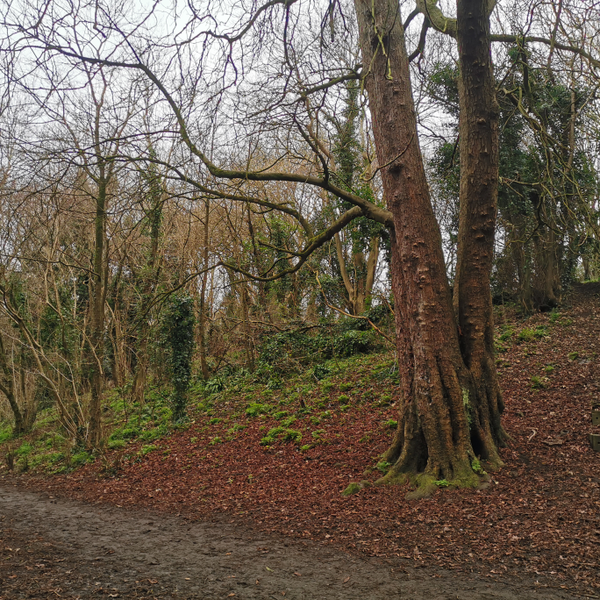
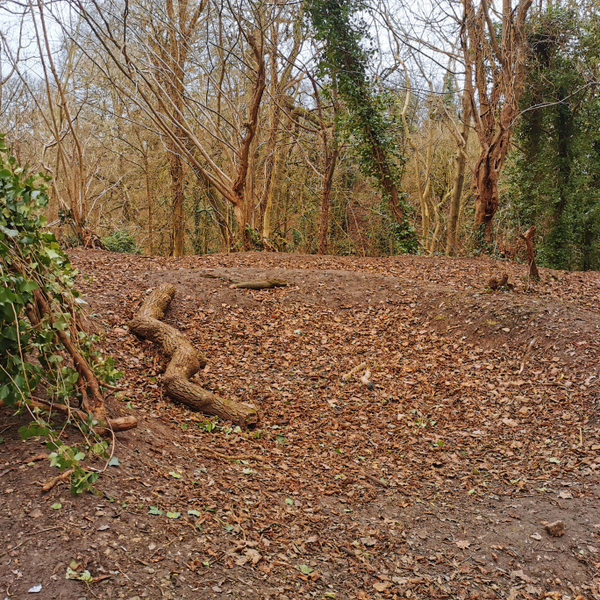
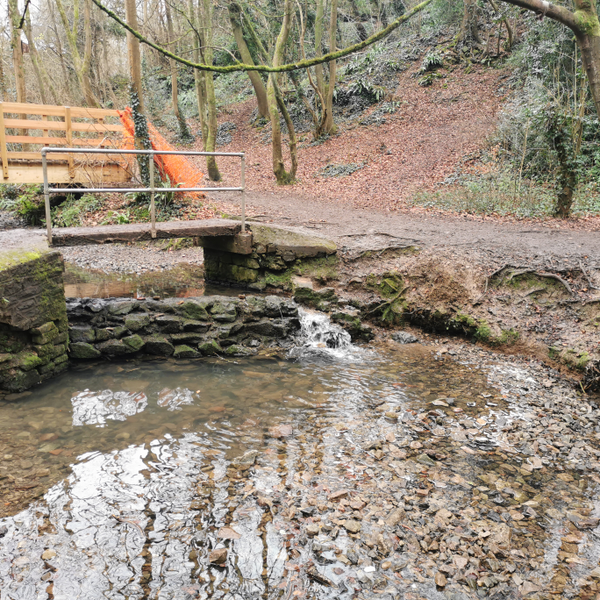
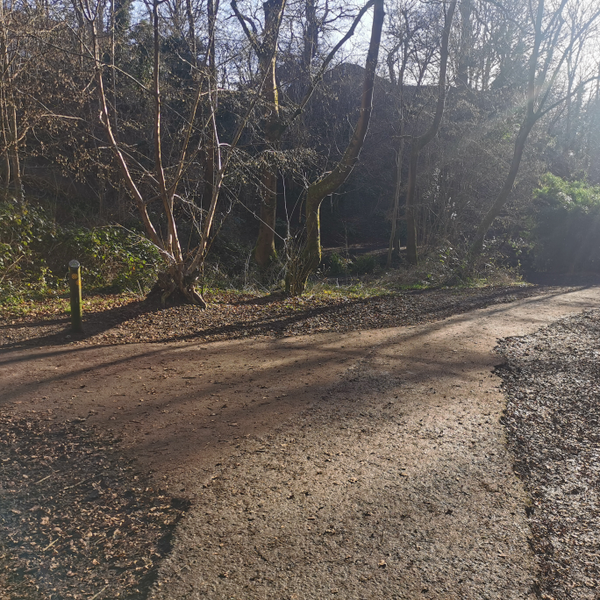
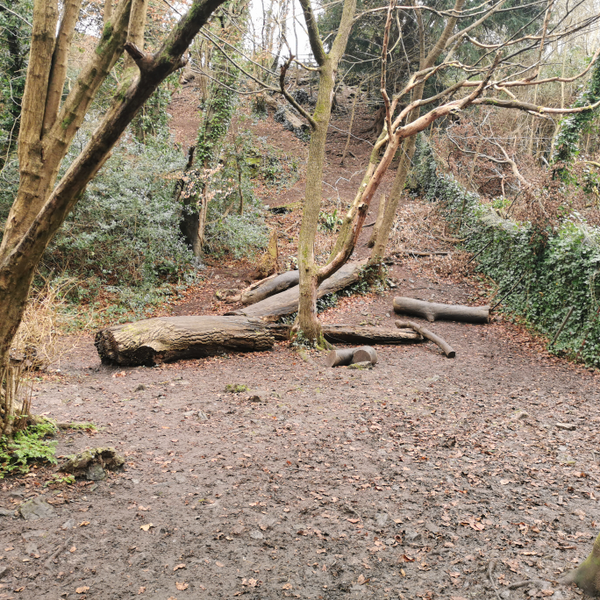
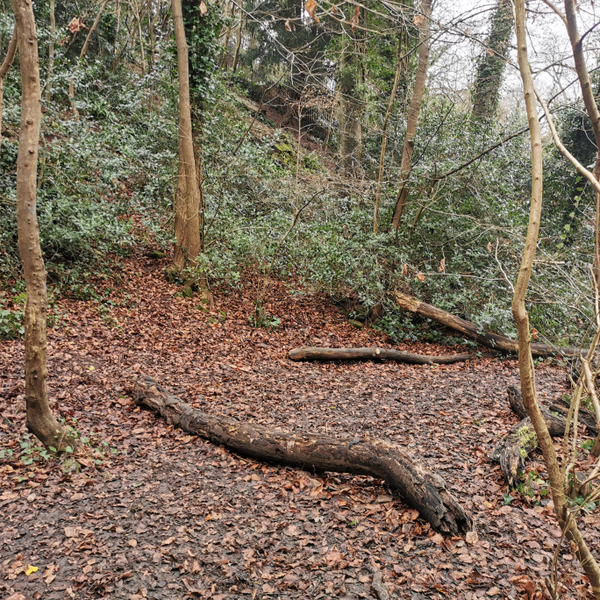
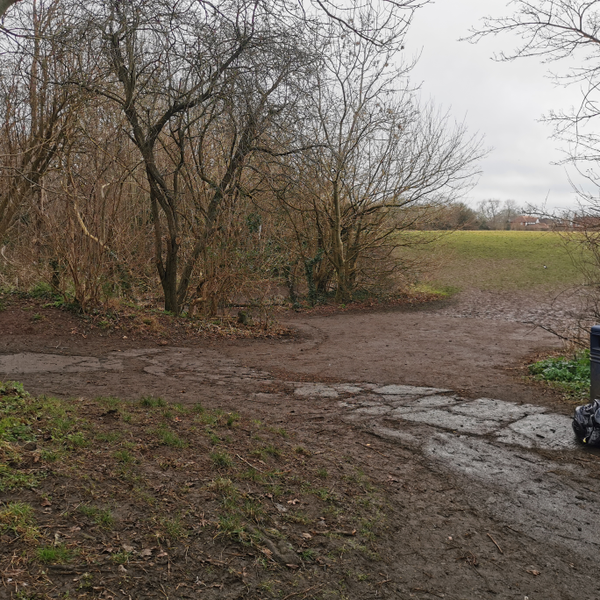
Ten sound-filled spots in Badock's Wood, Bristol.

All the sounds you will hear were captured during a 12 week forest school project for young people held in Badock's Wood during the winter of 2021.

Wild Words was a partnership between Brave Bold Drama (an award-winning theatre and community arts company), Mud Pie Explorers (a forest school) and Southmead Development Trust.

This project was funded by the Thriving Communities Fund, which aims to improve and increase social prescribing community activities by bringing together place-based partnerships of local voluntary, community, faith and social enterprise projects.
Brave Bold Drama
Brave Bold Drama

DOWNLOAD OUR APP TO DISCOVER THIS TOUR AND MANY OTHERS.

play-storeapp-store

The Echoes


Hide and Seek

Children hid and sought in groups. Seekers shout "1-2-3 Where are you?" and hiders reply "1-2-3 We'r…

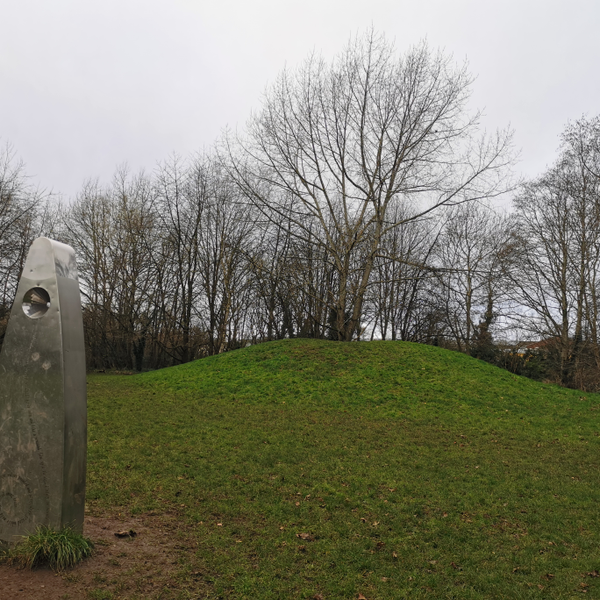
Celtic Mound

Children read about the ancient history from the information boards here, and share their own knowle…

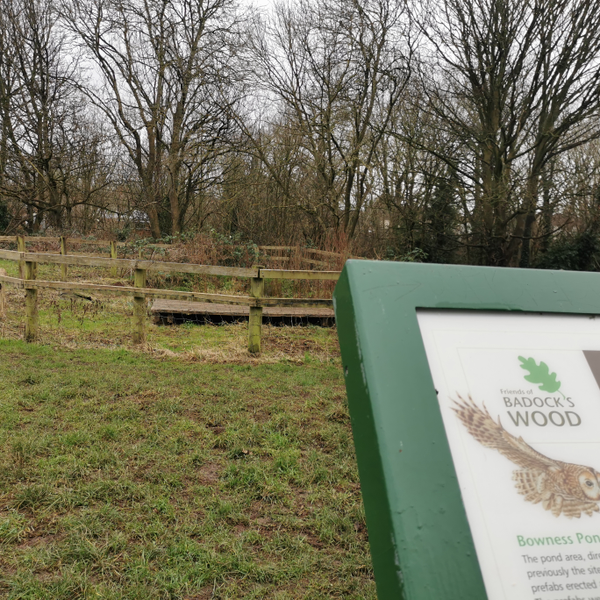
Fishing Place

A child reads from the information board about the history of Bowness Pond, and makes an exciting di…

Haunted Path

One dark night we explored this path armed only with head-torches. The children ever since called it…

Secret Path

Just to the left of a set of steps, the children found a way uphill that felt less official. They ca…

Old Base Camp

For the first few weeks we spent time here. The children learned how to use tools. They dug, sawed, …

Boat Launching

The children made boats out of natural materials to sail on the River Trym. They also made paper boa…

Leafy Crossroad

The children were in the woods in late autumn and winter 2021. The woods were always full of fallen …

Fire and Mud

This was basecamp for most of the project. The fire was always lit here. It was often very muddy. Th…

Potions and Witchcraft

This area was the creative, crafting place. One week we shared the witches' spell from Macbeth. This…

Discover more geolocated content in our apps.
play-storeapple-app-store

Or start creating tours, treasure hunts, POI maps... Just let your imagination guide you.


Other walks nearby

The Eastville Park Soundwalk

The Eastville Park Soundwalk

Download this sound walk beforehand for the best experience.
free
Misfits on the Move - Stokes Croft

Misfits on the Move - Stokes Croft

A short poetry walk with the theme of 'Identity' - from Hamilton House to The Bear Pit by The Misfits Poetry Group. We are a group of learning disabled people based at Hamilton House, Bristol
free
Walking Words: Hamilton House via Stokes Croft to the Unitarian and Bearpit

Walking Words: Hamilton House via Stokes Croft to the Unitarian and Bearpit

Hamilton House to the Unitarian via Stokes Croft and the Bearpit Poets: Pete Weinstock / David C Johnson Stokes Croft The road takes its name from John Stokes, mayor of Bristol in the late 14th century.His will recorded the area as "Berewykse Croft in Redeland", while the will of Nicholas Excestre, who died in 1434, named it "formerly John Stoke's close". It runs through the historic manor of Barton, which was recorded in the Domesday Book and part of the City of Bristol since 1373. Stokes Croft was predominantly rural until around 1700, being mainly used for market gardening. Urban development was first logged in the parish records of 1678, while St James Square, to the west of Stokes Croft, was laid out by around 1710. John Roque's map of Bristol 1750 shows the area built up and running north of a central courtyard between Stokes Croft, North Street and Wilder Street. Though industries were established on Stokes Croft during the 18th century, the road was not fully developed and built-up until around 1850. Construction of the Carriage Works at No. 104 began in 1859, while the City Road Baptist Church was built in 1861. The area was damaged badly in World War II, with many buildings destroyed on Stokes Croft and King Square. St James' Fair St James' Fair was an annual fortnight of excitement, adventure and entertainment for the people of Bristol. Beginning in the 13th century in and around the churchyard of St James, it originally took place during the feast of St James at the end of July, but by the 19th century it was held during the first two weeks of September. It attracted traders and shows from all across the UK and overseas, which included, according to the exhibitors list, wild beasts, waxworks, flying coaches, peep shows, a camera obscura, air bathing, a revolving panorama, dwarves, giants, and even 'a learned pig'. Traders sold goods ranging from earthenware pots to silk ribbons, and there were food and drink stalls, theatres, and fair ground rides. Bush houses, unlicensed pubs identified by an evergreen garland or bush, were also extremely popular until they were outlawed in 1815.
free
Walking Words: Royal Fort to Wills Building

Walking Words: Royal Fort to Wills Building

A walk from the Royal Fort Gardens down to the Wills Building via Bristol Grammar School. Poets: Tony D'Arpino and Elizabeth Parker Royal Fort The house was constructed on the site of a Civil War fortification, which had two bastions on the inside of the lines and three on the outside. It was the strongest part of the defences of Bristol, designed by Dutch military engineer Sir Bernard de Gomme. It was one of the few purpose-built defensive works of the war era. The fort was designed as the western headquarters of the Royalist army under Prince Rupert. Royalists retreated into the fort when the Parliamentarians had broken through the lines in the siege of 1645, before eventually surrendering to Cromwell's forces. The fort was demolished around 1655. The "Royal" in the name was in honour of Prince Rupert, when he was made Governor of Bristol. Gardens Colonel Thomas Tyndall employed Humphry Repton from 1799 to landscape the gardens which form a small part of Tyndall's Park, which extended to Whiteladies Road in the west, Park Row in the south and Cotham Hill to the north.Over the years large parts of the park were sold for housing development, as the site for the Bristol Grammar School, purchased in 1877, and only a small part of the original area remains, as Royal Fort Gardens. The siting of drives in the Royal Fort park is still reflected in street plans today.
free
Walking Words: The Wills Building to RWA via Triangle

Walking Words: The Wills Building to RWA via Triangle

A walk from the Wills building via the Triangle to RWA and Victoria Rooms. Poet: Jim Sidgwick RWA The Royal West of England Academy was the first art gallery to be established in Bristol, and is one of the longest-running regional galleries and art schools in the UK. Its foundation was initiated by the extraordinary Ellen Sharples, who secured funding from benefactors including Isambard Kingdom Brunel and Prince Albert, and the building was ultimately financed by a bequest of £2,000 from her will in 1849. At first, the core of the Academy was a well-known group of artists in Bristol, known as the Bristol Society of Artists, who were mostly landscape painters, and many, such as William James Müller, Francis Danby, James Baker Pyne and John Syer were well known. In 1844, when the Bristol Academy for the Promotion of Fine Arts was founded, the Bristol Society of Artists was incorporated into it. At this time the president and committee was predominantly its patrons, rather than its artists. In 1913 King George V granted the academy its Royal title, with the reigning monarch as its Patron, and by 1914 a major extension to the front of the building, including the dome and Walter Crane lunettes, was completed. The Victoria Rooms, also known as the Vic Rooms, houses the University of Bristol's music department in Clifton, Bristol, England, on a prominent site at the junction of Queens Road and Whiteladies Road. The building, originally assembly rooms, was designed by Charles Dyer and was constructed between 1838 and 1842 in Greek revival style, and named in honour of Queen Victoria, who had acceded to the throne in the previous year. An eight column Corinthian portico surmounts the entrance, with a classical relief sculpture designed by Musgrave Watson above. The construction is of dressed stonework, with a slate roof. A bronze statue of Edward VII, was erected in 1912 at the front of the Victoria Rooms, together with a curved pool and several fountains with sculptures in the Art Nouveau style.
free
Lulu is walking

Lulu is walking

free
Walking Words: Museum to Christmas Steps

Walking Words: Museum to Christmas Steps

A short walk from the Bristol Museum and Art Gallery down Park Row to the Christmas Steps. Poems by Gillie Harries The Museum and Art Gallery The Museum and Art Gallery's origins lie in the foundation, in 1823, of the Bristol Institution for the Advancement of Science and Art, sharing brand-new premises at the bottom of Park Street (a 100 yards (91 m) downhill from the current site) with the slightly older Bristol Literary and Philosophical Society. The neoclassical building was designed by Sir Charles Robert Cockerell (1788–1863), who was later to complete the Fitzwilliam Museum, Cambridge, and build St. George's Hall, Liverpool, and was later used as the Freemasons Hall. In April 1871 the Bristol Institution merged with the Bristol Library Society and on 1 April 1872 a new combined museum and library building in Venetian Gothic style was opened at the top of Park Street. Christmas Steps The name comes from the medieval Knifesmith Street. In Middle English the 'K' in 'knife' and 'knight' was sounded. It seems likely 'Knifesmith Street' became corrupted over time to 'Christmas Street'. In William Worcestre's 1480 itinerary of Bristol, he describes it as 'knyfesmythstrete aliter Cristmastrete' The street continued to be recorded as 'Christmas Street' in the official town rentals of the sixteenth and seventeenth centuries. This is also how it is recorded in the Hearth Tax Books of Bristol in the 1660s.Christmas Street still runs from St John's Gate to St Bartholomew's Hospital at the bottom of 'Christmas Steps'.(wikipedia)
free
I Watch You as You Disappear 04/12/19

I Watch You as You Disappear 04/12/19

MA project
free
Walking Words: Berkeley Square

Walking Words: Berkeley Square

A walk from Park Street around Berkeley Square. Poet: Charles Thompson Berkeley Square and The Square Bar Berkeley Square was laid out in 1787 by Thomas Paty. The surrounding buildings were only completed in the early 19th century. It is unusual among the Georgian squares of Bristol in that it occupies a sloping site, and this makes the unity of its architecture difficult to appreciate. When Bristol obtained its charter in 1373, the event was marked by the building of a magnificent ‘High Cross’ at the heart of the city. The Cross remained in place for over three centuries, “high, noble, and increasingly inconvenient to traffic”.In 1733 it was moved to College Green, but the residents complained and it was pulled down. In 1762 the Dean of Bristol illegally presented the High Cross to his friend Richard Hoare, who installed it in the grounds of his house at Stourhead in Wiltshire.In the 19th century the city recognised its loss and built a copy of the original cross after a fund raising campaign by the then Dean. It was erected in 1850.However, history repeated itself. The Cross was moved to the Green in 1888 to make way for a statue of Queen Victoria. In 1959 it was taken down to open up the view of the new Council House.The top part was rescued and erected in a corner of Berkeley Square, where it still stands “the kings and queens, sadly gazing at the moss in their laps”. A conversion of a Grade II Listed building from the former YWCA in Berkeley Square to a new high quality hotel with restaurant and en suite bedrooms, together with the creation of “The Square” bar in the basement. The building forms the central feature of a terrace of 8 houses, originally constructed by Thomas and William Paty in the late 18th century and rebuilt following destruction in the second world war. The buildings feature limestone ashlar walls, articulated by giant pilasters to cornice and parapet, with rusticated ground floor, all under under a slated mansard roof.(wikipedia)
free

Are you a creator?

START HERE

Privacy & cookie policy / Terms and conditions

© ECHOES. All rights reserved / ECHOES.XYZ Limited is a company registered in England and Wales, Registered office at Merston Common Cottage, Merston, Chichester, West Sussex, PO20 1BE

v2.4.30 © ECHOES. All rights reserved.