African American History Trail Tour - Lake City, SC

8 ECHOES

Location: Lake City, South Carolina, United States

The roots of African American history runs deep in South Carolina, providing a rich history that spans over three centuries and every corner of the state. Stories of the enslaved and free people of color to civil rights activists, politicians, educators, pastors and many more all contributed to this history. The constant struggle for equality and freedom is often seen in these stories. Lake City was no exception and this rich legacy lives on in the city at historical sites, remnants, oral histories, and cultural traditions. This tour highlights some of Lake City's historical African American sites while telling the unique story that Lake City contributed to African American history in the state of South Carolina and the nation.

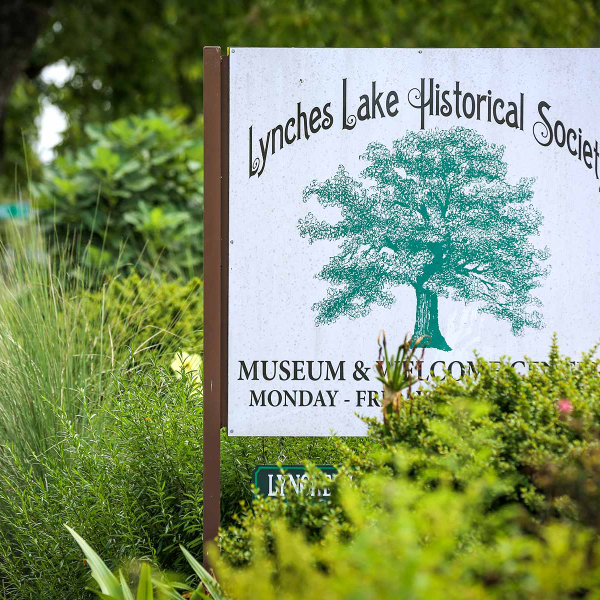
There are eight sites on this tour throughout the city including the Ronald E. McNair Library and Monument, P.D. Cockfield House, Lynches Historical Society Building (former segregated hospital), Frazier Baker (Lake City) Post Office, the Lynching of Frazier Baker Historical Marker (Deep River Street and Church Street), Greater St. James A.M.E. Church Historical Marker, Lake City Rosenwald (segregated) School, and the Bronze Huey Cooper Statue.

P.D. Cockfield House

Known during most of the nineteenth century as Graham’s Crossroads, and later renamed Lake City in 1883, the town of Lake City developed as an in-between point connecting cities of Georgetown and Camden, and Charleston and Cheraw. In the 1850s, the Northeastern Railroad (later the Atlantic Coast Line) laid the first track through Graham’s Crossroads, near the Cockfield House. Businesses and agriculture grew throughout the town and countryside. In the antebellum period, plantation owners relied on enslaved labor to cultivate cotton to the point that in 1860, some 66 percent of the county’s roughly 15,000 residents were African American. Tobacco would eventually replace cotton as the region’s major cash crop, and large landholders would no longer be able to rely on enslaved labor following the Civil War. Instead, sharecropping took hold in Lake City after the Civil War as the most common labor arrangement on former plantation properties and where cash crops were grown in large quantities. By the 1930s, Lake City had the largest strawberry market in South Carolina and what was thought to be the largest bean market in the United States.

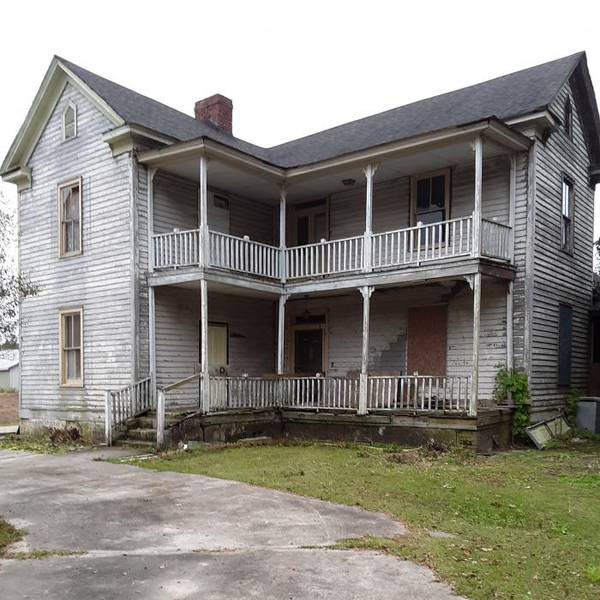
The Cockfields were among local Lake City families who lived through the late nineteenth and twentieth centuries and were a part of the agricultural economy of the city. People with the surname “Cockfield” owned property in Lake City as early as the colonial era with their land ownership expanding throughout the nineteenth century. By 1850, P.D. Cockfield’s grandfather, Washington Cockfield, owned approximately 4,000 acres of land. Dozens of enslaved African Americans worked on the Cockfield’s property, growing rice, cotton, sweet potatoes, and other crops, while also tending livestock. Born in 1867, Perry Davis Cockfield was a successful white local farmer whose relocation to Lake City and construction of this two-story Late Victorian-style house was built in 1905 with an L-shaped front porch at 125 Valley Street. This house, close to downtown, allowed him to engage with the local community more and become a well-known member of the town’s white business class. After taking up residence at 125 Valley Street, Cockfield served on the predecessor to Lake City Council and was elected City Warden. Soon after this home was built, the census records noted two African American servants residing with P.D. and his family: 21-year-old Liston Cockfield and 15-year-old Mable Cooper.

“While nothing more is known about Cooper, genealogical research and oral traditions reveal that, going back generations, bonds of blood and law tied together the white Cockfields and the freed people who ultimately assumed that surname, including Liston and P.D. The P.D. Cockfield House thus also represents the interwoven kinship between a mixed-race family that dates back to the antebellum era, when members of the white Cockfield family held African Americans in bondage …. The earliest confirmed link between the Black and white Cockfields is the 1844 birth of Robert Cockfield, P.D. Cockfield’s half-uncle. Robert was born to an enslaved woman named Lena who was then held in bondage by his father (and P.D.’s grandfather) Washington Cockfield. A light skinned man, Robert’s parentage is confirmed by oral tradition as well as his 1926 death certificate, which lists “Wash[ington] Cockfield” and “Lena Cockfield” as his parents. The Freedmen, Women, and Children, 1865, Articles of Agreement taken between Washington and his former slaves after the collapse of the Confederacy also lists a “Bob” as one of its signatories, marked with an “X” in agreement to their sharecropping labor contract. After the Civil War, Robert established himself as a farmer on the outskirts of Lake City, working at least for a time on some of the historic white Cockfield family property, as militia enrollments from 1869 show Robert living on the same property as his half-brother, J.A.H. Cockfield. Sometime between 1870 and 1880, he also married Nancy Gaskins, who was most likely enslaved to members of the local white Gaskins family when she was born in 1860. Nancy and Robert ultimately had at least ten children together, including a daughter named Katie who was born in 1889. Katie Cockfield eventually married Liston Cockfield, born the same year as Katie to Amos and Nora Cockfield, and who may have been her distant cousin."

Through their half-sibling fathers, J.A.H. and Robert, P.D. and Katie Cockfield were therefore cousins who undoubtedly knew each other as they grew up on or near the family lands east of Lake City. Though it’s unclear when exactly Katie married Liston Cockfield (they had a child together as early as 1913), their marriage would have therefore also made Liston and P.D. cousins-in-law. P.D. may have known or at least known of Liston apart from his eventual marriage to Katie, which may have inspired his employment of Liston at his new downtown home. Perhaps Liston and Katie were together by 1910, and Liston’s work at P.D.’s house somehow owed to Katie’s and P.D.’s familiarity with one another as cousins. While it is not entirely conclusive for Liston’s employment at 125 Valley Street, by 1920, neither Liston Cockfield, Mable Cooper, nor any other African Americans are documented living at the residence. Liston Cockfield tragically drowned in 1915, soon after Katie Cockfield became pregnant with their second child – a girl born that August by the name of Nora (same name as Liston’s mother). This historical site reflects the deep connections between Lake City’s Black and white Cockfields and the history of both Black and white Lake City residents over time. The house remains intact and mostly unaltered from its initial construction. Listed in November 2021 to the National Park Service’s National Register of Historical Places for architectural significance, the P.D. Cockfield House will be rehabilitated into a center for the Lake City community. Dr. Terrie Gaskins-Bryant owns this house who is the great granddaughter of Robert and Nancy Cockfield, great-great granddaughter of Washington and Lena Cockfield, and distant cousin of the home’s original occupant and namesake, P.D. Cockfield.

1 sound

Dr. Ronald E. McNair Memorial Park (Library and Monument)

Dr. Ronald E. McNair (1950-1986) was a native of Lake City and renowned physicist and astronaut. He was the second African American astronaut to travel in space, after Guion Bluford. McNair was educated in Florence County’s segregated schools. In 1959, at the age of nine, he entered Lake City public library which was white only to check out science books. The librarian refused to give him his books based on his race and called the police. As the police came, he was confident in that the knowledge he sought was rightfully his. The police persuaded the librarian to let McNair check out his books. McNair would leave the library unscathed with his books in hand and his mother and brother at his side. Decades later, that library would become the Dr. Ronald E. McNair Life History Center and museum located at the site of his monument and park. Graduating from Carver High School, McNair went on to North Carolina A&T State University, earning a Bachelor of Science in physics in 1971. He then went to the Massachusetts Institute of Technology (MIT) receiving a Ph.D. in physics in 1976. It was during this time at MIT that McNair became interested in lasers and became a laser physicist at Hughes Research Laboratories in Malibu, California. He then qualified to become a NASA mission specialist in 1979 after completing a year of training. In 1984, McNair was Mission Specialist aboard the flight of the Space Shuttle, Challenger making him the second African American to fly to space. McNair and his four other crew members would log 191 hours in space on the eight-day mission and the Challenger would make 128 orbits around the Earth on that trip.

McNair would receive three honorary doctorate degrees and many fellowships and commendations. These distinctions include Presidential Scholar, 1967-71; Ford Foundation Fellow, 1971-74; National Fellowship Fund Fellow, 1974-75; Omega Psi Phi Scholar of the Year, 1975; Distinguished National Scientist, National Society of Black Professional Engineers, 1979; and the Friend of Freedom Award, 1981. He also held a fifth-degree black belt in karate and was an accomplished jazz saxophonist, often playing his saxophone in space, “a medley of songs designed to send a message of thankfulness and hope to all mankind." He was a churchgoing family man, married to Cheryl B. Moore, and was the dedicated father of a daughter, Joy Cheray McNair, and son, Reginald Ervin McNair.

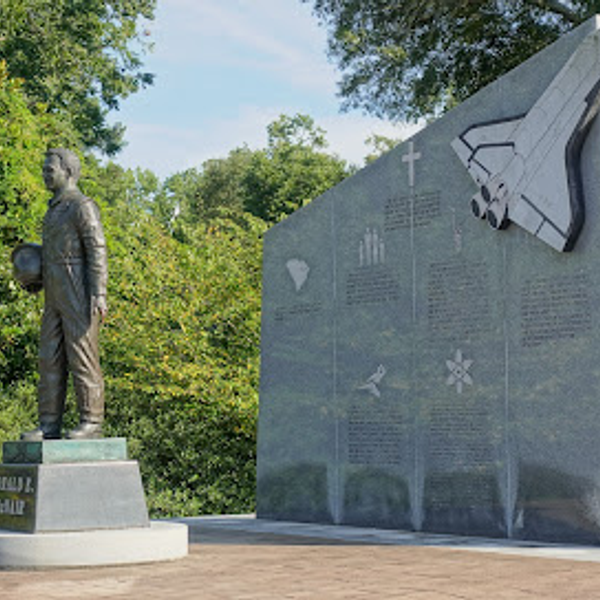
On January 28, 1986, he was part of the seven-astronaut crew that died in the Space Shuttle Challenger explosion. Devastated by his death, Lake City began in 1989 as a collaboration among the Ronald McNair Committee, a community organization dedicated to opening a museum in his memory; the City of Lake City; and the Lake City Library Board, to build a memorial park in his honor. The city broke ground on the park in 1991 and it was dedicated on February 11, 1992, eight years to the day of McNair’s completed mission as a specialist on the Challenger’s first landing at Kennedy Space Center. A granite wall created by the Coastal Monument Company of Conway was erected in 1995 describing McNair’s life along with a life-size, smiling, bronze statue of McNair wearing his Space Shuttle jumpsuit and holding a helmet created by Detroit artist Ed Chesney. In June 2004, McNair’s remains were relocated from his original burial site within Rest Lawn Memorial Cemetery, about five miles away, and re-entombed at the park in a sarcophagus next to the statue. An eternal flame flickers in front of it from a gas streetlamp. The Ronald McNair Life History Center and museum is dedicated to McNair and opened in 2011. The museum inside the building tells the story of McNair’s boyhood in segregated South Carolina.

1 sound

African American Schools in Lake City

The right to education has long stood at the epicenter of the battle for Civil Rights in America and is one in which African Americans have long fought for equality and access to education. Education has also been used as a tool to uphold racialized hierarchies in America. South Carolina was the first American colony to pass laws prohibiting slave education. In the aftermath of the Stono Rebellion in 1739, which killed twenty-five white people, South Carolina passed the comprehensive Negro Act of 1740. This legislation made it illegal to teach enslaved people to read or write and remained in effect until 1865. Shortly after the Civil War and abolition of slavery, South Carolina churches, charitable organizations, and particularly the Freedmen’s Bureau assumed the primary responsibility of educating newly freed slaves. However, the withdrawal of Union troops in 1877 and the ratification of the South Carolina Constitution of 1895 reversed many of the educational gains by African Americans and left education to white local school boards.

By 1922, 90 percent of educational funding went to white schools. The social and political reformist ideals of the Progressive era (1896-1918) inspired by prominent individuals such as Booker T. Washington and Julius Rosenwald, led to the creation of the Rosenwald Fund. This fund would build and improve educational facilities for Black students and incentivized states to partner in funding efforts for African American schools. This changed during the Great Depression though as the Rosenwald program curtailed its funding of new schools by 1930. During the 1930s, the Works Progress Administration (WPA) became increasingly involved with the building of schools including those for African Americans. One such school, Scranton Colored School, was built by the WPA in the 1930s serving black students in Scranton and nearby Lake City for 30 years. Built in the Rosenwald style, it featured a raised brick foundation, sash windows, two fireplaces, four rooms for instruction, and a central hallway.

In 1941, SC Governor Burnet Maybank established a legislative committee to study South Carolina’s public education. Part of the committee’s report focused on the inequalities in schooling between the races. For example, nineteen counties out of forty-six lacked high schools for blacks, and there were only eight school buses in the state to transport black children to school. The 1947 report, published in 1948, also found that SC education was inadequately funded compared to other southern states. Once again, the inequities between the races were staggering. For example, investment for whites waws approximately $221.00 per pupil, compared with $45.00 per pupil for Black students. These monies were over the entire school year and disparity amounted to a ration of 5:1

SC Governor James F. Byrnes (1951-1955) proposed a special tax to improve education for blacks, and, in 1951, the state passed a three-cent sales tax to fund a statewide program of school construction and finance the equalization program, which was designed to equalize white and black public schools.

In 1949, all black schools in Lake City were incorporated with Lake City Elementary and High Schools. These schools included the St. John Elementary School (1st to 7th grade) which was established in the early 1930s by Reverend Alva L. Wilson; Hickson Grove (school located at 4 1/2 341 West, North Green Road) whose principal was Bishop James S. Thomas; Gaskins Elementary School; Nineveh Elementary School; Liberty Elementary School; Glendale School; St. Luke Elementary School; Bethel Elementary School; McCutheon Elementary School; Scranton Elementary School; Olanta Trade School; High Hill Elementary School; And, Olive Grove Elementary School.

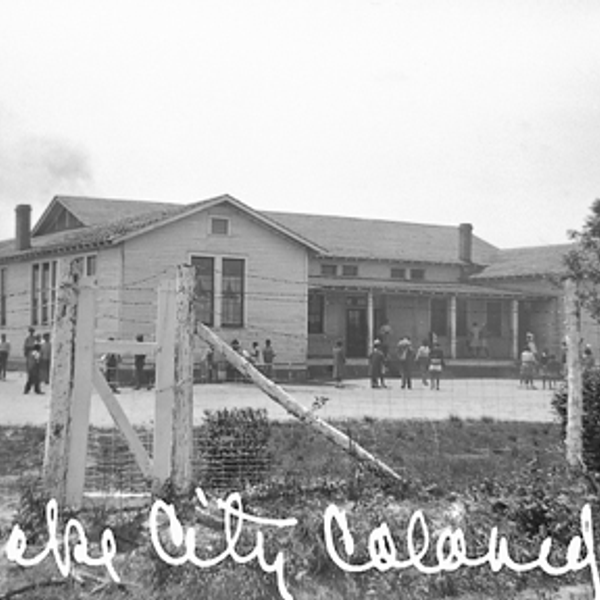
The building that we are standing in front of for this tour is currently known as the Lifelong Learning Center. However, before it was known as the Life Long Learning Center, it was the original site of the Lake City Colored Elementary and High School which served black students from the early 1930s to 1946. On August 4, 1929, the Florence Morning News, reported that bids were being taken to construct the Lake City High School Building which would be a “frame school building, built under the Rosenwald plan No. 6-A,” which included six rooms and an auditorium. “No plumbing or heating or boiler room, but” was to “be wired” and have “two six-hole sanitary privies built.” The building and materials had to conform to the Rosenwald plan and subject to their inspection and approval. This building would serve Lake City black students until it was destroyed by a fire in October of 1946. Because the school was outside of the city limits, and far from a hydrant, the Lake City Fire Department stood by as a precaution to other property but did not render any aid. The superintendent of Lake City Schools, J. Paul Truluck, claimed that the contents of the building that were lost was at least $30,000, but further investigation was needed to assess the total amount of damage.

According to Lake City historian, Kent Daniels, Lake City Colored Elementary and High School, was rebuilt on top of the original location and continued to serve Black students in the community until 1953, when Carver High School was built on Carver Street. Despite Lake City Colored Elementary and High School having served Black students for decades, it began to have difficulty accommodating so many students.

Carver High School would be built to help with such growth and was in response to SC Governor Byrnes’ “Equalization Program.” The equalization school program was intended to construct new black elementary and high schools across SC to circumvent a potential desegregation ruling by the US Supreme Court. The state of South Carolina would pass a $75,000.00 bond to equalize schools in South Carolina and Carver High School was built from these bonds as Lake City’s effort to equalize their white and Black schools. In response to SC’s Equalization of Schools Program, a lawsuit would be filed in neighboring Clarendon County under the name Briggs v. Elliott in 1950 which would challenge the constitutionality of “separate but equal” laws in education. A few months after Carver would open, the Supreme Court would make its ruling in May of 1954 that “Separate but Equal” was unconstitutional.

It is important to note that the current site that we are standing at is not the location of Carver High but can easily be found as today’s “McNair Middle School” off of Carver Street and Moore Streets. Carver High School would house grades ninth through twelfth and years later, the sixth, seventh, and eighth grades would be added to relieve the volume of students at the Lake City Colored Elementary School off of Graham Road. Carver High School, as it would become, was named for George Washington Carver, who was born into slavery. He became a world-renowned Agricultural Chemist, a humanitarian, and was one of the world’s most famous inventors. Hence, the very reason that the school was named in his honor. His photograph graced the wall of the school as a constant source of pride, inspiration and motivation.

One of the most notable alumni of Carver High School, and who is another prominent stop along this tour, is NASA astronaut and physicist, Ronald McNair, who died during the 1986 launch of the Challenger Mission. He graduated as valedictorian of Carver High School in 1967 and the school would later be renamed Ronald E. McNair High School in the 1980s, later McNair Middle School.

1 sound

Frazier Baker Historical Site

Frazier B. Baker was an African American teacher who had recently been appointed postmaster of Effingham, but under the William McKinley administration, was elected as the first African American US postmaster for Lake City in 1897. He held the position for six months, despite opposition to his appointment from the white community in Lake City. During that time, he was shot at twice and received many death threats for having obtained this position. Whites who resented Baker harassed him, even burning the post office in an attempt to make him resign and leave town. After the burning of the post office, the Bakers lived in a small home outside of the downtown area which was a former schoolhouse that had been converted into both their home and post office. On February 22, 1898, a mob of white townspeople circled their home, set it on fire, and fired at least 100 bullets at their house while the Bakers and their six children were inside. Frazier Baker was shot to death while trying to escape the house. His wife, Lavinia Baker fled the burning house, carrying her infant daughter Julia, but her baby was shot in her arms. Mrs. Baker and her other children managed to escape with their lives, but three of the children were wounded by gunshots and permanently maimed. Mr. Frazier and Julia’s remains were burned beyond recognition and the federal post office building was consumed with fire, leaving the people of Lake City without a post office. An editorial called it “the most horrible crime ever committed” in S.C. Members of the Black community in Lake City held a mass meeting at Pilgrim Baptist Church and drafted a public statement expressing outrage at the lynching. The murder led to a national campaign of letter-writing, activism, and advocacy which anti-lynching activist Ida B. Wells persuaded President McKinley to order a federal investigation. Eleven men were tried in federal court in 1899, but a hung jury resulted in a mistrial. Moreover, local and state officials did nothing. Some politicians such as SC Senator Benjamin Tillman, defended the lynching finding that the people of Lake City should not have to receive their mail from a Black man. In 1918, St. James A.M.E. Church was constructed on the site of Baker’s burned post office and house. On October 5, 1955, the church was burned down by white supremacists angry at the activism of minister Joseph Armstrong DeLaine during the Briggs v. Elliott desegregation case. The connection between both the violence committed to the Baker Family and Reverend J.A. DeLaine and his congregation demonstrate white supremacist attempts during Jim Crow to provoke fear in Black communities and uphold a racial caste system.

There were nearly 6,500 lynchings in the United States between 1865 and 1950, a majority of which took place in the South and whose victims were Black or people of color. South Carolina had over 150 lynchings from 1882 to 1968. Black Americans would begin to flee the South to escape terror of lynchings, a historic event known as the Great Migration, in the 1910s as they moved to urban mid-western and northeastern cities. Grassroots activism would take place such as boycotting white businesses and anti-lynching crusaders like Ida B. Wells would compose newspaper columns to criticize the atrocities of lynching. Several Civil Rights organizations, like the NAACP, would emerge during this time to combat racial violence and for legal protections for African Americans. In 1919, the NAACP published Thirty Years of Lynching in the United States, 1889-1919, which promoted awareness of lynchings and also provided data of those who were victims such as their race, sex, state, year, and alleged offense. NAACP supporter, Congressman Leonidas Dryer of Missouri would also propose an Anti-Lynching Bill – known as the Dyer Bill – into Congress in 1918. Unfortunately, this bill would be defeated by a Senate filibuster. On March 29, 2022, President Joe Biden signed into law the first federal legislation making lynching a hate crime, known as the Emmett Till Law, addressing a history of racist killings in the United States. Named after Emmett Till, a 14-year-old Black boy who was brutally murdered in Mississippi in 1955, the bill makes it possible to prosecute as a lynching any conspiracy to commit a hate crime that results in death or serious bodily injury.

1 sound

Greater St. James A.M.E. Church

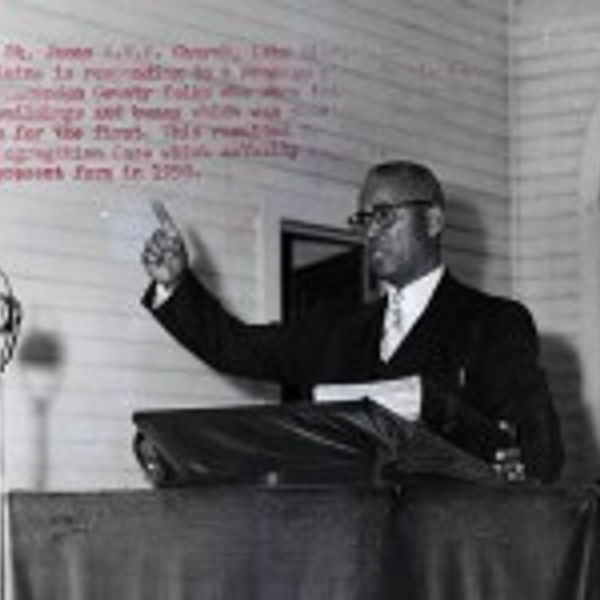
The Greater St. James A.M.E. church was founded in 1883 by Reverend Hill and twenty-five charter members. The congregation built its first church at the corner of Lake and North Church Streets in 1885. It was later renovated and enlarged in 1917 and a steeple was added in 1948-50. In 1949, having served as an activist, minister, and school principal, Reverend Joseph Armstrong DeLaine (1898-1974) organized African American parents in Summerton to petition the school board for a bus for Black students, who had to walk up to 10 miles through corn and cotton fields to attend a segregated school, while white students could ride to and from school on buses. In 1950, some of these parents including Harry and Eliza Briggs, sued Clarendon County schools to end school segregation. Reverend J.A. DeLaine played a significant role in the monumental Civil Rights Case, Briggs v. Elliott, which sought desegregation of Clarendon County schools and was one of five cases commonly known as the Brown v. Board of Education cases. These other cases included Brown v. Board of Education of Topeka (KS), Davis V. Board of Education of Prince Edward County (VA), Bolling v. Sharpe (D.C.) and Gebhart v. Ethel (DE). Civil Rights lawyer and activist, Thurgood Marshall, and the NAACP Legal Defense and Education Fund handled these cases as they went to the Supreme Court. While most of these cases wanted to reverse the Plessy v. Ferguson (1996) ruling that “separate but equal was constitutional,” and declare segregation in public schools to be unconstitutional, they had various reasons for doing so. Unable to come to a solution by June 1953, the Court decided to rehear the case in December 1953. After the case was reheard in 1953, Chief Justice Earl Warren was able to bring all of the Justices to agree in supporting an unanimous decision declaring segregation in public schools unconstitutional. On May 14, 1954, he delivered the opinion of the Court, stating that "We conclude that in the field of public education the doctrine of 'separate but equal' has no place. Separate educational facilities are inherently unequal. . ." Expecting opposition to its ruling, the Supreme Court asked the attorney generals of all states with laws permitting segregation in their public schools to submit plans for how to proceed with desegregation. Desegregation was to proceed with “all deliberate speed” which led to years before all segregated school systems were desegregated. In 1951, Reverend J.A. DeLaine was transferred from Pine Grove A.M.E. Church in Summerton after playing a leading role in Briggs v. Elliott, as white supremacists burned the church in October 1955. Rev. G. Lee Baylor was the pastor of the congregation when a new sanctuary, named Greater St. James, was erected in 1957. In Lake City, it would not be until the late 1960s when public schools would become integrated both for students and faculty.

1 sound

Frazier Baker Post Office (Lake City Post Office)

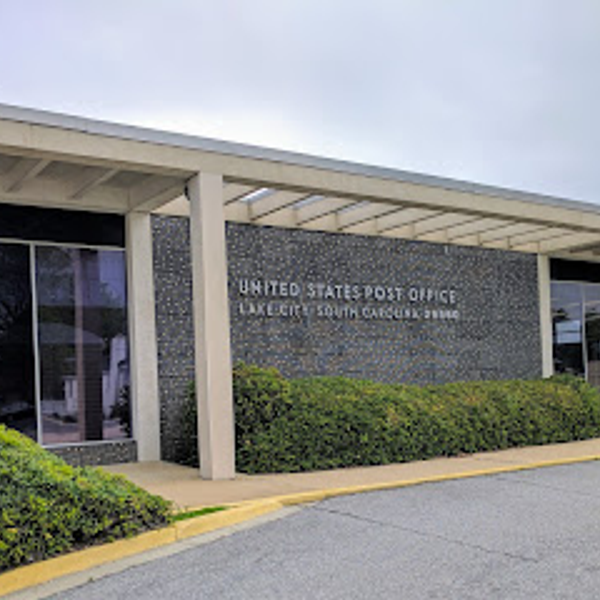
On February 22, 2019, US House Majority Whip James E. Clyburn along with other elected officials and the Baker Family renamed the Lake City Post Office in a public ceremony in honor of postmaster Frazier B. Baker. Having been appointed as the first African American to serve as postmaster at the Lake City Post Office in 1897, Frazier Baker courageously refused to give up his position despite threats from white community members. February 22, 1898, Baker and his infant daughter, Julia, were lynched as white townspeople shot bullets into his home and set it on fire. His wife, Lavinia, and their other children escaped with their lives but were wounded. The dedication took place 121 years after the lynching to acknowledge the ultimate sacrifice that Baker and many others gave in standing up against injustice and intolerance. The post office building itself was built and opened in 1962 under President John F. Kennedy. Following the lynching of Baker, Lake City was without a post office for decades until this post office was erected. The Postmaster General at the time of its building was J. Edward Day and the Deputy Director Postmaster General was H.W. Brawley. If you walk inside this mid-century modern, concrete block building, you will see on the far-right wall a photograph of Mrs. Frazier Baker and her children. Under this photograph is a plaque which reads “This building is named in Honor of Postmaster Frazier B. Baker by an act of Congress Public Law 115-388 December 21, 2018.”

1 sound

Huey Cooper Statue

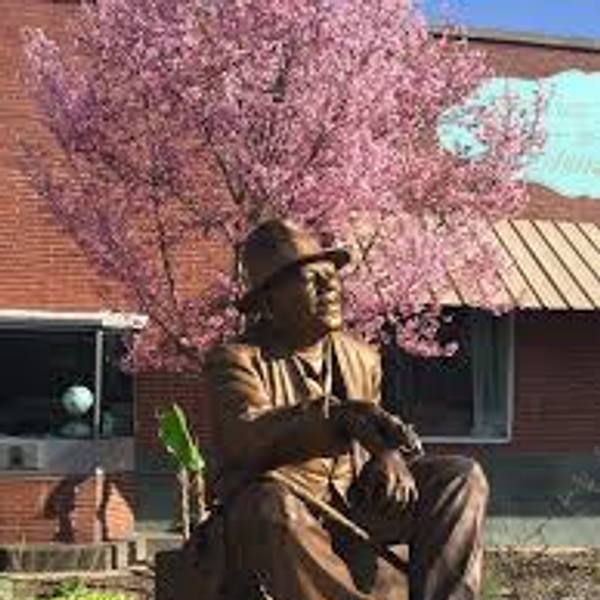
Huey Cooper was a well-known citizen of Lake City and known as a main “fixture in downtown Lake City for as long as anyone could remember,” according to a 1963 article in the Florence Morning News. It is said that Huey lived in a rent-free small building behind the Dairy Queen that was built and paid for by the town’s police department. Often sitting at the corner of Acline and Main Street on a low, cement wall, he cheerfully would let people rub his lucky rabbit’s foot for a nickel. He would then take his earnings to buy cigars and cokes at the nearby train depot. While it is not exactly known how old Huey was, it is claimed that he was born in 1873 which made him 105 upon his death in 1978. After his death, the memory of Huey slowly faded from the town’s collective memory. Kent Daniels, Lake City historian and Director of Lynches Lake Historical Society and Museum, spoke with businesswoman, investor, and Lake City local, Darla Moore Rainwater, about funding the erection of a statue to commemorate Huey’s life and legacy. Alex Palkovich was commissioned (previously sculpted Swamp Fox, Francis Marion) and a bronze sculpture was erected on September 10, 2014, at the former location of where Huey would have sat. Huey holds out a rabbit’s foot and there’s a slot in his right pocket for depositing nickels. Under Huey’s bronze sculpture is a plaque which reads: “Huey Cooper 1873-1978 – Lake City locals remember Huey Cooper as one of Lake City’s most unique citizens, who for a nickel, would let you rub the rabbit’s foot he carried around with him for luck. ‘Please help us keep this tradition alive by rubbing the rabbit’s foot and dropping a coin in Huey’s pocket.’ Sculptor -Alex Palkovich.”

1 sound

DOWNLOAD OUR APP TO DISCOVER THIS TOUR AND MANY OTHERS.

play-storeapp-store

Or start creating tours, treasure hunts, POI maps... Just let your imagination guide you.


Other walks nearby

Tarboro Highlights Walking Tour

Tarboro Highlights Walking Tour

Tarboro, North Carolina, United States
IMPORTANT: READ BELOW Welcome to historic Tarboro, North Carolina. Today’s interactive walking tour will give you an inside look into the town’s historic landmarks, buildings, and homes. This app, called Echoes, will serve as an audio guide for your tour of historic Tarboro. Echoes uses smart location-aware technology that will allow you to explore the town of Tarboro at your own pace, taking breaks or dining at one of our delicious restaurants at your leisure. If you look at your screen, you will see a number of shapes scattered across the map. These are locations of interest. Walk freely and explore, and when you visit a historic spot marked on the map, the audio guide will sense that you have arrived and automatically begin explaining the site. The blue dot indicates your current location. This tour includes the highlights of downtown Tarboro. Wherever you start, we welcome you to our beautiful town and encourage you to explore the map and visit as many locations as possible. Ever since its founding, Tarboro has been at the heart of history in the South. The North Carolina State Legislature met here once in 1787 and again in 1987. At one time, our town was even under consideration to be the state capital of North Carolina. President George Washington slept in Tarboro during a visit on his 1791 Southern tour, and is noted to have said of our town that \[quote] “it was the best salute you could have from a single cannon.”
free

Are you a creator?

START HERE

Privacy & cookie policy / Terms and conditions

© ECHOES. All rights reserved / ECHOES.XYZ Limited is a company registered in England and Wales, Registered office at Merston Common Cottage, Merston, Chichester, West Sussex, PO20 1BE

v2.5.15 © ECHOES. All rights reserved.