Songs of Hope, Wild Woodberry, Inside Out Festival

7 ECHOES

Songs of Hope audio sound walk, located at Wild Woodbury, Bere Regis. Inside Out festival 20 - 24th September 2023. A song cycle of hope located within a field recorded and sonically manipulated soundscape, including words, songs and music. Contemporary writers have responded to the poem “Hope" is the thing with Feathers by Emily Dickinson. Laura has set the words for voices, piano, instruments and pre-recorded sounds. These musical echoes are presented in an audio walk. Free to access by mobile phone and headphones in specific locations using GPS location software echoes xyz.com (software to be downloaded in advance). The walk will take 40 - 50 minutes. It will be available to access via mobile devices for the duration of the festival. A repeated loop version is available near the wooden carvings at the entrance to the site. Featuring soprano Gweneth Ann Rand and piano by Allyson Devenish. Music by Laura Reid. Words: Ahed Al Hamwi, Katie Colombus, Oge Nwosu, Teresa Howard. Responses to the poem range from the personification of Hope by Ahed Al Hamwi, optimistic reflections recalling images of nature by Teresa Howard and Katie Colombus, to stark realities of sustaining hope in challenging circumstances by Oge Nwosu. Each one has a unique perspective. Age Rating: All ages, but mostly adults. Content Advisory: to see content advisories for Tête à Tête: The Opera Festival 2023 shows, click here. Laura is generously supported by PRS Foundation Composers’ fund.

Produced by Laura Reid

Sacred Threads

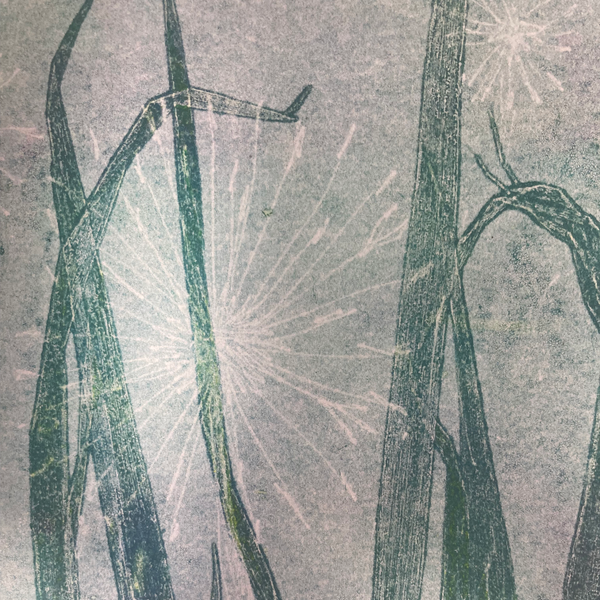
Sacred Threads, words by Teresa Howard, music by Laura Reid. Vocals Gweneth Ann Rand, piano Allyson Devenish. Image by Heidi Stellar.

Teresa Howard is a writer, librettist, lyricist. Her most recent work is GHOSTWOOD, an Immersive VR Project for the Mayor of London!s Liberty Festival (Albany Theatre) working with Immersive Technologist Carl Guyenette (War of the Worlds, Somnai) as Concept Writer, Lyricist and Creative Producer; MINI-BREAK libretto for a One Act Opera composed by Victoria Bernath (Royal Opera House and Casco Phil – St Pancras International); Libretti for composer Sun Keting include: UNSUNG a Song Cycle commissioned by Conrad Sclar, One Act Operas ONE CUP OF MILK (RAM) & NEW GENUS (Tête à Tête Festival ‘22). She is also the book and lyric writer of THE WIND SINGER musical, based on the "Young Adult!#novel by William Nicholson composed by Sarah Llewellyn (RSC Residency/Performance) and book and lyrics of I CAPTURE THE CASTLE composed by Steven Edis (UK tour). Emily Dickinson's poem inspired me to write about Crinoids, one of the most ancient forms of sea life from the Echinodermata family, it looks like a bunch of feathers floating gracefully in the deep. Its presence in the sea, having outlived extinctions of other creatures like the dinosaurs, makes it a symbol of survival and hope. The poem is a prayer in homage to the ancient line of the Crinoid. SACRED THREADS Phy-lum Echin-o-der-mata Phy-lum Sacrum Genitori, genitoque Ad Phylum Crinoidae Five hundred million years of life. Five hundred million years. We heard the dying moan of beast from ice and fire, and air and sea. You thought we were the lilies of ancient shallow waters, but animal adaptable we learned to move, evolve, survive. We have nothing that a human needs. We take nothing that a human wants. We were here before and will watch you leave, unless you hold the door, amid your blast and roar! Hear my secret scripture Hear me call beneath the wave Hope is floating feather lilies Hope learns to weather any change. Phy-lum Echin-o-der-mata Phy-lum Sacrum Genitori, genitoque Ad Phylum Crinoidae. Copyright Teresa Howard 2023 Translation: Phy-lum Echin-o-der-mata (Latin name for the genus they belong to, including starfish etc.) Phy-lum Sacrum (sacred thread) Genitori, genitoque (begotten and begotten) Ad Phylum Crinoidae (the thread of crinoids)

1 sound

In the forest next the trees

Words by Katie Colombus, Music by Laura Reid. Soprano Gweneth Ann Rand, Piano Allyson Devenish. Katie Colombus is the author of How to Listen and Pathways (Hachette) and has an extensive background in arts and wellbeing journalism. She creates interdisciplinary work with dancers and musicians and recently graduated with distinction from the MA in Writing Poetry at The Poetry School, London. She has had poems published in The Frogmore Press, ROSA Magazine, Dance Art Journal and Glyn Maxwell’s Dark Canadee, and was longlisted for the Fish Prize for Poetry. She was commissioned by the Royal Opera House to create libretto for a micro-opera festival for International Women’s Day.

"I remember when Julie first told us she was ill and that at some point in the near future she wouldn't be here anymore, and it felt like it was going to be so hard. But she took control and made it the best possible ending of her time here, and that helped all the family in so many ways. She often talked about "the next adventure on the other side of the universe"; we went shopping for the brightest, most colourful dress we could find to wear at her funeral; she wrote letters and boxed up gifts for the future, and it all somehow softened the journey. Before she died we went travelling - we saw whales and dolphins, swam in the sea, hiked hills, walked in forests, and we all appreciated every moment, acutely aware of how precious that time was. It was in Kaikoura, New Zealand, that I had this dream about Julie being able to communicate with the whales in a secret language. It is my hope that this work will keep beautiful memories of a very special person alive."

In the Forest Next the Sea

Birdsong unravels in cloud,      hills and myths move with time, slowly around edifice of softening ground.

Evening curves in and out        of dappled light, warm winds drape over the hard grey leaves of trembling poplar trees,

owls dark on perches, still in shadow patches,        one crying twit, the other replying twoo – I never knew that the call meant there were two.

Sweet magnolia hangs heavy, falls soft        to forest floor, leaving leaves like silken skirts that whirl at my ankles as I walk.

Black pupils of night close in        on an island dream where whales sing in language understood by only you.

Copyright Katie Colombus 2023

1 sound

Sustenance

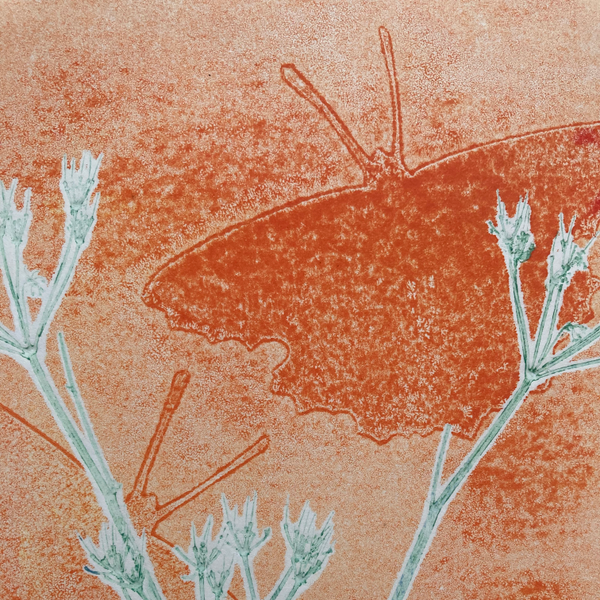
Words by Oge Nwosu, Music by Laura Reid, Vocals spoken and sung by Gweneth Ann Rand. Additional vocals by Nwenenda Horsefall. Image by Heidi Stellar. Oge Kpalukwuozu Nwosu is a UK based librettist and former barrister. An alumna of Cambridge University and Guildhall, her MA chamber opera, produced in association with ROH, was recommissioned by the V&A Museum. She has been a Visiting Scholar at Oxford Centre for Life Writing, and an Invited Artist at the Women Opera Makers Workshop of the Academie du Festival d’Aix-en-Provence. SUSTENANCE: Tête á Tête Note, July 2023. Recently I wrote a micro-opera with Laura, titled Detritus. Commissioned by ROH Jette Parker programme and Casco Phil as a site specific piece, performed at St Pancras Station on International Women’s Day, its protagonist was St Anthony of Padua, Patron Saint of Lost Things, involuntarily transplanted into life as a Cleaner at the station. He was essentially a Displaced Person - one who had never set foot on a national or international train - struggling to make sense of his purpose in that place and time. That theme - movement compelled under unfathomable circumstances - set a precedent for the work I have subsequently created with Laura. The real and fictional global micro-stories contained in Sustenance sit ‘naturally’ in the city, but my primary impulse was to bring The World to the rural setting of the original project. Because, as Laura has perspicaciously observed, The World has passed through Dorset across history; animate and inanimate entities, transported by ship and air and foot, travel and trade and learning and aid, colouring fields and coasts and conversations. So, movement of all kinds. This lyric - if it can be called that - gives voice to headlines rather than people, and exists as much in its footnotes as in the sparsely sketched stories. The people represent a multiplicity of footnotes in recent history, each one at a liminal point between grief and hope, survival and erasure. No comment is made on the events and no specific emotion is demanded of the listener. The separate lines of text are united by one repeated phrase; Nka bu örom. The choice of Ikwerre as the language of this phrase is both as random and as specific as each of the stories it follows. Two facts make it relevant to me as the writer of the piece; Ikwerre is the language of the part of Rivers State, Nigeria, in which my father was born; and this phrase was the first he taught me. It means This is my house. I used to enjoy saying it when we welcomed guests into the unfamiliar houses we moved into. Here, in this lyric, it extends to mean something like the Earth is home to all of us. Beyond that, there is no direct connection between the language and the acts outlined here, just as there is no direct link between a human being’s innate essence and the random bolts of fortune that might unexpectedly assail them. I use it to capture a spirit of welcome, or stoicism, a brief reflection on radical acts that embody or sustain hope. The deliberately un-poetic text begins with the journey of a foetus from its dying mother into a hostile, fractured world. This was an imagined story, written months before the most recent instance of real life appearing to intersect with fiction. The succeeding lines all reference singular personal events, huge in the lives of those living through them, all or some of which you will be aware of from news sources. Links to these lives are included in the footnotes to the lyric. Oge Kpalukwuozu Nwosu July 2023. SUSTENANCE1 Theffania quickening, in the carriage - crushed.2 Nka bu örom. Pia steering, a small boy’s body frozen on the boat.3 Nka bu örom. Aamira, at the station, with a ticket and her textbooks.4 Nka bu örom. Ines embroiders ‘Assamaka’ on the shoes she leaves behind.5 Nka bu örom. Nasruddin, defiant, wades the water for the women.6 Nka bu örom. Anakaren cries before a camera, for a prize.7 Nka bu örom. Johannes, aged, with the bruises of the blows of the hammer to his head.8 Nka bu örom. This woman, nameless, grasps a knife, inscribes - 9 Nka bu örom. 1 A multiplicity of contemporary voices, real and fictional, each at a liminal point between grief and hope, all united through a single phrase; “Nka bu örom.” (Ikwerre.) Translation: “This is my house”. (And, by extension, here, “The Earth is home to us all.”) It is used here in a spirit of stoicism, or welcome - radical activity that sustains hope. 2 ‘Quickening’ as in feeling the foetus move inside her. 3 Captain Pia Klemp, TedxBerlin, 2019. https://youtu.be/-7V1zNNfc_Q 4 https://www.theguardian.com/uk-news/2022/may/10/home-office-backs-down-over-travel- costs-for-eritrean-refugeesitting-gcses?CMP=ShareiOSAppOther 5 https://niger.iom.int/stories/sewing-centre-support-womens-resilience-assamaka 6 https://www.theguardian.com/world/2020/jun/26/indonesian-villagers-defy-covid-19-warnings- to-rescue-rohingyarefugees?CMP=ShareiOSAppOther 7 https://www.nytimes.com/2020/11/03/world/americas/mexico-day-of-the-dead.html? smid=nytcore-ios-share%20https:// www.nytimes.com/2020/11/03/world/americas/mexico-day- of-the-dead.html?referringSource=articleShare 8 https://www.mirror.co.uk/news/uk-news/pensioner-79-told-shouldnt-country-23039708 9 https://www.bbc.co.uk/news/world-asia-53436335 Copyright Oge Nwosu 2023

1 sound

DOWNLOAD OUR APP TO DISCOVER THIS TOUR AND MANY OTHERS.

play-storeapp-store

Or start creating tours, treasure hunts, POI maps... Just let your imagination guide you.


Other walks nearby

Listening to the sand dunes

Listening to the sand dunes

Swanage
Studland Bay has stories to tell. Within the sand and under the heather are hidden noises and untold tales. And they ask you… Do you know what sound a pine tree makes? Or the calls that happen at night? How about the stories from the war or perhaps the wonders of our dune dynamics? Well now you can put your headphones in, go for a walk and experience an exploratory soundscape at Studland Bay. Dotted across the dunes are echoes for you to find, some are in popular spots while others are hidden in the wilderness. On your exploration, please be mindful of tough vegetation, cattle grazing and the wildlife that lives at Studland. The dunes are home to some wonderful species, like nightjars that make their nest on the ground or adders that live in the heather. To keep yourself and the wildlife safe please walk carefully, wear appropriate clothing, keep dogs on a lead and take any litter home. Each echo has a different theme, species or story to tell and has been developed by two sound artists, Laura Reid and Adrian Newton (both members of EAP, Environmental Art Practitioners). Laura blends music with conversation to further deepen our understanding of history, culture and ecology at Studland Bay. Adrian, who worked with Lynn Davy and Arthur Newton, uses specialist equipment to record hidden nature sounds and gives us a window into a noisy world we rarely hear. The development of this sound walk is all due to Dynamic Dunescapes, a nationwide project to restore sand dunes across England and Wales. So far at Studland Bay, we have re-created patches of bare sand and reintroduced cattle grazing, but everyone can play a part in restoring this special place. The sand dunes have become over-vegetated, and as a result are declining in biodiversity. By exploring the ‘listening to the sand dunes’ soundscape, you will be taken off-path to trample on overgrown vegetation and create space for rare life. If we leave no trace, and are mindful of the local wildlife, we can help the dunes simply by exploring them. So, take an immersive trip to Studland Bay. The soundscape works best with headphones, and by downloading the walk before you go. There is also an instruction sheet to collect at Knoll Beach if you wish. You can start at either Shell Bay or Northern Boundary, and the experience will take you approximately two-hours. Get lost in sound, discover untold stories and know that by doing so, you are also helping restore our sand dunes
free
The Resilient

The Resilient

Weymouth
A ship in danger - a crew forbidden to go ashore - a cabin boy terrified of climbing the mast... This is the soundtrack of The Resilient, a musical drama set on a tall ship. The film, by children at St John’s Primary School in Weymouth supported by professional filmmakers from Dorset arts organisation ScreenPLAY was premiered at the school in July 2022. A nice warm bed wouldn’t do us any harm, sing the homeward-bound crew of the tall ship Resilient but will they make it safely back to port when storms threaten to dash them onto the treacherous Chesil beach? Sit on the beach by the rocks at Greenhill or anywhere around the school to hear to their story. You can also watch the Resilient film: https://youtu.be/h9h4GP9lP74 Cast in order of appearance Bosun - Vhiel Captain - Joanne First Mate - Isabel Wheelhouse - Fibi, Libby, Isaac Cabin boy - Jamie Deckhands - Jacob, Jason, Lucas, Ellie, Lalani, Nicole, Bella, Oliver Harbourmaster - Oscar, Assistant harbourmaster - Yasmin Rigging hands - Lucas, Ellie, Lalani Crew Fishing - Ken-Right, Bella, Millie, Darcy, Serena, Ava Singers - Phoebe, Ellie, Lelani, Serena, Lucas Song Lyrics - Jamie, Ellie, Lucas, Piotr, Isabel Set painters Reception, Year 1 and Year 2 classes Woodgrain painters Children from years 3,4,5 and 6 Set riggers - Year 5 Supported by ScreenPLAY mentors Phoebe Coombes - Scriptwriting Sharon Hayden - Drama development and directing Clare Munford - Set design and painting Kathie Prince - Song composition and Music Sean Kirby - Music production Alastair Nisbet - Film production Made with funding from Dorset Council Community and Culture Fund, Jigsaw PSHE
free

Are you a creator?

START HERE

Privacy & cookie policy / Terms and conditions

© ECHOES. All rights reserved / ECHOES.XYZ Limited is a company registered in England and Wales, Registered office at Merston Common Cottage, Merston, Chichester, West Sussex, PO20 1BE

v2.5.15 © ECHOES. All rights reserved.