Sonic Border by Januario Jano

7 ECHOES

Location: Huntly, Aberdeenshire, Scotland, United Kingdom

Deveron Projects
Deveron Projects

A new sound installation by artist Januario Jano is situated across seven sites in Huntly, Aberdeenshire. The public artwork, developed whilst on residency at Deveron Projects, traces (and imagines) the journey of migratory birds, primarily passing through Angola, reaching the north of Scotland.

The project began with a focus on Huntly’s infamous swift population and has evolved to include seven migratory birds. Through archive and newly recorded sounds of Common Swifts, Spotted Flycatchers, Red Knots, Common Starlings, Sedge Warblers, Common Terns and House Martins, Januario has composed a complex soundscape that reflects on migration and assimilation of human and non-humans.

Moving above geographic borders, a process of assimilation for birds is distinctive from people and plants, and politics, but equally requires hospitality for survival. Habitual in their migration, Swifts return to the exact home (nesting in roofs, under tiles, under eaves and within gables) annually. So methodical in their nature that should the home have been removed, the Swifts will continuously knock themselves against the spot that their nest resided that the impact will often kill them. To what end to we, humans, require the kindness and considerations of others to be at home?

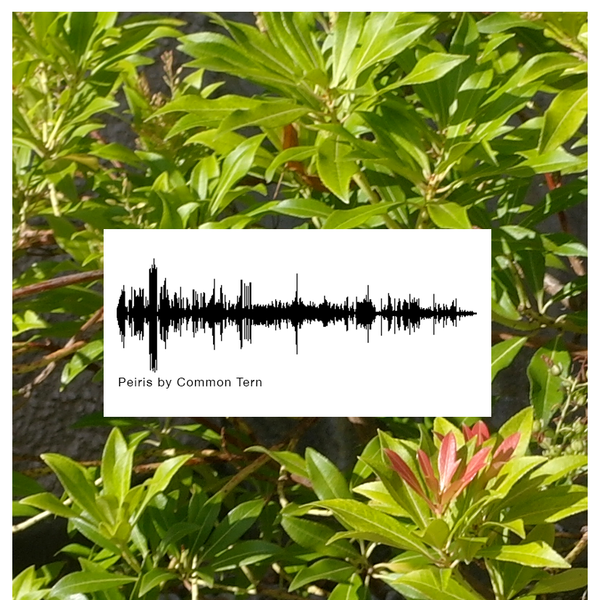
The soundscape maps a 45-minute circular path and the sites for each track are marked by seven 'non-native' plants, imbedded into Huntly's landscape: Crocosmia, Pampas Grass, Cotoneaster, Peiris Japonica, Hydrangea, Japanese Maple and Lavender.
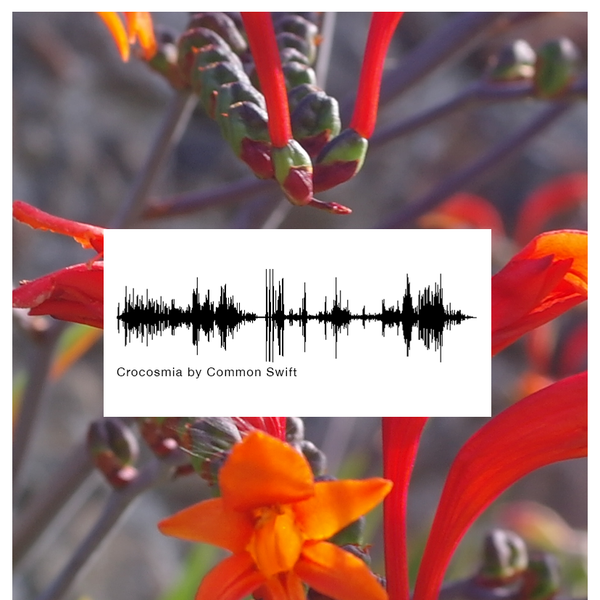
Crocosmia by Common Swift

Crocosmia (Crocosmia-crocosmiiflora) Common name: Common Montbretia Native to: Grasslands of Southern and Eastern Africa

A deciduous cormous perennial (Iridaceae family) with sword like leaves. Red or orange flowers are grouped along tall stems in a line.

The plant first arrived in Europe around 1847. Victor Lemoine crossed Crocosmia aurea with Crocosmia pottsii to produce a variety known as ‘Montbretia’ in 1881. Many varieties are now available.

Crocosmia is classed in many countries as ‘invasive’. In the UK it is listed under Schedule 9 of the Wildlife and Countryside Act. Care should be taken not to allow it to escape from gardens.

Toxicity: Corms are mildly toxic to dogs and cats.

Common Swift (Apus apus)

The Common Swift is the most aerial of all our birds. Uniquely for a British and Irish bird, some of the non-breeders do not come to ground at night but “roost” on the wing; some birds may not even touch down at all during the whole summer. It is even possible that most Swifts spend the whole of the winter in Africa on the wing, since roosting sites have not been reported.

Historically, the Swift nested in holes high in large trees, often those made by woodpeckers; it still does so in a fewn places. However, in most areas it nowadays nests almost exclusively in buildings, usually those where the nest sites can be above about 6 m from the ground, allowing the bird easy access to the site.

Almost all Swifts winter in Africa, south of the Sahara, with larger numbers in tropical areas than in southern Africa. Small numbers of Swifts may winter in northern India and in Arabia, though these are presumably not from Britain and Ireland. The main wintering grounds of the nominate race are probably largely south of 4ºS in the Congo Basin, Angola, Tanzania and from Malawi to the Cape.

The is a potential for confusion with African Black Swift through much of the wintering range.Because they are long-lived, many Swifts make the return journey to Africa many time. In they lifetime, Swifts flight time is equivalent to a return trip to the moon five times.

1 sound

Pampas Grass by Spotted Flycatcher

Cortaderia selloana Common name: Pampas Grass Native to: Pampas regions of South America, including parts of Argentina and Brazil and the whole of Uruguay.

This is a type of grass in the Poaceae family. This grass is considered an invasive nuisance in parts of North America and is banned in Hawaii and New Zealand.

Pampas Grass’ latin name, Cortedaria selloana, is named after the German botanist Friedrich Sellow who collected and sent many plants to Europe when working in South America in the early 19th Century.

Pampas grass is non-toxic to animals though care needs to be taken of it’s sharp-edge leaves.

Spotted Flycatcher (Muscicapa striata)

Catching sight of the fleeting flash of a Spotted Flycatcher, as it darts into the air to snatch an insect, is usually our first sign that this long-distance trans-Saharan migrant has returned once again to breed in the gardens and woodlands around us.

All populations winter in Africa south of the Sahara, with most crossing the Equator. They are locally common in southern West Africa, Camerron, and Eas Africa, and common ans widespread from the southern Congo Basin and Zambia throughout southern Africa.

Spotted Flycatchers use a variety of breeding habitants from sea-leve; to c900 m and occasionally up to 1,500 m elevation. Common components of preferred habitants include raised perches, often in mature trees and shrubs, telephone wires, fences and buildings. They require open woodland which clearings or glades, and are often found near open water, rivers or streams, and sling the edges of dense woodland. Dry deciduous woodland is preferred but they are also found in native pinewoods.

In the wintering quarters, the habitants chosen are often similar to those used when breeding. Secondary woodland, disturbed land, and suburban areas are preferred but they will utilize habitat along logging tracks in forest.

1 sound

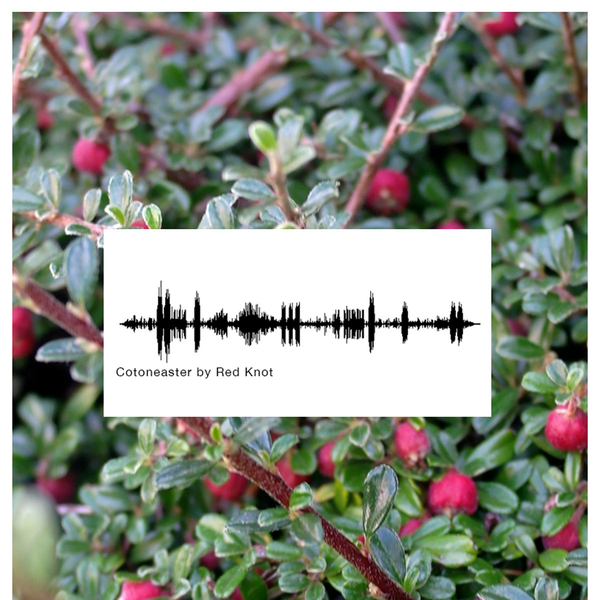
Cotoneaster by Red Knot

Cotoneaster horizontalis Native to Himalayan regions from Afghanistan to Sichuan

The Cotoneaster is part of the Rosaceae (Rose) family, a hardy plant that can exist in temperatures down to -25C. The plant was introduced to Europe in 1824.

There are many types of Cotoneaster. Horizantalis is a popular variety but, due to its extensive root system and dense structure, most varieties are considered invasive. They are a particular problem on limestone cliffs and grasslands and are listed under Section 9 of the Wildlife and Countryside Act.

Cotoneaster is very often used as a ground cover shrub in urban areas and is a popular plant with birds and bees.

The berries are not edible but are not highly toxic either to humans or to cats and dogs.

Red Knot (Calidris canutus)

Knots are exclusively high Arctic breeders and make some of the longest non-stop migrations of any wader. Outside their breeding season Knots are wholly coastal, mollusc-feeding specialists, depending almost entirely on extensive mud and sandflats in large estuaries and embayments where they occur in dense flocks of many thousands of birds. They reach these by making flights of up to 5,000 km between very few staging areas.

During northward and southward migration, it stages in the Wadden sea en route to the wintering areas along the Atlantic coast of Africa from Mauritania to South Africa, with over 75% on the Banc d’Arguin in Mauritania.

Deducing the overall migration system require a flyway-scale analysis of Knot ring-recoveries. Knots may be a key indicator species for early warning of the impacts of climate change on migratory Arctic birds. Predicted changes in weather patterns, and increased storminess, will increase the need for emergency stopover sites if adverse headwinds increase in frequency, since otherwise Knots could be prevented from reaching the Arctic in sufficiently good condition to breed successfully.

1 sound

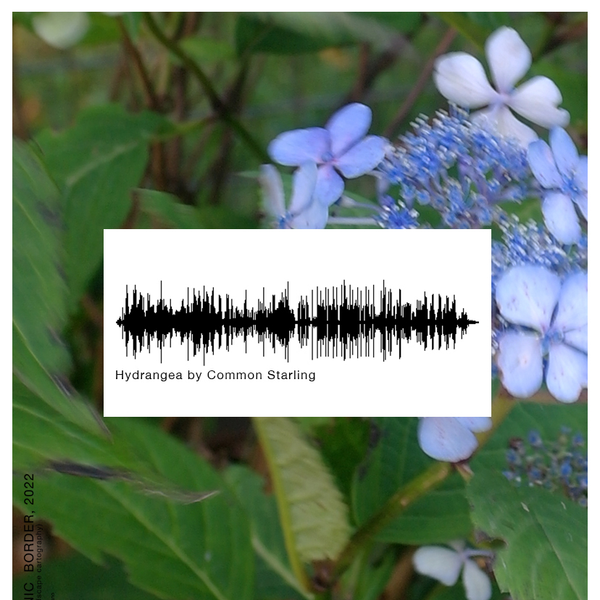
Hydrangea by Common Starling

Hydrangea (serrata) Native name: Ajisai Native to Japan, China and Korea.

Alternate name for some varieties in Japan (H. macrophylla and H. serrata) – Nanahenge meaning ‘seven transformations’. This is due to the properties of some species which change colour according to the soil conditions. Acidic soil produces more blue flowers, alkaline soil more red or pink. This deciduous flowering shrub is happy in sun or part shade.

The first varieties were brought to Europe in the 18th Century. Samples were difficult to move (smuggle) out of secure Japanese conditions. Carl Peter Thunberg is credited as taking back the first plants which have been cultivated in Japan since the 8th century.

Other hydrangea species, such as H. arborescens and H. quercifolia originate from North America.

Toxic: to people, cats and dogs.

Common Starling (Stumus vulgaris)

The Starlings is one of most familiar and widely birds. It is at home in towns, gardens and the wider countryside, and yet the numbers of this highly adaptable species have declined over the two decades.

The resident breeding population is augmented in winter by immigrants from northwest continental Europe, the arrival of which can present a moving sight to watchers on the east coast of Britain in late October and early November. Once here, their aerial manoeuvres as they prepare to alight in their night roost present one of the most exciting spectacles of ornithology.

In addition to this natural range, Starlings have become successfully established, after introduction by Man, in southern Australia, New Zealand, South Africa and North America.

In summer, adults tend to remain near their breeding areas, but large flocks of juveniles are found feeding on coastal salt marshes, moorland and in cherry orchards, suggesting a divergence in the habitants used by adults and young at this time of year.

1 sound

Japanese Maple by Sedge Warbler

Acer Palmatum (Japanese Maple) Native to: Eastern China, Korea and Japan.

A deciduous shrub or small tree, growing up to 10meters in the wild. It's natural habitat is woods, hills and mountains. The Japanese Maple enjoys any moist soil in part shade, sheltered from wind. It flowers in April/May.

The first trees came to Britain in the 19th Century but they had been cultivated in Japan for centuries before any specimens reached Europe.

Sedge Warbler (Acrocephalus Schoenobaenus)

Sedge Warbler are long-distance trans-Sahara migrants that lay down extensive fat reserve in northern Europe in preparation for long-haul flights to the African wintering grounds.

Sedge Warblers breed extensively within both Britain and Ireland, with strongholds in the fens and coastal levels of eastern England and in lowland areas of Scotland and east-central Ireland. Preferred breeding habitants are lowland marshes and waterways, although dry scrub, young conifers and even crops are sometimes used. Although knowledge is scant, Sedge Warblers seem to utilize a range of habitats in the African winter quarters but most commonly those associated with fresh water, such as reed beds, papyrus and the marshy fringes of lakes.

Pre-migratory movement of Sedge Warbler begin in late July with birds apparently searching for sites with high densities of Plum-reed Aphids, an important but ephemeral and unpredictable food source. In West Africa, spring migration begins in late February, and the first birds reach their breeding grounds inFrance by the late March and Britain by early April.

1 sound

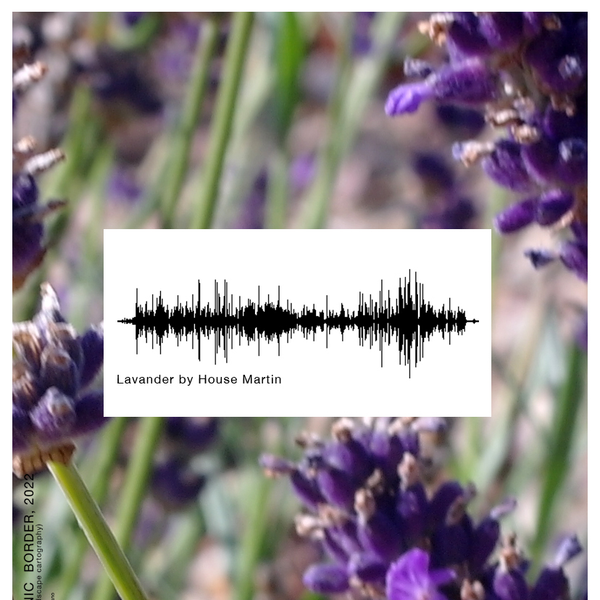
Lavender by House Martin

Lavender augusifolia (English Lavender) Native to: the Mediterranean region, from Yugoslavia to Spain and North Africa.

Lavender is from the Lamiaceae (mint) family. Although commonly named English Lavender there is no record of any Lavender in the UK prior to the 13th Century. It may have been brought by the Romans earlier but it is not in common use until it was used by monks in the 15th century for healing. Lavender is hardy up to -15C and enjoys well-drained soil in full sun.

House Martin (Delichon urbica)

Despite House Martins begin common, widespread and universally well known in their breeding range due to their commensal relationship with Humans, they remain, to some extent, birds of mystery. It is still uncertain whether they roost terrestrially or aerially, both in their breeding range (when not in their nests), and in their wintering areas south of the Sahara Desert; also unknown are the locations of the various European populations in these areas.

In their breeding range, House Martin are almost always associated with human habitations, buildings their mud nests under protective overhangs such as the eaves of houses and under bridges; a small proportion, less than 1% of the population, nests on cliffs. They are aerial feeders, feeding on insects at a higher altitude than Swallows but lower than Swifts, and favour agricultural areas.

Despite being one of Europe’s common trans-Sahara migrants, almost nothing is known about the House Martin’s wintering areas in Africa.

1 sound

DOWNLOAD OUR APP TO DISCOVER THIS TOUR AND MANY OTHERS.

play-storeapp-store

Or start creating tours, treasure hunts, POI maps... Just let your imagination guide you.


Other walks nearby

SAND, SILT, FLINT - AUCHINDOUN

SAND, SILT, FLINT - AUCHINDOUN

Keith
AUCHINOUN - FROM THE ALBUM "SAND, SILT, FLINT" BY FIONA SOE PAING https://FionaSoePaing.bandcamp.com Little is known of Auchindoun’s early history. It’s thought to have been built in the 1470s by the architect and master mason Thomas Cochrane, a favourite of King James 111 of Scotland. Further fortification was made in 1509 when the castle is recorded as being owned by Sir James Ogilvy who in this year granted Auchindoun to his nephew, Alexander Oglivy. In 1567 Alexander’s son sold the castle to Sir Adam Gordon, a kinsman of the Earl of Huntly. It’s during his ownership that the history of Auchindoun takes a dark turn and becomes associated with one of the most atrocious acts committed as part of Scotland’s notorious clan feuding. Following victory over his rival John Forbes of Towie at the Battle of Craibstone in 1571, Sir Adam Gordon ordered an attack on Corgarff Castle (see The Lass o’ the Lecht walk), which, at the time, was affiliated with the Mackintosh clan and owned by Forbes. Forbes was away when Gordon’s men arrived and his wife Margaret Campbell refused them entry. In retaliation they burned Corgarff killing Margaret, her children and servants. Revenge attacks followed by Willie Mackintosh on Auchindoun for both the burning of Corgarff Castle and the murder of James Stewart, Earl of Moray by the Earl of Huntly. In 1594 Sir Adam Gordon was killed at the Battle of Glenlivet and Auchindoun sold back to the Oglivy family and passed between owners through Civil War and Restoration. During the first Jacobite uprising in 1689 Auchindoun undertook brief service as a temporary headquarters of the Jacobite army. However, by 1725 Auchindoun lay derelict and many of the stones from the castle’s walls were removed and used in the construction of nearby buildings. Much of the clan feuding and deep Catholic/Protestant rivalry between the Gordon and Forbes families is recorded in the rich ballad tradition of the region. Including the burning of Auchindoun and Corgarff castles. The burning of Corgarff is remembered in the ballad of Edom o Gordon, while the burning of Auchindoun is immortalised in ‘Turn Willie Macintosh.’ Auchindoun Castle Walk The dramatic ruins of Auchindoun Castle crown a small hill in the heart of Scotland’s whiskey trail in Speyside and strike a lonely, windswept pose over the River Fiddich. It’s a 15 minute walk from car park to the castle along track and grassy pathways that lead through the surrounding farmland to the ruins. On leaving the car park follow a wide rough track that heads slightly uphill past clusters of lodge pole pine, sitka spruce and aspen trees to a farmhouse. Once at the farmhouse, a signposted gate points the way to a grassy track from which the ruins can be clearly seen up ahead. Head through a couple more gates and along a short track lined with ash, elm and sycamore trees that lead in procession towards the castle. On breezy days a keen wind funnels across a landscape of wild heather, home to pheasants, herds of wild deer and active wind turbines. Once inside castle ruins the remains of Auchindoun’s high curtain wall protects visitors from the strongest of winds. The castle is in effect a large tower house that rises across a number of floors, the most impressive of which, even in a ruinous condition, is a great vaulted hall on the first floor. Auchindoun’s rough lichen covered walls hold the memories of winters, summers, feasts and battles and it’s worth taking time to explore the nooks, crannies and remains of old fireplaces on the ground floor – the only floor accessible to the public. Although watch your footing on the uneven ground and look out for fenced off sections. Alongside the romantic ruins, the views of the surrounding Moray countryside are well worth the walk to experience and best taken in through the large, long and empty windows and doors that punctuate the remains of the castle’s curtain wall – watch out for the steep drop on one side. From this vantage point it’s easy to imagine the journey of Willie Mackintosh and his men en route to Aunchindoun to seek revenge for the burning of Corgarff, and the bitter clan rivalry that shaped the history and fabric of both castles. Practical Information Auchindoun Castle is maintained by Historic Environment Scotland. It is open year round and there is no charge for entry. The ruins are located two miles south of Dufftown in Moray off the A941, the main road between Dufftown and Rhynie (postcode: AB55 4DR). Turn onto a signposted farm track off the A941 that leads uphill to a small car park where the walk begins. There are no facilities at the car park. The path to the castle is uphill, rocky in places and wet sometimes. In the winter it can also be icy. Good walking shoes or boots are recommended. The grounds inside the castle walls make for a quiet and sheltered spot for a picnic. The nearest refreshments and public toilets are located in Dufftown. Alternatively, about six miles south of the ruins off the A941 at Lower Cabrach is The Grouse Inn. Part of Speyside Whiskey folklore, the inn is famous for its outstanding whiskey collection with around 235 on optics and in total over 700 to choose from. The Inn’s tearooms are open 10am – 6pm Saturday to Thursday and 1pm – 6pm on Fridays. Text for the Soundwalks researched and written by Lesley-Anne Rose at OPEN ROAD https://OpenRoadLtd.co.uk , with very many thanks. Image with thanks to Isla Goldie Photography
free
SAND, SILT, FLINT - FORGLEN'S PLANTINS

SAND, SILT, FLINT - FORGLEN'S PLANTINS

Turriff
FORGLEN ESTATE - FORGLEN'S PLANTINS - FROM THE ALBUM "SAND, SILT, FLINT" BY FIONA SOE PAING https://FionaSoePaing.bandcamp.com The old North East ballad linked with Forglen Estate is known as Forglen’s Plantins or Forglen’s Wood – the word ‘plantins’ is Scots for a small wood. Through its lyrical versus an unknown writer weaves a picture of rural idyll as the backdrop for a tale rich with young love, the heartbreak of separation and the uncertainty of if a lover will remain faithful. While taking in the ‘fresh and fair’ air of the plantins one morning the writer is enjoying the beauty of the woods and lark songs when he comes across two young lovers locked in an embrace by the foot of a tree. The writer’s soft footsteps do not disturb the lovers and as he approaches he overhears the young man confessing to his love that, although he dearly wants to stay, he has no choice but to go away. As he breaks his sad new to his ‘dearest’ he showers her with romantic praise claiming she is ‘sweeter to me than the honey to the bee’ and that her cheeks are like roses and her skin as soft as silk. Despite his professed love, the young man isn't convinced she will stay faithful during his absence. He predicates sleepless nights thinking about her while he is away, but proceeds to compare her love for him to the moon which ‘wanders up and down.’ The ballad concludes with the young man’s assurances that his love for her is much more like the constant sun as he promises to remain true to her while he’s away. Unfortunately, we don't know her reply to both her lover’s praise and accusations, or if the writer was discovered eavesdropping on their conversation. However, we do know that the ballad and the young lovers it depicts have also been ascribed to other places in the North East such as Strichen, twenty miles east of Forglen. Forglen Estate Walk Forglen Estate is one the North East’s best kept secrets and it’s not hard to imagine the ballad’s unknown writer drawing inspiration for his tale of young love from its rural setting and aura of romance. Once you pass through the estate gates it takes no time at all to get lost in the peace of the pathways and trails which gently weave through acres of woodland and alongside the banks of the River Deveron. Originally Forglen belonged to the Ogilvy family through their claim on the Scottish peerage title of Lord Banff. However, following the death of the unmarried William Ogily the 8th Lord Banff in 1803, ownership passed to the Abercromby family through the marriage of the late Lord’s sister. They in turn sold up in the mid 1970s. Today Forglen remains privately owned and a working estate, growing barley for the region’s whiskey industry. Deer, Highland cattle and native birds of prey such as sparrow hawks and buzzards also all call the estate home and could well be spotted during a walk. However, one of the highlights of a visit is the magnificent Forglen House which sits about a mile from the entrance to the estate. Although only built in the early nineteenth century, the house stands on the footprint of a much older building and contains some of the features salvaged from its processor including a stone triple coat of arms which sits on one of its towers. Gothic in feel and style, the mansion was designed by Scottish architect John Smith who is also responsible for much of the architecture of Aberdeen. Although not open to the public, it’s well worth the walk to see it and take in the stunning river views that stretch out in front of the mansion’s wide lawns. Also take time to explore Forglen’s magical, glen garden which is landscaped around a small stream and reached through a gate close to the house. The looped walk through the garden’s rambling peace is about a mile long and features an old stone bridge and wooden benches tucked under the trees, which are perfect to enjoy the sounds of the stream and complete silence beneath it. The trail around the garden can be very slippery in wet weather. Other estate highlights include a Gothic mausoleum built in the mid 19th century. Ultimately, one visit to the estate isn’t enough and once you’ve discovered it’s beauty, like the young lover in the ballad of Forglen’s Plantins, you’ll be sad to leave and look forward to returning. Practical Information Forglen Estate, Turriff, Aberdeenshire, AB53 4JP Forglen Estate is located a couple of mile north west of Turriff. Follow the B9025 as it leads north and then west from the centre of Turriff until you come to the gates of the estate on the right hand side of the road. There is a small road and layby in front of the gates where cars can park. From here pass by the gate house and into the estate. It’s then a straight walk along the track through the woodland to Forglen House. You can either return the way you came or take a circular walk of around three miles around the estate which leads back to the layby by a track which emerges just past it. There is a selection of self-catering holiday cottages as part of the estate which can be booked at https://forglen.scot There are no amenities for visitors at the estate. Shops, cafes and public toilets can all be found at Turriff. Text for the Soundwalk researched and written by Lesley-Anne Rose at https://OpenRoadLtd.co.uk , with many thanks. Image with thanks to Isla Goldie Photography
free
SAND, SILT, FLINT - THE BALLAD OF JOHN HOSIE

SAND, SILT, FLINT - THE BALLAD OF JOHN HOSIE

Inverurie
HOSIE'S WELL - THE BALLAD OF JOHN HOSIE - FROM "SAND, SILT, FLINT" BY FIONA SOE PAING https://FionaSoePaing.bandcamp.com The tragic tale of John Hosie and his sweetheart, and bride to be, Jean is embedded in the landscape and folklore of Bennachie. On July 24, 1411 the Battle of Harlaw, nick named “Reid Harlaw” in recognition of its ferocity and sheer amount of bloodshed, was fought at the foot of Bennachie. The battle brought together two Highland forces, one led by the local Earl of Mar who was loyal to Scottish King David the second, and the other by Donald, Lord of the Isles. The conflict was sparked by their competing claims to the Earldon of Ross, a huge region of northern Scotland leading from Skye to Ross and into Inverness. King David confirmed the land belonged to the Earl of Mar, but Donald disagreed and invaded. Both sides suffered heavy losses during the day long battle aimed at settling the conflict, but after no conclusive victory on either side, Donald and what remained of his troops, withdrew back to the Isles in the night. John Hosie fought on the side of the Earl of Mar, but the battle fell on the day before he was due to marry his beloved Jean. John survived the bloodshed, but was taken prisoner by Donald’s retreating forces and marched back to the Isles with them, leaving behind the broken hearted Jean. Folklore tells us that it was years before John escaped the Isles and hot foot it back to Aberdeenshire and Bennachie where he pledged his heart to Jean. However, believing John to be dead, Jean is now engaged to another man. The story passed down tells us that the day John returned to Bennachie, Jean and her new fiancé happened to be out walking on the hill. With echoes of Romeo and Juliet, Jean is so shocked and distraught at the sight of the long lost John she drops dead on the spot. Overcome with grief John dies too and is soon buried on the spot where he fell. Legend tells us his tears flowed up from the earth to create Hosie’s well, and still make up its waters to this day. Bennachie Walk The craggy granite peak of the Mither Tap dominates views of Aberdeenshire and is one of nine summits spread out across the ancient landscape of Bennachie. A popular walk with locals and visitors alike, this former hilltop Pictish fort is riddled with walking trails and folklore, and rewards anyone who ventures up its rocky slopes with long horizon views of the surrounding countryside and coast. The easiest way to reach Hosie’s Well is to follow the Maiden Causeway trail, which leads from the Rowan Tree Car Park to the north of Bennachie, to the summit of the Mither Tap, scooting past the well on the way. The trail kicks off to a steep, narrow start as it leads upwards from the car park quicky into woodland of Scots Pine and Sitka Spruce. Take time to look out for the red squirrels that call this forest home and to take in the birdsong that accompanies the short, uphill walk through the trees. From here you’ll soon emerge into a heather strewn hillside and unfolding views of the Mither Tap ahead. After about half an hour of steady walking, and a mile from the car park, you’ll reach a level area, dotted with rowan and larch trees, that branches off to the right of the Maiden Causeway. This diversion leads to Hosie’s Well nestled deep within the rocks beneath the grassy ground. The well itself isn't big, but is a good place to pause, unpack a picnic and take in the silence of the hillside. Also take time to read the information board detailing the story of the blood-stained Battle of Harlow and the tragic Hosie, whose heartbroken tears are said to feed the well’s clear waters. If you’ve the time and energy, and the weather is on your side, continue up the Maiden Causeway to the Mither Tap summit. The Causeway itself is the stuff of legend and named after a feisty local girl who made a deal with the devil, betting she could bake a batch of oatcakes in less time than it would take him to build a pathway up Bennachie. The views from the top of the Mither Tap are equally legendary and well worth the scramble to the top to take in. Practical Information Bennachie is managed by Forestry and Land Scotland (https://forestryandland.gov.scot) It is accessible all year round. There is no charge to part at Rowan Tree car park, but do park in the designated area and be careful not to block gateways. To reach the car park follow the A96 north from Inverurie for about eight miles. Turn left onto a minor road signposted to ‘Maiden Stone’, just before the turning to Oyne. After about 1⁄2 mile, take a right turn signposted ‘Rowantree Forest Walks’. The car park is about 1⁄2 mile along this road, at grid reference NJ 692 244. The nearest post code is: AB51 5HZ. This is a popular walk and the car park gets busy at weekends and holidays. If you are travelling by public transport the nearest drop off point is Pitcaple villiage which is about two miles from the car park on the A96 and served by buses between Huntly and Aberdeen. For more information see Traveline Scotland. (https://travelinescotland.com) The best option to eating is to bring a picnic and picnic tables with a view are perched on a grassy bank above the car park. These are not accessible for wheelchair users, but the on site toilets, which are open Easter to September, are. Good walking shoes or boots are recommended as some parts of the trail are narrow steep and rocky. The ground can also get muddy after rain and icy in the winter. Text for the Soundwalk researched and written by Lesley Anne Rose at https://OpenRoadLtd.co.uk , with many thanks.
free
SAND, SILT, FLINT - TIFTY'S ANNIE

SAND, SILT, FLINT - TIFTY'S ANNIE

Turriff
FYVIE WALK - TIFTY'S ANNIE - FROM THE ALBUM 'SAND, SILT, FLINT" BY FIONA SOE PAING http://FionaSoePaing.bandcamp.com Agnes, or “Annie” Smith, was the bonnie daughter of a wealthy miller who owned the mill at Tifty, a tiny hamlet close to the village and castle of Fyvie deep in the Aberdeenshire countryside. Against the wishes of her family, Annie fell in love with Andrew Lammie the trumpeter for Lord Fyvie who won over her young heart when they met in the woods of Fyvie. Annie’s family refused to give their consent for her to marry a lowly servant who they believed had bewitched their innocent daughter. Her family didn’t just disown Annie, but also took it in turns to beat the love out of her, especially her brother whose cruel repeated blows, according to folklore, also took the life out her. Annie’s dying plea was for her mother to make a bed looking towards Fyvie and her dear Andrew Lammie so she could lie down and die facing the man she loved. Fyvie Walk The Fyvie Estate with its magnificent 800-year-old castle, restored Walled Garden and tranquil grounds lies about half a mile south of Tifty. It’s easy for anyone to fall in love in its magical woodlands, filled with birdsong and wildlife which is a riot of bluebells and cherry blossom in spring and repellent with gold and red in autumn. Fyvie Lake is one of the estate’s focal points and you can follow in Annie and Andrew’s love-struck footsteps on the one and half mile walk around its peaceful banks. All paths lead to Fyvie Castle – a Baronial former fortress whose rich history mixes and merges with local folklore. Each of the five families who once owned Fyvie are said to have built one of its imposing towers. Cast your eyes skywards to spy the statue of a wee trumpeter who stands astride one of the castle’s many turrets. The spirit of Andrew Lammie is also reported to be one of the numerous ghosts who haunt Fyvie. According to local legend if the sound of his ghostly trumpet is heard, it’s a warning to the castle’s resident family that something bad is about to happen. Practical Information Fyvie Castle and Gardens are situated off the A947 to the north of the village of Fyvie which is around eight miles south east of Turriff. Parking, picnic tables, public toilets, a gift shop and tea rooms are all to be found at the castle which currently belongs to the National Trust for Scotland. The grounds are free to walk around, but an admission fee is charged to enter the castle. Opening times and prices can all be found at: https://www.nts.org.uk/visit/places/fyvie-castle. For those on public transport, Fyvie is on the route of the Stagecoach bus no 35 which runs between Aberdeen and Elgin. Text for the Soundwalk researched and written by Lesley-Anne Rose at https://OpenRoadLtd.co.uk , with many thanks. Image with thanks to Isla Goldie Photography
free
SAND, SILT, FLINT - MAGGIE MACHLIN

SAND, SILT, FLINT - MAGGIE MACHLIN

Banff
INVERBOYNDIE BEACH - MAGGIE MACHLIN FROM THE ALBUM "SAND SILT, FLINT" BY FIONA SOE PAING https://FionaSoePaing.bandcamp.com The ballad of Maggie Machlin recounts the sad story of a local domestic servant who worked in service for the Manse at Boyndie. According to the song and regional folklore poor Maggie, once favoured by those she worked for, was cast out when she became pregnant by a local dignitary – ‘a Boyndie man of high degree.’ Sadly for Maggie the man of high degree also rejected her and in despair one evening she walked down the water’s edge at Inverboyndie Beach. Here she sat down on a rock and stared out to sea. The ballad tells us that the rock Maggie sat on was bare and covered with spray from the sea. But here Maggie sat from evening until dawn. Sadly, Maggie didn't survive the cold night in this wild, windy spot on the edge of the North Sea and was found dead of exposure the next morning. Inverboyndie Beach Walk Don’t let the sad tale of Maggie Machlin deter you from a walk along this wild bonnie beach situated west of Banff in Boyndie Bay. The sands and sea at Inverboynie are a popular spot for local walkers, surfers, and swimmers who all gravitate here to take in wide views of the North Sea and surrounding gorse covered cliffs. The car park adjacent to the Banff Links Caravan Park is a favourite place to park and from here it’s a short walk to the beach’s golden sands past a large children’s play park. The voices of playing children meet with the sounds of the sea and wind enroute to the beach and form a poignant echo to Maggie’s sad story. Alternatively, park at the east end of the beach and head down to the coastal pathway that leads through a wide expanse of grassland on the edge of the shoreline. The walk from either end of the beach is filled with the smells of grass and seaweed and lined with picnic tables and jaunty beach shelters with striking blue roofs. The far east side of the beach is the more remote spot to find a bare rock to sit on, stare out to sea and remember poor Maggie. From here the coast path carries onto Banff to the east or, from the other end of the beach, along the coast to Whitehalls – a favourite local dolphin watching spot. Practical Information The facilities at the Banff Links Caravan Park (open seasonally from the end of March to early January) include a small shop and public toilets. For a sit down meal head west to The Gallery at Whitehalls, a café and fish restaurant on the edge of the marina, or east to Banff which has a number of places to eat and stay. Those travelling on public transport to Inverboyndie can hop aboard one of a number of bus services that run from Banff, Macduff and Fraserburgh. Soundwalk text researched and written by Lesley Anne Rose at Open Road Ltd, with profound thanks. Image with thanks to Isla Goldie Photography.
free
SAND, SILT, FLINT - FISHER'S LULLABY

SAND, SILT, FLINT - FISHER'S LULLABY

Banff
GARDENSTOWN - FISHER'S LULLABY - FROM THE ALBUM "SAND, SILT, FLINT" BY FIONA SOE PAING http://FionaSoePaing.bandcamp.com Lullabies sung by the wives of fishermen are common in the fishing communities of North East Scotland. The women of these tiny coastal villages constantly worried for their husbands while they were out at sea. Singing lullabies was a simple way for them to calm both their children and their worries. The Fisher’s Lullaby is based on the song of the Fisherman’s Wife. In this sad song a worried waiting wife prays with her children for the safety of their father out at sea as she sings them gently to sleep with her bittersweet lullaby. The original version “The Sang O' The Fisherman's Wife" was written by Zetta Sinclair, mother of Scottish singer and former game show host Isla St Claire, who grew up in Buckie on the north Aberdeenshire coast. Zetta was also one of the original founders in the 1960s of the Aberdeen Folk Song Club. Gardenstown Walk The village and harbour of Gardenstown is one a handful of tiny sea facing hamlets that cling to the steep cliffs of coastal Aberdeenshire. All houses face seawards around both the hamlet’s old harbour and the only road that winds its steep way down to the sea. Gardenstown was founded in the early eighteen century and fishing began in its harbour about a hundred years later. Both salmon and herring fleets were once based here and, at the height of the peak the local fishing industry at turn of the nineteenth to twentieth centuries, 92 boats operated from Gardenstown’s tiny harbour. It’s easy to imagine this old sea-soaked village surrounded by steep cliffs full of boats selling their catch of the day and large salmon nets hanging out to dry and to still feel the worry of those waiting at home when the fleet left safe harbour for open sea. Take time on a walk around the old harbour to read the information boards detailing the history of the town’s fishing industry. If you’re visiting on a weekday during the summer drop into the Heritage Centre (open Monday to Friday 2pm-4pm during the summer) to find out more about Gardenstown’s harbour, fishing fleet and old fish wives. If you’ve time for a longer walk, head east along the coastal path to the tiny community of Crovie a few miles along the coast whose main street can only be travelled along by foot. The path is a perfect place for dolphin or bird spotting, but some parts get covered by the high tide. In wild weather it’s best avoided altogether. Practical Information Getting There Two narrow roads lead off the B9031 to Gardenstown, one to the east and the other to the west of the hamlet. Both meet and merge into the B9123 as it makes a steep, twisty, and increasingly narrow, downhill journey to the Gardenstown’s harbour and heart of the village. Parking is located at the harbourside. A local bus service (no 273) runs between Gardenstown, Fraserbourgh to the east and Banff to the west. Toilets & Refreshments Picnic tables and public toilets can both be found at the harbourside. Places to eat include The Garden Arms Hotel (closed on Tuesdays) which dates back to 1743 and also has accommodation - the hotel boasts a visit by Bram Stoker in 1896. Eli’s Crafts, Cakes and Coffee is located close to public parking and champions local produce on their menu – take away also available. Accessibility The roads and lanes around Gardenstown’s harbour are accessible by wheelchair. Text for the Soundwalk researched and written by Lesley-Anne Rose at https://OpenRoadLtd.co.uk , with many thanks. Image with thanks to Isla Goldie Photography
free

Are you a creator?

START HERE

Privacy & cookie policy / Terms and conditions

© ECHOES. All rights reserved / ECHOES.XYZ Limited is a company registered in England and Wales, Registered office at Merston Common Cottage, Merston, Chichester, West Sussex, PO20 1BE

v2.5.15 © ECHOES. All rights reserved.