Machair soundwalk

5 ECHOES

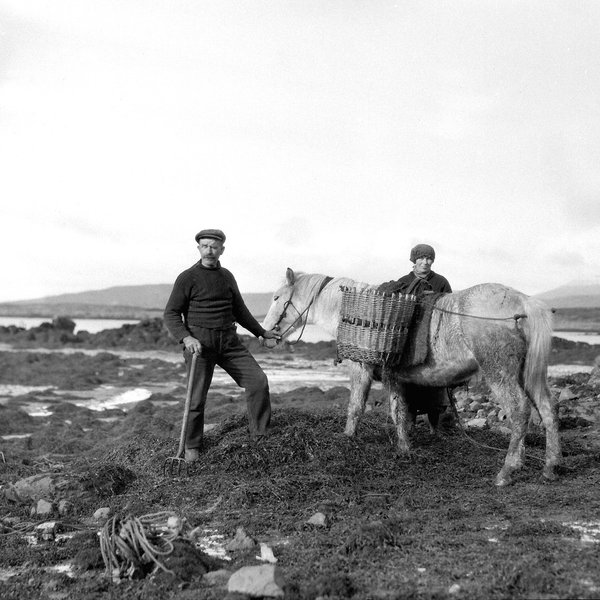
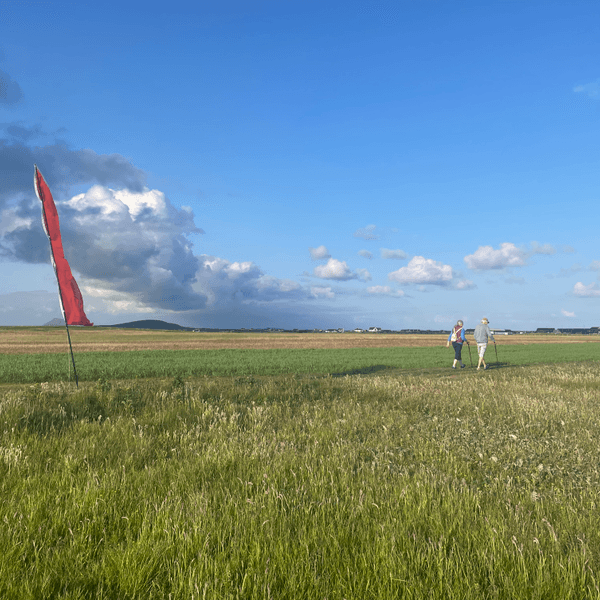
Commissioned by Taigh Chearsabhagh Museum & Arts Centre, this soundwalk explores the traditions and ecology of Uist’s machair. A Gaelic word meaning fertile, low-lying grassy plain, machair is one of Europe's rarest yet most species-rich habitats; only occurring on the exposed west-facing shores of Scotland and Ireland, 70% of which is found on Uist. Generations of low-intensity farming have shaped this unique landscape and encouraged wildlife over millennia. Developed in partnership with the local community, this work combines spoken narratives, field recordings, and compositions with archival sound recordings from Edinburgh University’s School of Scottish Studies, that chart over 70-years of oral history.

Contributors: Freddie MacDonald, Seoras MacDonald, Alisdair MacEachen, Anne MacLellan, and Matthew Topsfield.

Production team: Duncan MacLeod (composer), Kirsty MacDonald & Mairi McFadyen (creative ethnologists), and Sorcha Monk (creative producer).

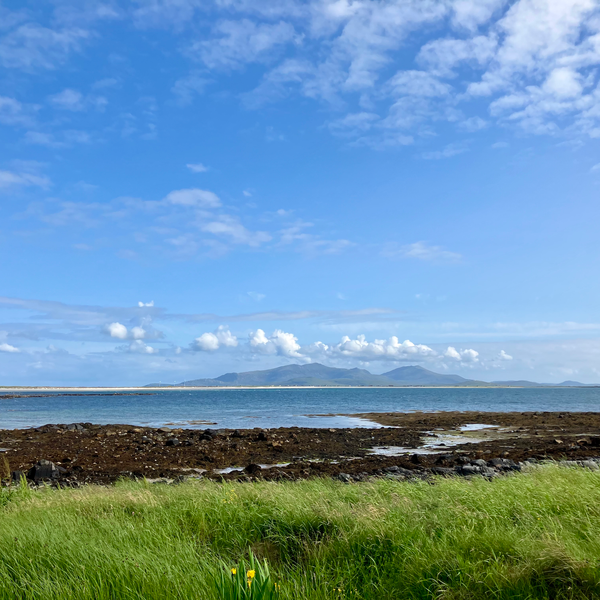
Cover photo: Liniclate machair, Tara Drummie, 2022.

If you have any questions or feedback about this soundwalk, please email contact@uistsoundwalks.org

V.24.1

© 2024 Duncan MacLeod. Unauthorised copying, hiring, lending, public performance and broadcasting of this soundwalk is strictly prohibited.

soundwalk machair hebrides acoustic ecology soundscape gaelic song uist benebcula oral tradition
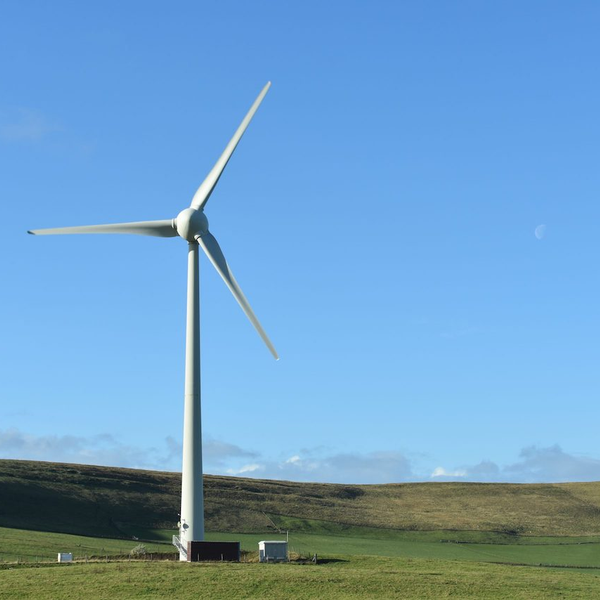
Section 4: Cropping & harvesting on the machair.

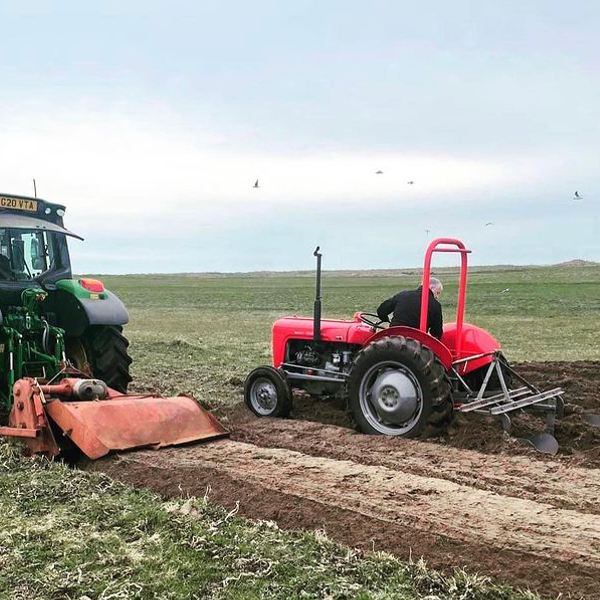
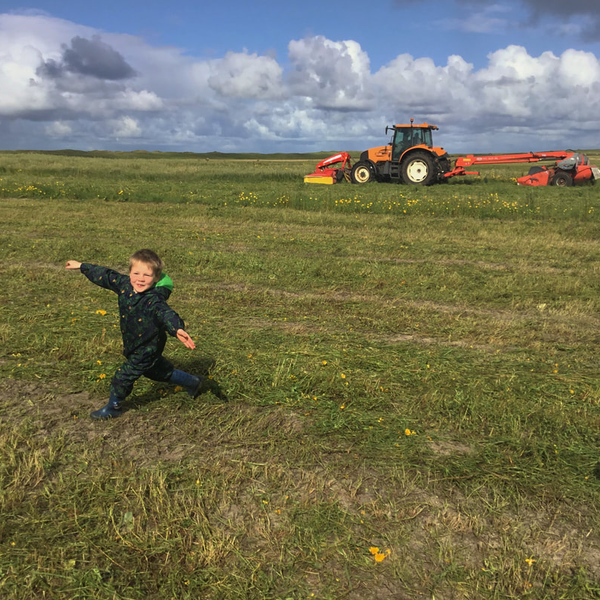
Turning left, we follow the track inland through the machair. In this final section, we learn about planting and harvesting crops on the machair. Crofters Alasdair MacAchen and Matthew Topsfield talk us through the system of cropping, and the types of grain commonly grown on the machair. We then hear from the next generation of crofters, brothers Freddie (aged 7) and Seoras (aged 4) MacDonald, who provide a running commentary on their dad and grandpapa’s harvesting crops on the machair. Music featured in this section includes the children's harvesting song Orra Bhonnagan a Ghaoil (Dear Orra Bonnagan) sung by Nan MacKinnon, recorded in 1958. Kenneth MacIver returns with another set of puirt à beul (mouth-music) dance tunes, and we finish with Angus Fletcher singing Am Buntàta 's an Sgadan (The Potato and Herring) recorded in 1971.

Credits: Orra Bhonnagan a Ghaoil - sung by Nan McKinnon, recorded by James Ross (1958); Lifting potatoes - Alasdair MacEachen interviewed by Mairi McFayden (2022); Machair cropping - Matthew Topsfield interviewed by Mairi McFayden (2022); Cropping on the machair - Alasdair MacEachen interviewed by Mairi McFayden (2022); Cropping traditions on the machair - Matthew Topsfield interviewed by Mairi McFayden (2022); Nam Bithinn na mo Mhaighdeann, Tha Fionnlagh ag Inneireadh, Mac a' Phì - sung by Kenneth MacIver, recorded by James Ross (1959); Bailing on the machair - Freddie and Seoras Monk MacDonald (2022); Am Buntàta 's an Sgadan - sung by Angus Fletcher, recorded by Morag MacLeod & Ian Fraser (1971).

Photo: Harvesting on the machair, Sorcha Monk, 2022.

1 sound

DOWNLOAD OUR APP TO DISCOVER THIS TOUR AND MANY OTHERS.

play-storeapp-store

Or start creating tours, treasure hunts, POI maps... Just let your imagination guide you.


Other walks nearby

Orasaigh

Orasaigh

Boisdale, Isle of South Uist
Orasaigh is a geolocative acousmatic soundwalk composition that was developed in 2023 as part of the exhibition 'Orasaigh', a collaboration between poet Steve Ely, photographer Michael Faint, and composer Duncan MacLeod. Commissioned by Taigh Chearsabhagh Museum and Arts Centre, the project draws upon the landscape around the tidal island of Orasaigh, located on the coast of South Uist at Boisdale. Ely’s visionary poem, whilst always remaining anchored in the island, roams widely, exploring a range of themes related to Uist and the wider world – sea level rise, the crisis of the ‘sixth extinction’, history, culture, politics, conflict and class. Faint and MacLeod vividly capture the spirit of the place through their respective mediums, creating an independent yet complementary subjectivity. As with Ely’s poem, the soundwalk is rooted in the landscape through the presence of soundscape compositions, utilising immersive field recordings captured on location. Elsewhere, material for bass clarinet and highland bagpipes, along with creative reimagining of archival sound recordings from Uist, draws upon the Isles' rich musical heritage through Gaelic song and pibroch (an art music genre associated with the great Highland Bagpipe). The work of the three artists combines and interacts to produce a uniquely evocative response to a rich and resonant landscape that affirms the vitality and resilience of the human spirit. The island itself becomes a dual symbol of precarity and hope in the crisis of the Anthropocene. Poem: Steve Ely Narration: Steve Ely Music & Soundscape compositions: Duncan MacLeod Bass Clarinet: Charlotte Jolly Environmental field recordings: Juraj Fajnor & Duncan MacLeod Commissioned by Taigh Chearsabhagh Museum & Arts Centre, with funds from the Arts and Humanities Research Council
author avatar
Hebridean Soundwalks
free

Are you a creator?

START HERE

Privacy & cookie policy / Terms and conditions

© ECHOES. All rights reserved / ECHOES.XYZ Limited is a company registered in England and Wales, Registered office at Merston Common Cottage, Merston, Chichester, West Sussex, PO20 1BE

v2.5.15 © ECHOES. All rights reserved.