The Road to Monaghan

39 ECHOES

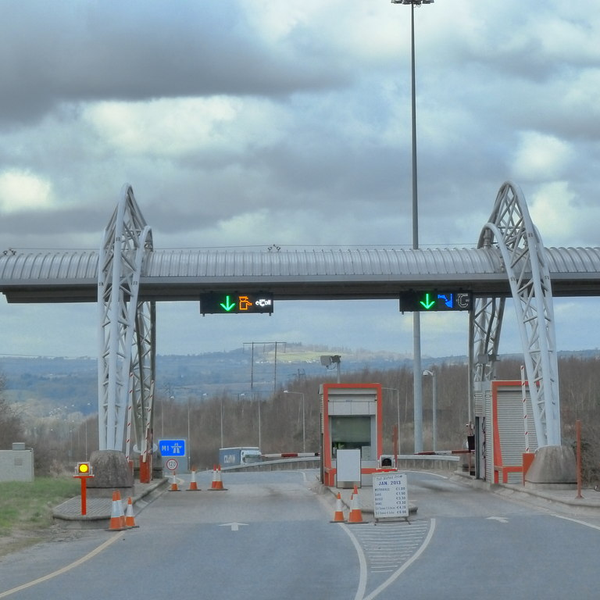
This is a storytelling app based on the drive up to Monaghan from Dublin Airport. We assume you are driving via the M1 Motorway North to Belfast, Then turning off at Junction 14 and the A33 to Ardee. And from there following the N2 North to Monaghan.
Typically, the Journey takes an hour and twenty minutes. This is not a sat-nav so check a map. Keep your eyes on your driving and your hands on the wheel. No Laughing! We’ll let you get onto the Motorway and get used to the car before we start telling stories. If you've any sugestions contact me seamustreanor@yahoo.co.uk

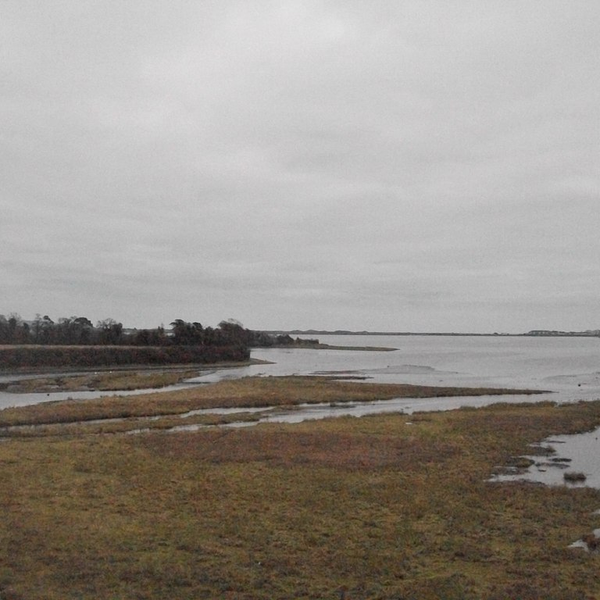
The Boyne River

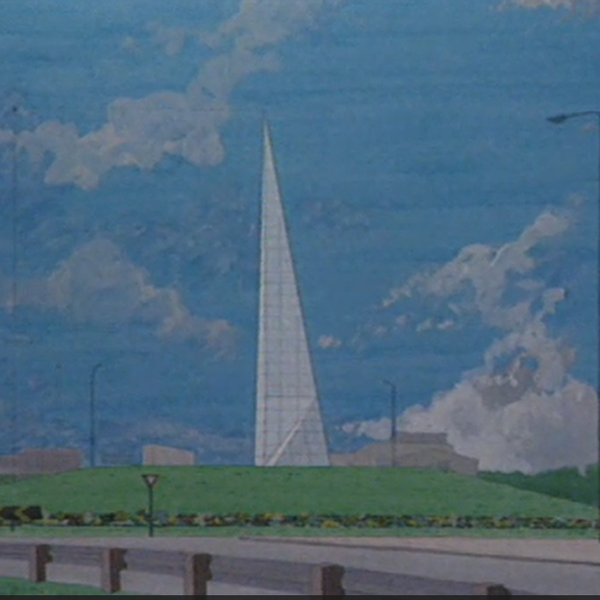
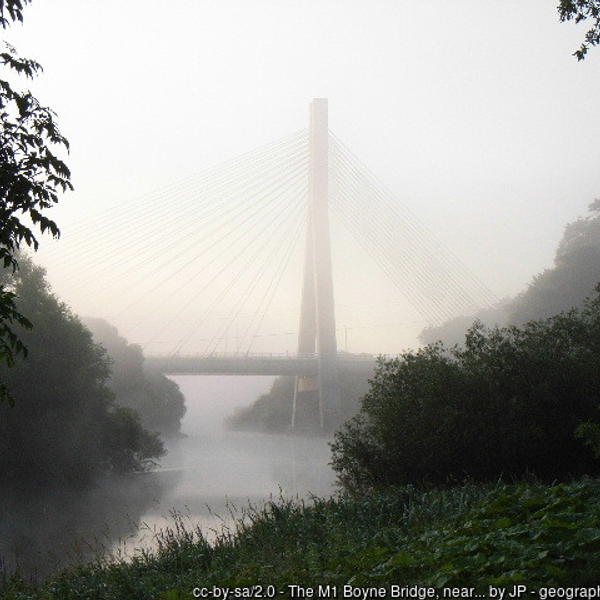
The Boyne We could take the whole journey from Dublin to Monahan, and further, and just talk about this river. But we’ll just put up five bits, in reverse order: 1. In 2013, the bridge was named the Mary McAleese Boyne Valley Bridge, after the first (and to date) only female President of Ireland. Why after a living person? Because no other bridges in the South, the Republic, the 26 Counties are named after a woman. Was it controversial, yes, because locals wanted a local name, hence the Boyne Valley bit.
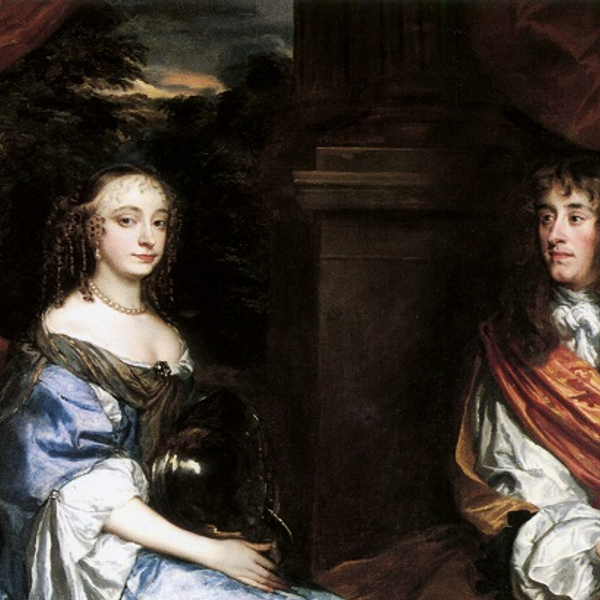
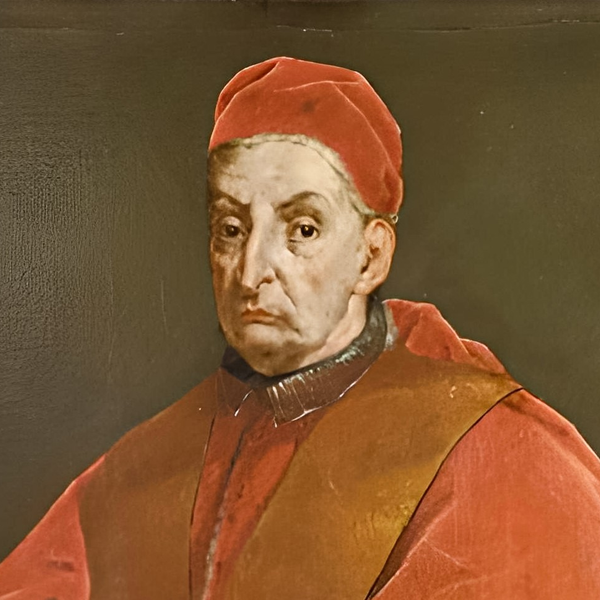
  1. Down the river in Drogheda is the head of St Oliver Plunkett, in St Peters Church. He was the Catholic Archbishop of Armagh, in the time of Charles II, and had by all accounts spent his time tending his flock. In 1681, he was framed in Ireland for treason, insurrection and rebellion, he was tried in Ireland. The case collapsed. He was then tried in London, in a trial no-one believed, not the prosecution, not the English Lord Chief Justice, not even King Charles himself. He was hung, drawn and quartered at Tyburn in London, just down from Marble Arch, if you know it.

  2. As you cross the bridge – to the west you can see the site of the 1693 Battle of the Boyne. Where the English King James II lost to the Dutch William of Orange, and Ireland lost either way. Luckily there’s a café and an interpretation centre there so it’s worth a visit if a) your hungry, and b) you don’t know anything about it

  3. The river has been a highway for since people came to live in Ireland after the Ice Age. In the last ten years or so, when the river was low, twelve hollowed tree-trunk boats were found along the banks. They dated from the megalithic to the medieval.

  4. Newgrange, the iconic megalithic tomb, is only six miles up the river, it is over 5000 years old. It has a chamber aligned with dawn on the winter solstice on 21st December. At that time the light of the sunshines directly into the middle of the tomb. You can enter a raffle to be there. There are others up and down the valley, from the same period, but they don’t have cafés, and interpretation centres. And I haven’t even told you how lovely it is to walk along it. There is too much to say about this river

1 sound

The Tinure Donkey and the Ghosts of Red-Gap Hill

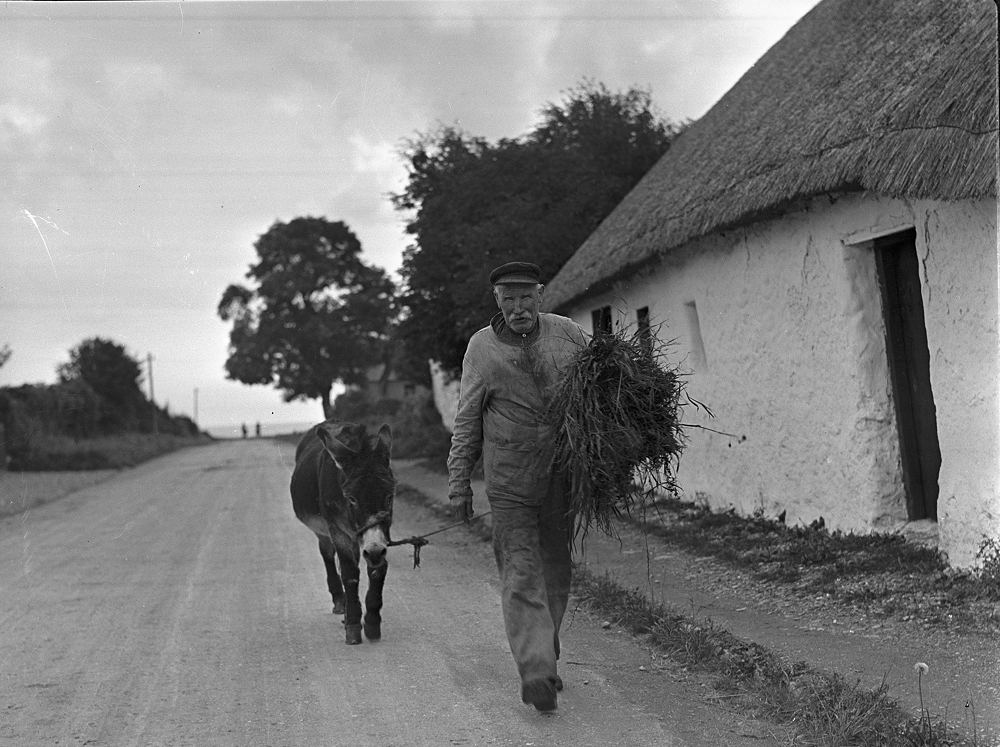
The Tinure donkey and the ghosts About twenty years ago [about 1910), there lived in this parish of Tenure, an old man named Dan McCullough, who used to see a ghost nearly every night. One night he was coming from Drogheda with a donkey, the donkey stopped seven times from the dispensary to the Red Gap hill, that is the place where Cromwell fought his battle. The poor old man would take off his hat, and put it on the donkey's eyes, and he would move along. Every time the donkey would see a ghost he would stop, and start sweating, and try to turn on the road. That would happen any time he would be late coming from Drogheda on that part of the road. Around about that locality, a great many people see a ghost. There is a gate on the top of the Red-Gap hill, which keeps shaking the calmest night of the year at twelve o clock. A little north of the Red-Gap is another ghost place. One night a man was coming with a bundle of hay on his back, when crossing a stile, he felt no weight on his back. He looked behind him, and saw about twenty little men. He went on farther, and just when he was going past a place called the "middle gap", all the little men disappeared. They were called the good men. Plenty of people hear footsteps late at night at that place. https://www.duchas.ie/en/cbes/5008866/4962225/5078770 The Schools’ Collection, Volume 0674, Page 284 Photographer Maurice Curtin https://www.duchas.ie/en/cbeg/6136 The Photographic Collection, A015.15.00018

1 sound

The Fairies of Roodstown

One of them, Lawrence Taffe, tells this ghost story: There is a certain field in the district of Roodstown, where there are fairies. This old man, who lived about a century ago in 1840, was always going home late, and was usually drunk. Then someone warned him not to be going across this field after midnight, but in return, he told them that he would fight all the fairies in Ireland. This night he was going home after midnight, and he was drunk. As he was crossing the field, he got a slap on the face, which knocked him. He rose, but got the same again. He lay there groaning, and while thus, a little red man came up to him, and said "Now my good man, you must come for a ride to the Slieve Gullion mountains". The old man refused, but the next place he found himself, was on top of an enormous horse. The little man told him, that when he would want the horse to jump anything, he should say "High over all". But anyway, when he was near Armagh, a big river, with a ditch on the side opposite appeared. "Beggora, she will never jump this". So instead of saying "High over all", he said "Right through all", so excited was he, but the horse jumped through the ditch, leaving the man behind, and him stuck fast in the ditch. It took the man three hours to get out, and three weeks to get back home. So, he never said that he was not afraid of the fairies after that. Told by Laurence Taaffe of Roodstown, to Nancy Conlon of Drumcashel, County Louth duchas.ie Photograph: https://www.duchas.ie/en/cbeg/4625; The Photographic Collection, A001.29.00038 Photographer Åke Campbell 1935

1 sound

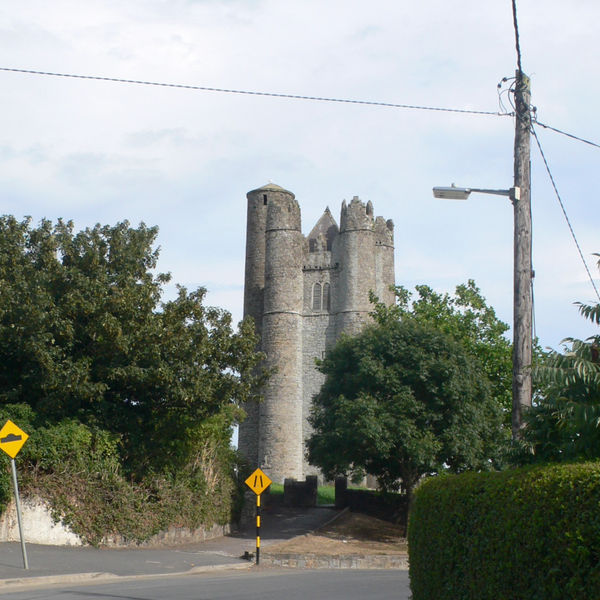
Roodstown Castle

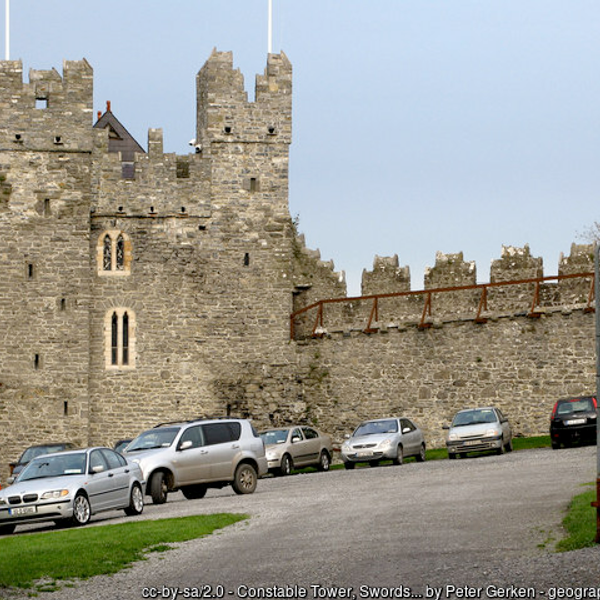
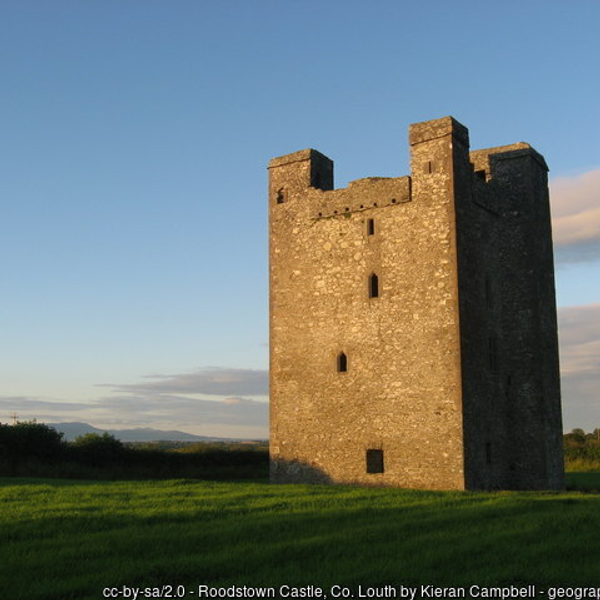
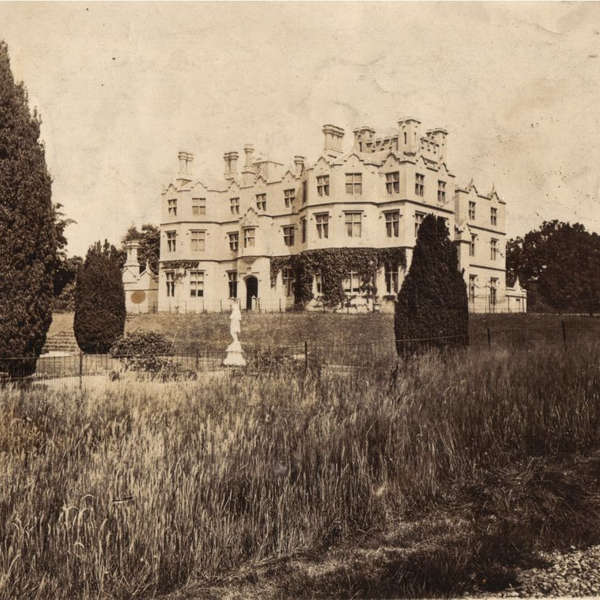
Roodstown Castle can be seen on the hill to the north (to the right if heading to Monaghan). If you have time on the way back, it is worth a small detour just to see an intact £10 castle. £10 castles were built by local lords, paid for by Henry VI Locally associated with the Taffe family, yes Taff, as in the nickname for the Welsh from the river through Cardiff. The Taffe’s built it and number of others around Ardee, and Carlingford, in the 1400s. They weren’t blow-in’s they had been around for over three hundred years even in 1400. But, the Taffe’s went onto to be on the losing side in The War of the Three Kingdoms in 1690, and they lost all their Irish Land, and the First World War in 1918 where they lost all their Irish titles, the English being sore winners. They are still known as the Graf von Taffes in Europe. Oh and there are still Taffes around here, only not Counts and Grafs.

One of them, Lawrence Taffe, tells this ghost story: There is a certain field in the district of Roodstown where there are fairies. This old man, who lived about a century ago in 1840, was always going home late and was usually drunk. Then someone warned him not to be going across this field after midnight, but in return, he told them that he would fight all the fairies in Ireland. This night he was going home after midnight, and he was drunk. As he was crossing the field, he got a slap on the face, which knocked him. He rose, but got the same again. He lay there groaning, and while thus, a little red man came up to him and said "now my good man, you must come for a ride to the Slieve Gullion mountains". The old man refused, but the next place he found himself, was on top of an enormous horse. The little man told him, that when he would want the horse to jump anything, he should say "High over all". But anyway, when he was near Armagh, a big river, with a ditch on the side opposite appeared. "Beggora she will never jump this". So instead of saying "High over all", he said "Right through all", so excited was he, but the horse jumped through the ditch, leaving the man behind and him stuck fast in the ditch. It took the man three hours to get out, and three weeks to get back home. So, he never said that he was not afraid of the fairies after that. Told by Laurence Taaffe of Roodstown, to Nancy Conlon of Drumcashel, County Louth 422 words

https://www.duchas.ie/en/cbes/5008852/4961104/5074900 The Schools’ Collection, Volume 0670, Page 005 Image and data © National Folklore Collection, UCD. See copyright details »

1 sound

The Jumping Church of Millextown

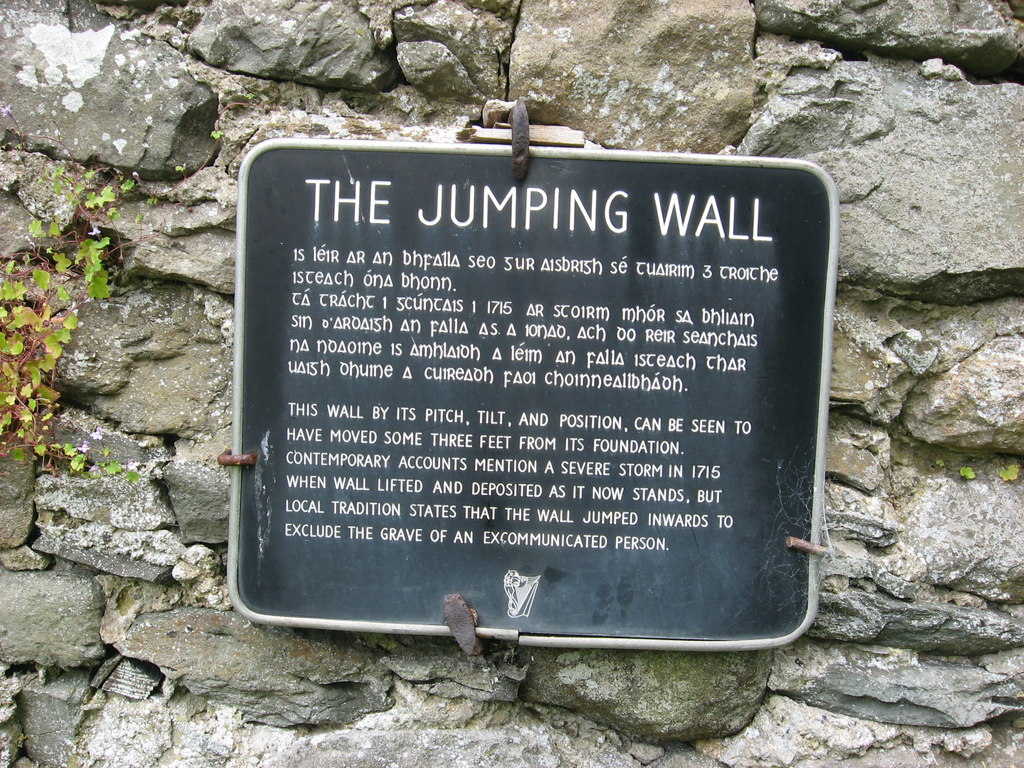
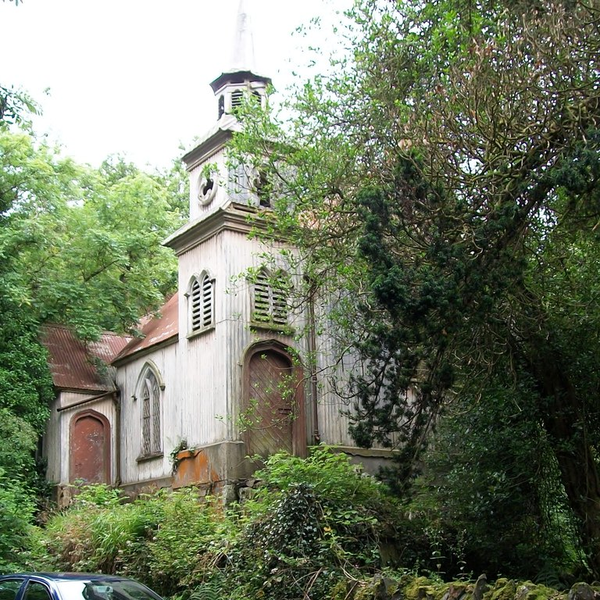
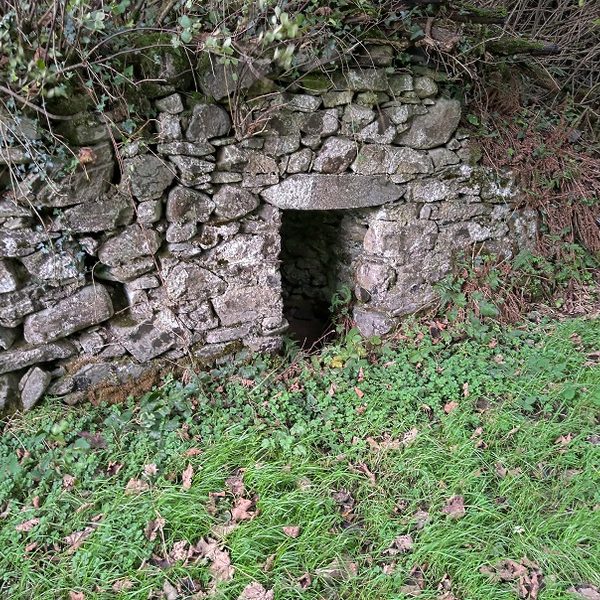
Just south of Ardee we have the jumping Church of Millextown, having been one of the many religious houses which fell a victim to plunder and destruction, it was reduced to ruins and subsequently became a place of burial only. Immediately inside the end wall of the church was a grave containing the ashes of one whose religious opinions were not considered orthodox to warrant his being interred within the sanctuary. However this may be, the end wall was discovered one morning by some mysterious and, as yet, unexplained means, to have changed its position, moving so far inward as to leave the mouldering remains of the "unbeliever" outside. This might be considered fabulous and written in the language of fiction, but, it is, nevertheless, true. By whatever agency it has been accomplished the wall is not now, where it was originally built. It is about four feet from the foundation wall, the grave occupying the space between. Whatever difficulty visitors may find in explaining this phenomenon, they will experience none whatever in consulting the facts, as both the wall and its foundation are still perfect, with the obnoxious grave between them. Hence it has been called the "Jumping Church" of Millextown. https://www.duchas.ie/en/cbes/5008848/4960933 The Schools’ Collection, Volume 0668, Page 360 Image and data © National Folklore Collection, UCD. See copyright details » You can still go and see it – and if you have a better explanation, tell someone.

1 sound

Farney and the Earl of Essex

Farney is the name of the first Monaghan barony we come to from the south.
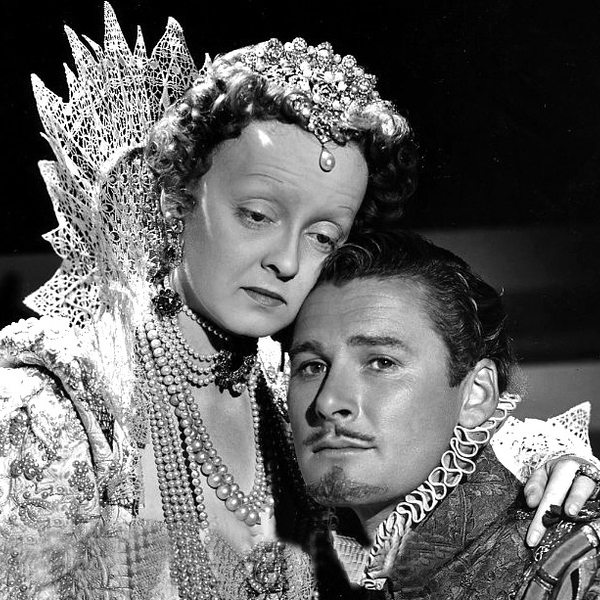
If you are of a certain age or if you watched black and white films on TV growing up you may remember Erroll Flynn playing the Earl of Essex against Betty Davis’s Queen Elizabeth. Well that Earl of Essex was given Farney (over the local Macmahon) by Hugh O’Neill, The O’Neill, way back in 1599, to make him go away. Essex did only to get into trouble with Elizabeth and was executed two years later.
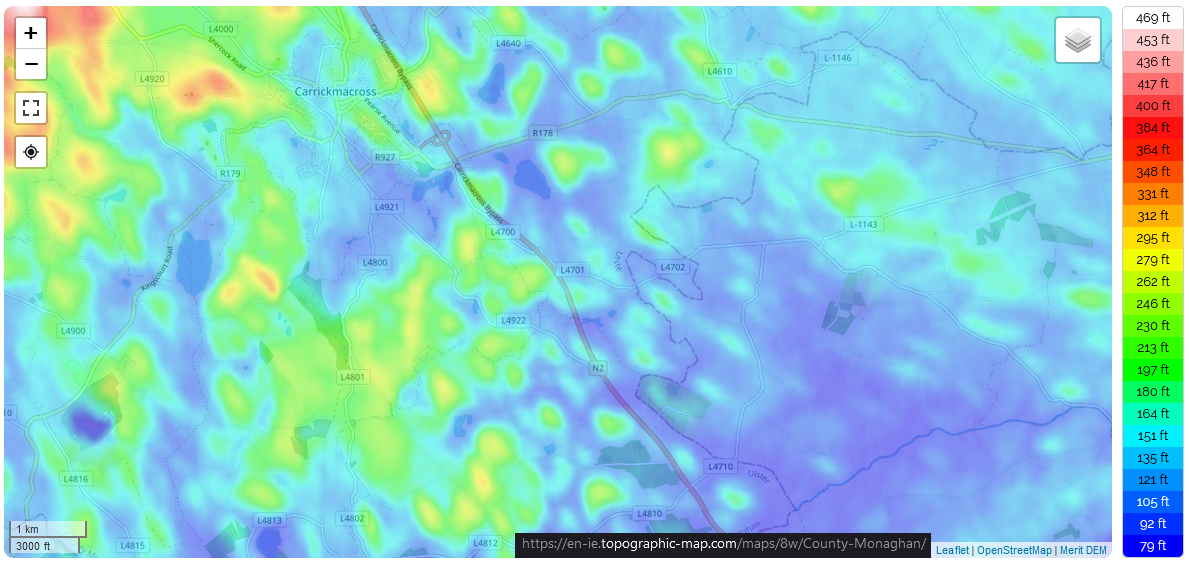
Because it was ‘officially’ in English eyes owned by the Essex’s, his family, his daughter, legally held onto Farney. Farney and Monaghan for similar reasons were never ‘planted’ as such. Planted being in modern terms meaning ‘complusory purchased’ or ‘eminent domain’ without the compensation involved. So the Barony was divided between Essex’s descendants. the Baths and the Shirley’s. The Shirleys took the land west of Carrickmacross Main Street and the Baths east of it. Both families remained Landlords for the next three hundred plus years

The following is told by Mrs Mary Burns, 100 years of age in 1938 to her granddaughter Kate Anne Finegan. Both of Lisnagunnion, Co. Monaghan

Our local landlord was Lord Bath, Bath and Shirley got the big estate around Carrick and our farm is on Bath's estate. They came into possession of this land in the 17th century. Queen Elizabeth gave the whole estate to Lord Essex. He had two daughters and when he was dying he left the estate to them. One of the daughters married a Shirley and the other married the Lord of Bath and this is how they came to own the land. The estate was divided by a running through Carrick which divided the Main St. and gave one side to each.

All of Baths were supposed to be good and were liked well by the people. When they got these lands they divided them into farms. Farms were never subdivided among members of the family in marriage. The landlord had never any special powers over his tenants and they were never punished for trivial acts. Long ago the tithe money would be gathered around here. It was not gathered in money but in value. The best remembered tithe proctor was Cupid Kiarnan and anyone who did not pay the tithe money ten stooks of corn would be taken from his field. Not many people in this district were evicted. Although Lord Bath was liked well by the people he was a bit selfish. One day as he was riding on his horse over a race course he hit an Orangeman with his whip and said "A man of money can do what he likes" and the man took out his revolver and struck Lord Bath off his horse with it and said "and a man without money can do something too".

One of the unintended consequences of the takeover of Farney by Essex’s descendants was that Irish was spoken here longer than anywhere else in Monaghan. Because the land was owned by the Baths and the Shirley’s it wasn’t planted like most of the rest of Ulster. The native Irish remained in the majority and kept their own tradition. However then the Famine struck here worse and Farney lost over 40% of its’ population in less than ten years.

1 sound

The Corrinchago Fairy

You see the lake down to the right, that was known as Corrinchago lake in the townland of the same name. This is probably the best fairy story I’ve heard in English as opposed to the Irish. I look forward to be corrected.

On the top of Corrinchago hill there is a fort called Corrinchago fort. The people who owned this farm often say that they still hear the fairies sing-and-dance to fairy music. Here is a story told by a woman who lives in the farm presently and who says she remembers the day of this happening. She is 80 years old on 1st Jan '38. Her father had about 3 acres of flax beside Corrinchago Lake. This day they had a boon of lovely boys-and-girls, pulling the flax. She was only a girl of 5 years of age at the time. Her mother and two neighbour women were cooking the dinner for the flax pullers which consisted at that time of a large pot of champ (mashed potatoes) oat cake made on the grid-iron and baked or roasted in front of a turf fire, along with a bowl of sweet milk. This meal was served at a large table in the middle of the floor like this. A large dish with champ piled up on it was placed in the middle of the table, in the centre of the champ a hole was made and about 1/2lb of butter was put into this hole. The workers each got a spoon and dipped each spoonful of champ in the butter, ate a piece of oat cake, and drank the sweet milk with it. No tea or second course was served. In those days a boon might consist of from 30 to 40 according to the popularity of the farmer who had his flax to pull, in the chance of a nice flax-pulling-dance taking place that night. On this special occasion there was to be a dance so this fact was partly responsible for 40 pullers. Needless to say the cooks were very busy and anxious about the dinner which was always due at 12 noon. About 11.30 am the cooks espied a very small woman coming up the boreen. She was dressed in a black skirt check apron with patch pockets and a red kerchief on her head. She carried a stick and a small white bag (size of a 1/4 stone paper bag) under her shawl. She knocked at the door and asked for some oat meal. The bean-a-tighe who was a Mrs Connolly (bhrian ardghail) went to her and told her they were very busy and to call back after the dinner. She would help her, as the meal by the way was out in a barn loft and it would take away too much of the woman's time to go up in the loft in it at the time. This little beggar woman "turned-on-her-heel" as is said around here and never spoke, but went her way. At the same moment the story goes that very strong gust of wind blew from the fort in the field where the flax pullers were and blew the flax, the beads, the bands in all directions through the country and also lifted in the air the prettiest girl in the boon, and flung her into the middle of Corrinchago Lake, and then formed circle within circle while she was going to the bottom of the lake. This girl was 17 years of age- the eldest girl of the lady of the house who refused the oaten meal to the wee beggar woman till after dinner. Needless to say, there was consternation among all and after a few minutes all realised what had happened and they got drags, chains, currachs & even tubs were used as boats to take the men to the middle of the lake to see if they could rescue her, but no trace of her was to be found.

Some old man in the district suggested that the woman (mother of the girl) who sent the "wee" woman off till after dinner should leave a bag of oaten meal at the fort, to see would the any result. And she did overnight. Next day a great gust of wind came, and a lovely man dressed as a king, in clothes of most brilliant colours, came riding on a grey steed down from the Corrinchago fort. He came into the field where the flax pulling boon was some days before, leaped straight into the air and down into the middle of the lake and at the same spot where the girl was blown into the lake.

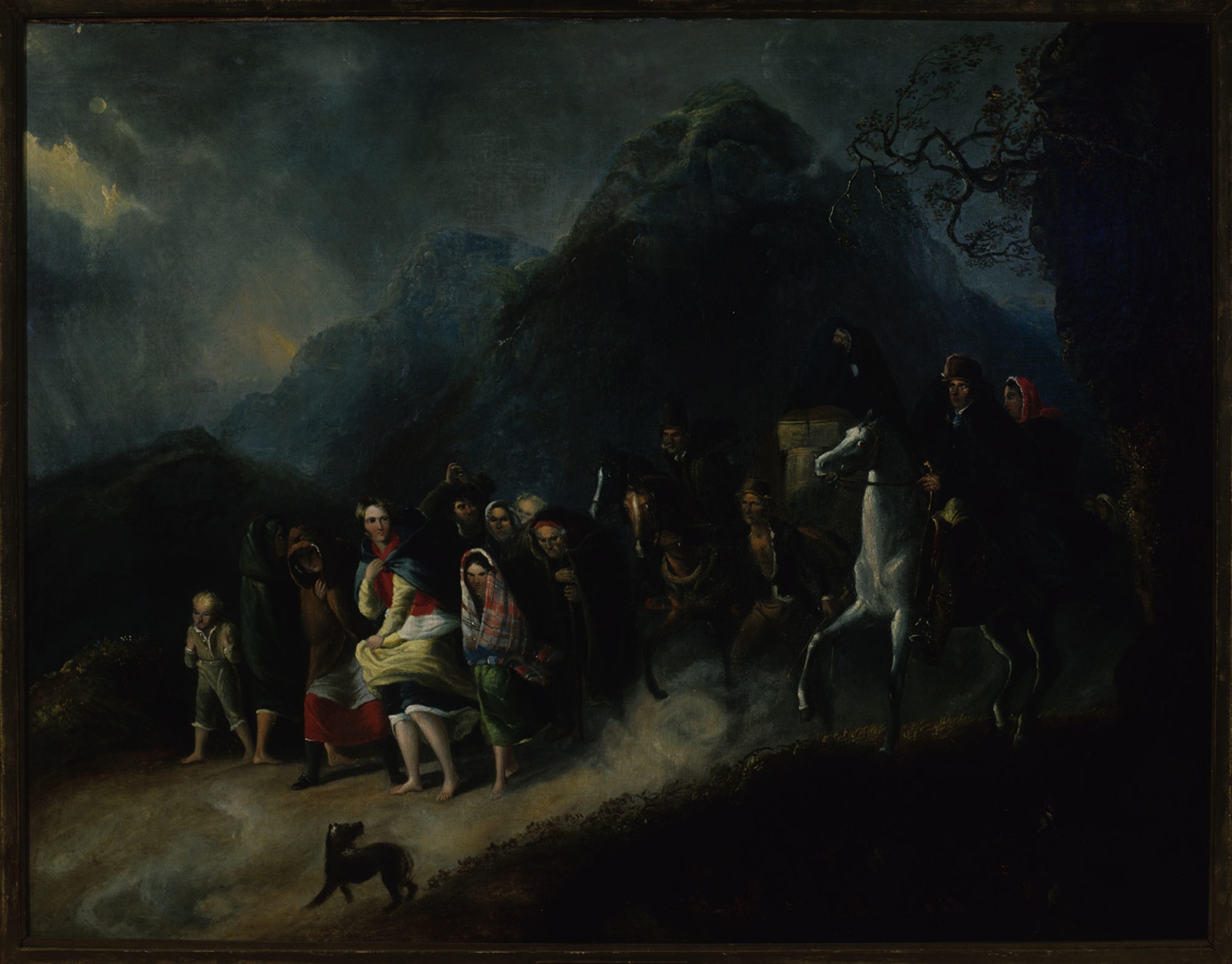
All those present looked on in amazement, and as the horse and rider were going down, circle after circle was appearing on the surface of the water. After the lapse of a few seconds, the rider and horseman appeared again, and the lady who was taken away a few days before this, was seated on the grey steed behind the man who appeared as a King, and was afterwards described as King of the Fairies in Corrinchago Fort. The horse galloped in the flax field, the lady jumped off, and the horseman and horse galloped off up the hill in the direction of the fort, and disappeared underneath the ground. The girl returned to her parents unharmed, but refused to tell what had happened except to say she was in a lively home. * This story has been told to me [the Schoolmaster] in presence of the school children by Mrs Anne Connolly - Corrinchago - 81 years of age [in 1938]. She is the cousin to the lady who was carried away. She can tell the genealogical table of almost every family in the district. She crossed to America 13 times, has all her passports and is now in receipt of the old age pension. https://www.duchas.ie/en/cbes/4723822/4716453/4937039 The Schools’ Collection, Volume 0936, Page 190 c/o National Folklore Collection The Connolly’s and their people still live in the area now.

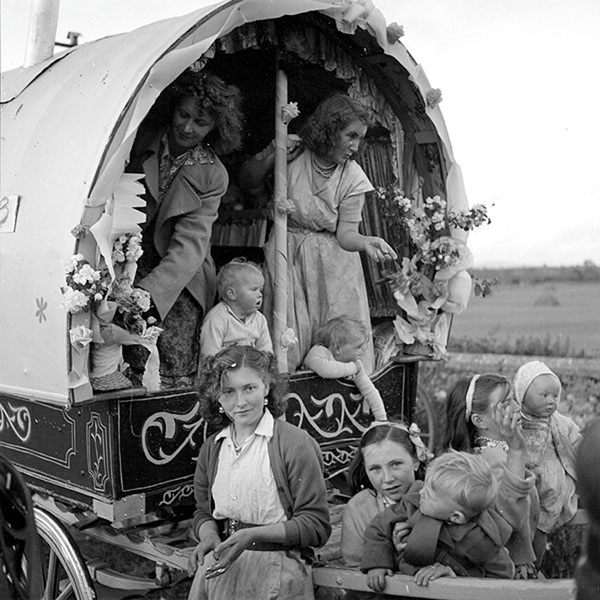
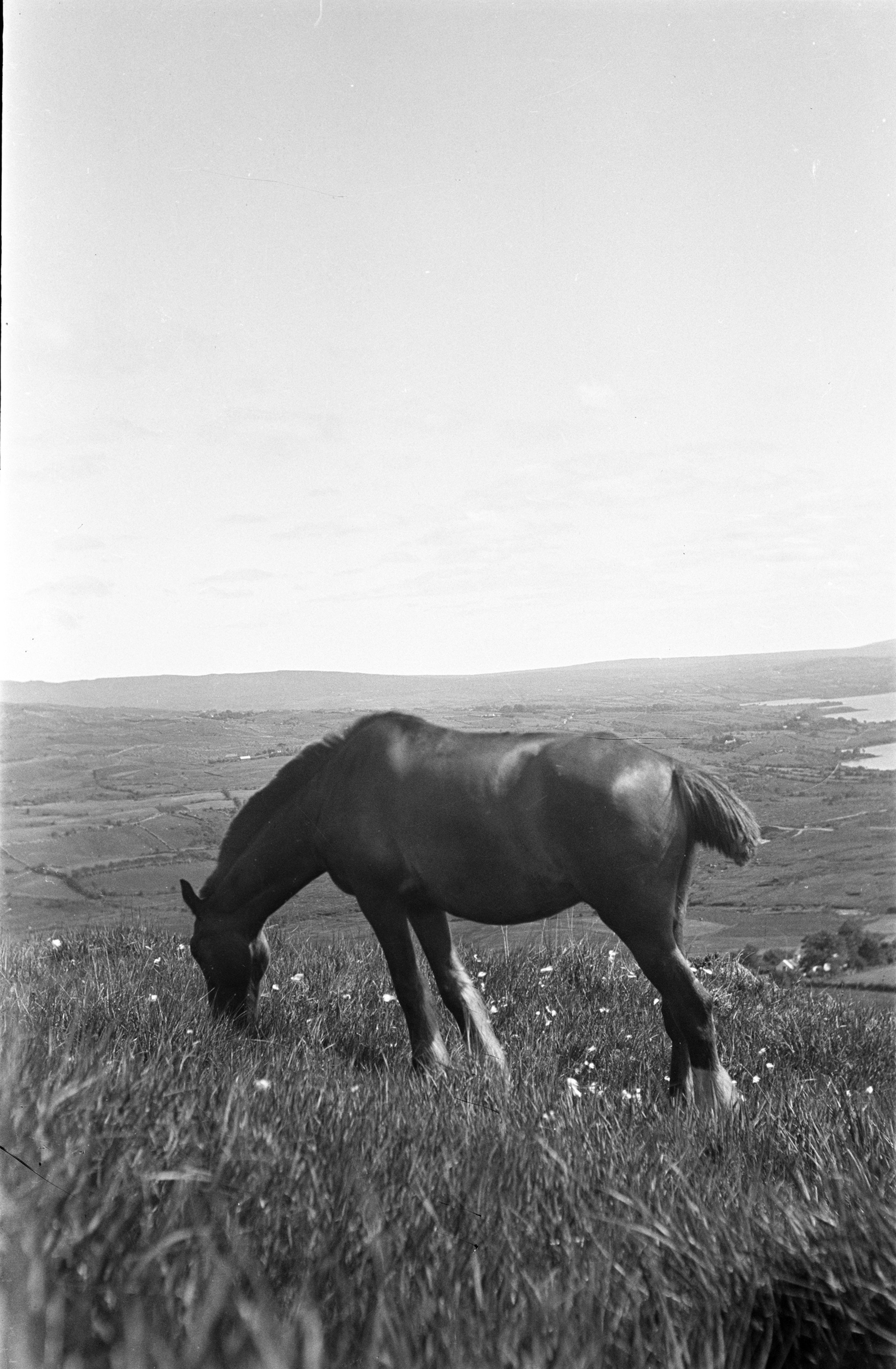
Image https://www.duchas.ie/en/cbeg/15703; The Photographic Collection, J012.06.00001Image and data © National Folklore Collection, UCD

1 sound

DOWNLOAD OUR APP TO DISCOVER THIS TOUR AND MANY OTHERS.

play-storeapp-store

Or start creating tours, treasure hunts, POI maps... Just let your imagination guide you.


Other walks nearby

National Botanical Gardens, Dublin Soundwalk

National Botanical Gardens, Dublin Soundwalk

Dublin
WALK DESCRIPTION This is a piece of music in 8 geolocated sections for location (field) recordings, synthesizers, and percussion. Between each section there is a short 'beat interlude'. It is experienced through the Echoes app and a pair of headphones. When you arrive at a specific location in the National Botanical Gardens, that location’s music will be triggered on the Echoes app. There is a suggested route by following each 'echo' and pathway; however, the sections can also be heard in any order. By taking in each of the eight locations, the total walk should last a little under an hour. SOUNDWALK INFORMATION Growing up close by, the National Botanic Gardens in Glasnevin have been foundational throughout my life. They were a place of exploration through my young childhood; a picturesque backdrop for photographing coming of age family events; a place of solace & escape through my teenage & young adult years; and throughout COVID-19 lockdown, it was one of the few places where it was possible to meet friends & family at a distance. Now as a father, it is a place of exploration once more, as I visit almost on a weekly basis with my young son. Moreover, it continues to be a place of solace & comfort. My dad is buried right next door in Glasnevin Cemetery, and when he died during strict lockdown in 2021, knowing that he was buried in such a beautiful place, surrounded by such an abundance of life, brought solace when we were robbed of the traditional grieving rituals that help us deal with such loss. On 27 January 2023, myself and my four-year-old son went exploring some of our favourite spots in the National Botanical Gardens, and by making location (field) recordings collected sounds that excited us. I have taken these location recordings home, and augmented or ornamented them by articulating the resonant frequencies found on the recordings on synthesizers and other instruments I have at home. The location recordings you can hear are the result of naively listening to not only the environment around us, but our place, and our impact within it. As a result, there is no attempt to edit or remove ourselves from the recordings, and at times you can hear myself and my son discussing things that we hear and see with wonder and appreciation. I hope you enjoy this little ornamented soundwalk guided by myself and a four-year-old, and enjoy exploring the beauty of the National Botanical Gardens. Feel free to follow the path that we took, or to make your own way around the different geolocations. I made this piece as preparatory research for an different work I'm currently writing for Plus Minus Ensemble as part of Zubin Kanga's Cyborg Soloists UKRI Future Leaders Fellowship at Royal Holloway University of London.
free

Are you a creator?

START HERE

Privacy & cookie policy / Terms and conditions

© ECHOES. All rights reserved / ECHOES.XYZ Limited is a company registered in England and Wales, Registered office at Merston Common Cottage, Merston, Chichester, West Sussex, PO20 1BE

v2.5.15 © ECHOES. All rights reserved.