Divine Comedy Landscape -- Spring 2024

18 ECHOES

Location: Firenze, Florence, Italy

The map includes spots in Florence, or in its immediate surroundings, that are either mentioned in the Dante's Divine Comedy, or that resonate with Dantesque environments and topics such as wilderness, wood, gardens, water, natural/urban barriers.

Badia Fiorentina Church

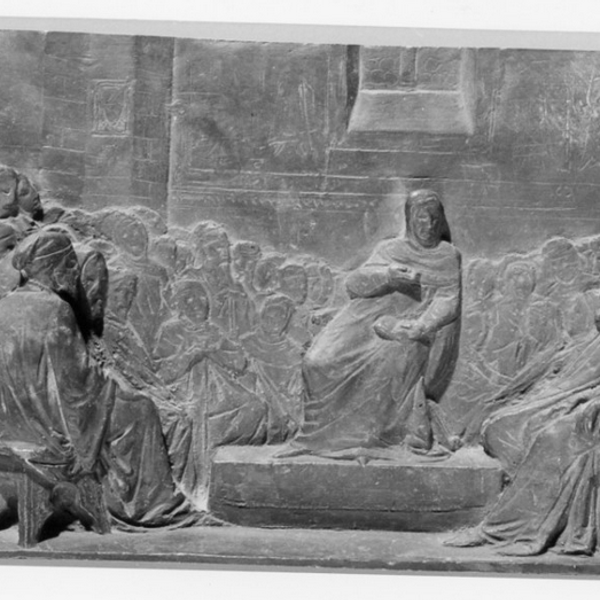
The Badia was founded in 978 by the Marchioness of Tuscany, and assigned to the Cassinese Benedictines. It is also a place crucially connected to the Dante and his literary work. In the Summer of 1373, a good number of Florentine citizens presented a petition to the Government of the People and Commonwealth in Florence, requesting to appoint a lecturer who could expound in public the lines of Dante’s Comedy. As the petition reads, these Florentines were “desirous of being instructed in the book of Dante, wherefrom, both to the shunning of vice, and to the acquisition of virtue, no less than in ornaments of eloquence, even the unlearned may receive instruction.” Only seventy-one years before, Dante had been accused of bribery, and condemned first to pay a fine (which Dante refused to do, claiming it would have meant pleading guilty) then to be permanently exiled from Florence. The petition was accepted. The appointed lecturer was another renown Tuscan author, Giovanni Boccaccio, who, on October 23, 1373, right in this church, opened his series of readings of Dante’s Comedy. The petition give specific indication as to the calendar of the lectures, scheduled “on consecutive days not being holidays, and in consecutive lectures, as is customary in these cases.” Boccaccio fell ill, and he interrupted his lectures at the canto seventeenth of the Inferno. Following Boccaccio’s suggestion, the title became Divine Comedy (Dante and his contemporaries would refer to it simply as Comedy).

Parco delle Cascine

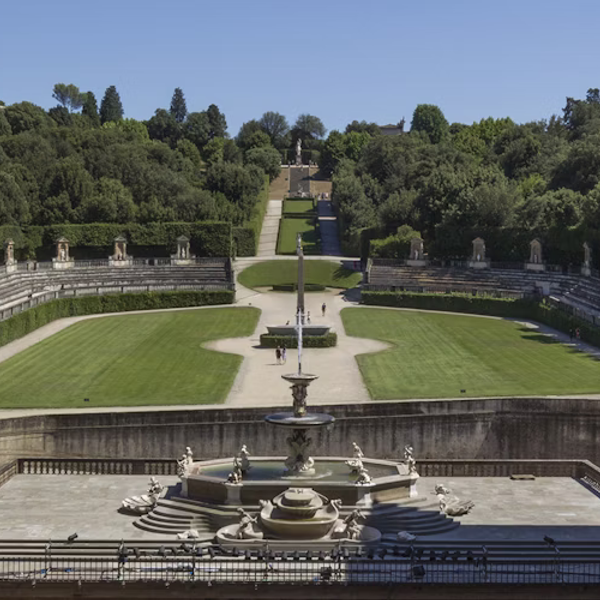
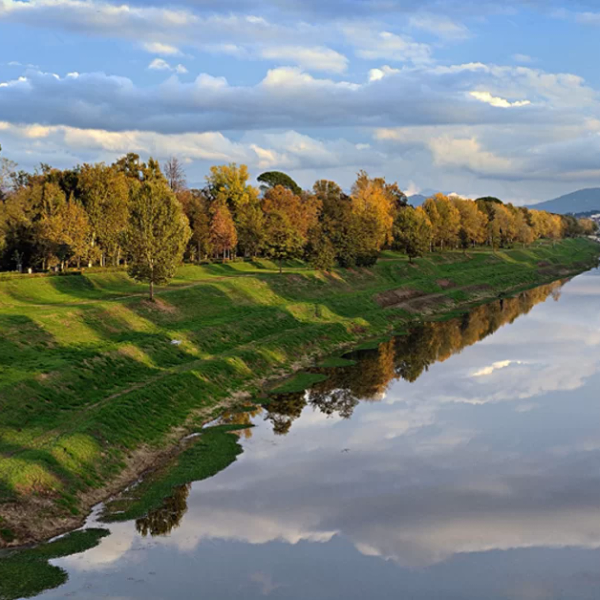
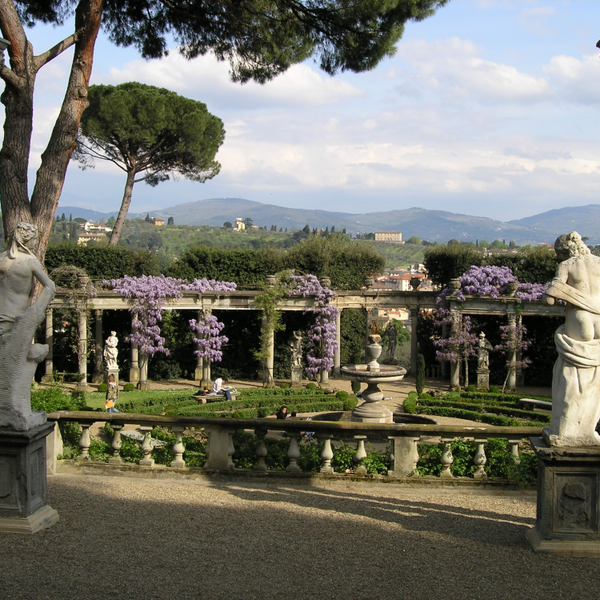
Cascine Park emerges as a verdant haven in Florence, offering a fascinating glimpse into the interplay between civilization and wilderness. Originally created as a hunting domain for the Medici family in the 1500s, the park's evolution mirrors the shifting perceptions of wilderness and its relationship with human civilization.

Positioned beyond the confines of Florence's old city walls, the park symbolizes the tension between urbanity and the untamed wilderness, echoing our class's exploration of Dante’s and Medieval ideas of walls, civility, and the encroachment of wilderness onto urban environments.

In its early years under Medici control, Cascine Park remained largely inaccessible to the public, embodying a curated vision of nature where wilderness was tamed, controlled and inaccessible. This privileged access to curated wilderness reflects the cultural constructions of wilderness e seen through the lens of human dominance and manipulation. Rather than a connection to religion, to God, nature exalts human excellence, greed and power.

However, as societal perspectives evolved, so too did Cascine Park. With the dawn of the 19th century, the park underwent a transformation, opening its gates to the public and becoming a symbol of accessible green space within the urban landscape. This shift mirrors broader cultural shifts towards environmental conservation and the recognition of the intrinsic value of wilderness in its untouched state. Cascine Park stands as a testament to the enduring dialogue between civilization and nature. It offers respite from city life, while also serving as a reminder of our interconnectedness with the natural world

Palazzo del Bargello

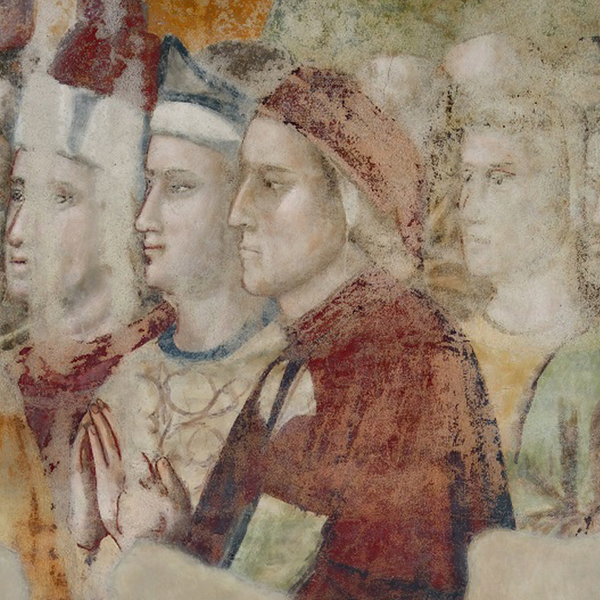
Although not mentioned in the Comedy or Dante’s other works. I think it is worth pointing out on the map as this is where Dante was condemned and sentenced to exile on March 10th, 1302, for the museum originally served as the highest magistrate of Florence city council, containing judicial offices and detention cells. Although according to Boccacio, the first seven cantos were written before Dante’s exile, the sentence nonetheless marked the beginning of the composition of the Divine Comedy and the parallel between Dante the traveler’s pilgrimage from hell to heaven and the poet’s wandering across the Italian land. It is also the exile that gave Dante a distance from and a fresh perspective into the political turmoil in his city, leading to the formulation of his later view that went beyond the split between Guelf and Ghibelline, expressed in both the Comedy and his more political work like Monarchia. On the other hand, on the walls of the Cappella del Podestà in the museum, there was the first known portrait of Dante by Giotto as part of the fresco in the cappella, done during 1333 and 1337, only a decade after Dante’s death. Here Dante is portrayed among the blessed in paradise, under the light of God, which is exactly the eternal afterlife that Dante envisioned for himself in the Comedy. Opposite to the blessed, there is a painting of Inferno and Satan that echoes Dante’s description of him at the end of Inferno. This work of Giotto suggested Florence’s belated recognition of Dante’s genius and in a way can be viewed as the return Dante never realised in his earthly life.

Basilica of San Miniato al Monte

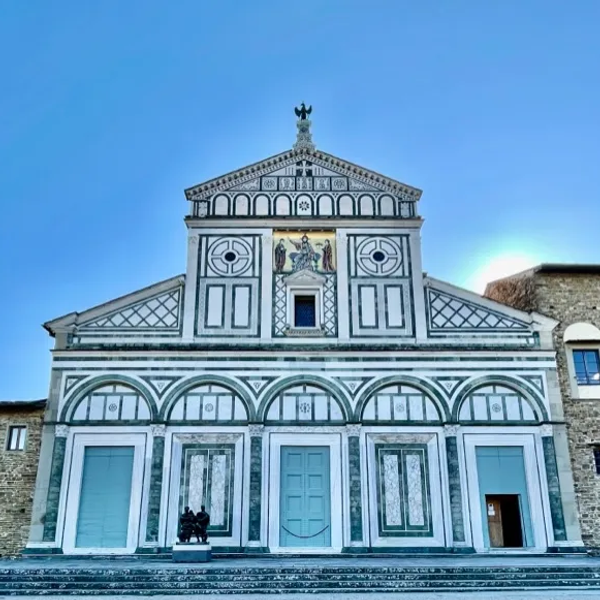
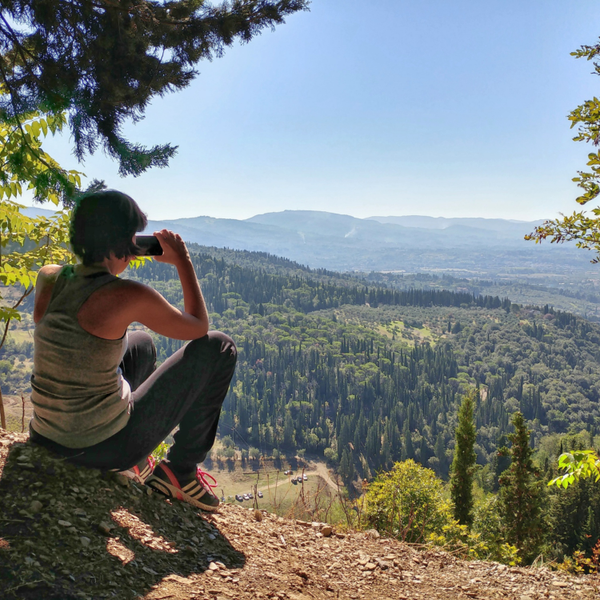
The Basilica of San Miniato al Monte, situated on one of the highest points overlooking Florence, is a prime example of Romanesque architecture. Constructed from the 11th to the 13th century, its design features a distinctive façade adorned with white and green marble geometric patterns and a notable interior marked by the rigor of its mathematical and symmetrical layout. Historically, San Miniato al Monte has served both as a religious site and a defensive position during the sieges of Florence. Its strategic location and fortified elements, including the battlements added in 1537, highlight its dual role in the city’s spiritual and military history. The church’s interior, with its extensive use of polychrome marble, mosaics, and the large, raised crypt, showcases the artistry and religious importance of the period. The basilica's elevated position and serene surroundings reflect the themes of ascension and contemplation—concepts central to Dante’s "Divine Comedy," particularly in the cantos dealing with Purgatory and Paradise. The presence of the martyr St. Miniato’s relics in the crypt underscores themes of martyrdom and redemption, paralleling the spiritual odysseys described by Dante. San Miniato al Monte's topographical and symbolic positioning bears significant parallels to the mountain of Purgatory in Dante’s "Divine Comedy". The mountain is described as a solitary peak rising to the heavens, isolated from the world, and serving as a place for purification and ascent to Paradise. Additionally, San Miniato, set upon a hill, stands apart from the urban sprawl of Florence, offering a physical representation of isolation and elevation. This separation from the city’s chaos mirrors the pilgrim’s journey upward through the terraces of Purgatory, seeking spiritual purification. In "Divine Comedy", the mountain of Purgatory is meticulously structured, with each terrace purging a specific sin to prepare souls for their ascension to Paradise. The architectural layout of San Miniato, characterized by its clearly defined geometric and spatial order, reflects this thematic structuring. Each part of the basilica, from the crypt to the nave and choir, serves a distinct purpose, guiding visitors through a spiritual narrative similar to the pilgrims’ progression through Purgatory’s levels.

Pescaia Santa Rosa

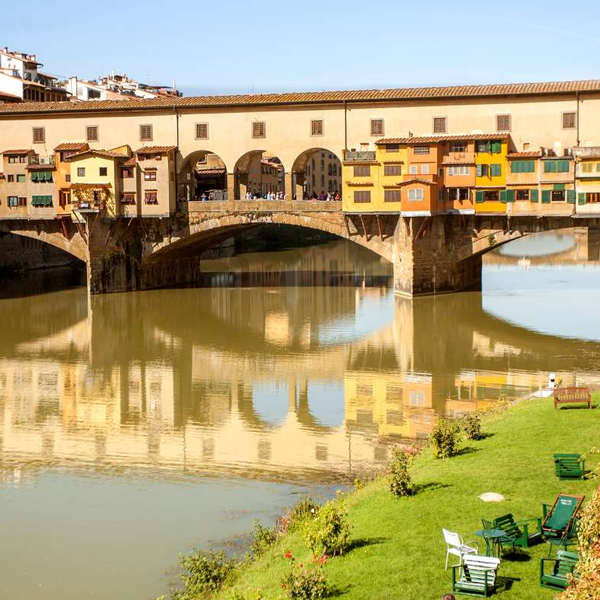
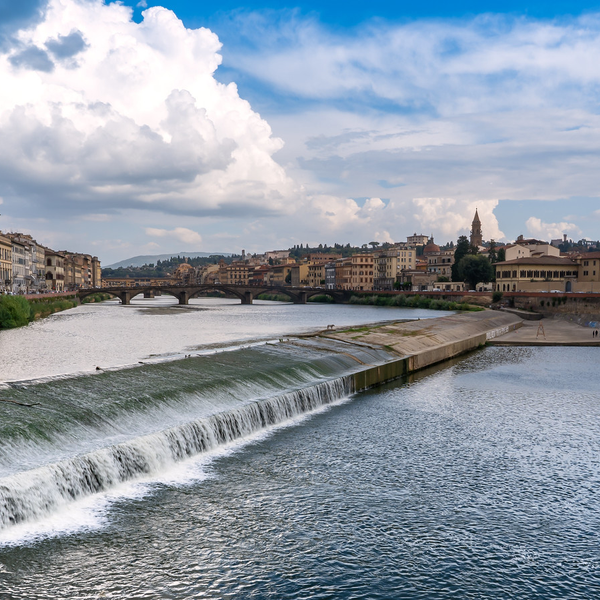
The Pescaia di Santa Rosa is a point on the Arno, where the river is dammed, making it possible to actually sit below the water level. In order to get there, you must climb over a low stone wall and descend a slope down to the riverbank. Once there, at low tide, you can walk out about halfway across the dam and sit down. While this particular spot is certainly not mentioned in the Commedia, rivers play an important role in the geography of the world which Dante constructs. Florence being, as Calvino would say, Dante’s “implicit city,” every river in the Commedia is in some sense a representation or a reflection of the Arno.

“The water that you see does not spring from/ a vein that vapor—cold—condensed—restores,/ like rivers that acquire or lose their force;/ it issues from a pure and changeless fountain,/ which by the will of God regains as much/ as, on two sides, it pours and it divides” (Purgatorio 28).

There are few other places—none that I know of along the Arno—where one is able to come into such visceral contact with the Arno river and the immense natural force it represents. Sitting out on the Pescaia di Santa Rosa, you hear the sound of water crashing onto water. You can meet the water on its own terms, at eye level, standing effectively beneath its surface. From this intimate vantage point, we see water doing as it always will in a perfectly arranged cosmos such as Dante’s: water will flow down. And it will do so with so much force, such deep conviction, for it has no other choice.

Giardino delle Rose

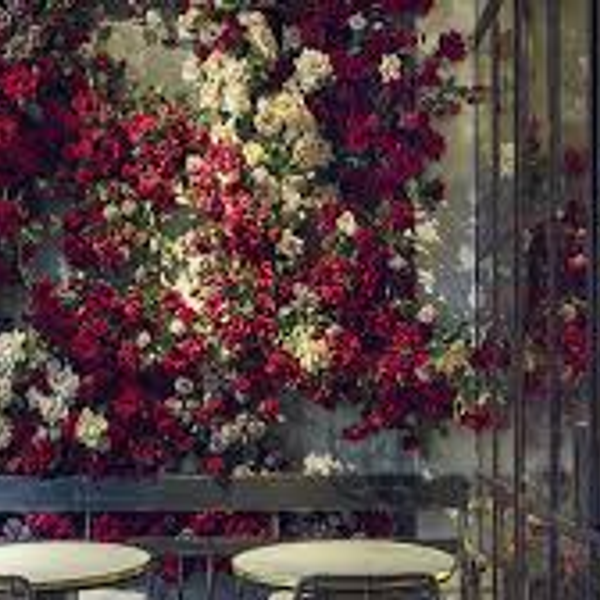
The Giardino delle Rose in Florence, designed by architect Giuseppe Poggi in 1865, is more than just a garden. Situated in Oltrarno, this garden extends over one hectare and is home to a collection of approximately 400 different varieties of roses. As I was wandering alone through the streets of Florence, I unexpectedly stumbled into the garden, and was immediately mesmerised. The mosaic of colours created by the roses, the layered design, as well as the breathtaking view of Florence, was simply enchanting. In Paradiso, Dante presents Heaven not just as a realm of general beauty but also as a structured universe where every soul finds its rightful place in a grand cosmic order, which he metaphorically describes as concentric spheres of light. This order finds a reflection in the Giardino delle Rose’s terraced layout and the careful arrangement of its roses, which mimic a sense of ascending beauty as one moves through the garden. Furthermore, Dante’s celestial rose, a key symbol in Paradiso, represents the ultimate union of all the blessed souls, mirroring the divine order. Similarly, the various species of roses in the Giardino delle Rose, each unique yet part of a cohesive whole, is a strong symbol of this unity in diversity. The feelings of contemplation and peace that the garden made me feel strongly resonates with Dante’s experiences in Paradise, where the beauty of Heaven inspires profound spiritual awe. Similarly, visitors to the Giardino delle Rose might find themselves enveloped in an atmosphere that, though earthly, hints at a transcending experience.

DOWNLOAD OUR APP TO DISCOVER THIS TOUR AND MANY OTHERS.

play-storeapp-store

Or start creating tours, treasure hunts, POI maps... Just let your imagination guide you.


Other walks nearby

Savonarola Soundwalk

Savonarola Soundwalk

These sounds come from a workshop organised by the CRESSON on the occasion of the Winterschool 2021. They were recorded between the 18th and the 28th january 2021 and I designed them in order to do a soundwalk which takes place around the Savonarola square. This soundwalk is a sonic photography and a composition of how this area sounds during an ordinary january week. Savonarola is a residential district full of vitality. Out from the touristic tour but very close to the city center. Here life is good and the demand to acquire a property is high. The crisis of tourism since the emergence of the Covid-19 showed the city center being emptied. Empty of tourists, students but also of inhabitants. But around Savonarola square, people continued to live day after day, always passing through or around it. For sure, there were more activities here than around the famous Duomo. In particulary, the Savonarola square gives us a pist to understand why this district is loved. I took the example of this square to describe the concept of "open and inclusive city" developped by Richard Sennett in his book « Building and dwelling : Ethics for the city ». So, we can say that the quality of the place is strong. Because many different activities take place together into it or around it, at different moments of the day and of the year. For example, the square sounds differently when summer's coming because this is the place to have a drink thanks to the little street bar with inexpensive prices and music...
free
Trattoria Angolo Pitti

Trattoria Angolo Pitti

Firenze
This is Trattoria Angolo Pitti- a restaurant a short walk across the river. When I came to Florence, I was eager to try all the touristy restaurants I saw advertised on social media, so I made it my mission to do my first month here. Though I enjoyed my meals at these restaurants, nowhere felt special or worth returning to immediately. My friend had invited me to dinner at their new favorite place, which soon became my favorite place. Trattoria Angolo Pitti had great food and an incredible staff, making the place and experience memorable. The staff offered exceptional services and shared stories about places special to them in Florence. They also asked about my travels and my time in Florence, making it a point to build a meaningful connection. This dining experience felt personal in a way that I had not experienced in Florence yet. Trattoria Angolo Pitti represented what many restaurants have lost in the wave of mass tourism and homogenous consumerism: authenticity. Popular dining spots have focused on simply becoming places for tourists to check off their lists, focusing on aesthetics and economic gains rather than building personal connections that give places a unique identity. Visiting Trattoria Angolo Pitti is a refreshing experience in a city where consumerism seems to strip restaurants of a distinct identity and make every restaurant, museum, and site feel the same. The city's soul is diminished in these areas where the primary focus is serving a mass rather than crafting a personalized, unique experience. Businesses prioritize maximizing their profit and status, which can be noted by the fact that many places try to serve as many people as possible, overpricing small portions of food and having quick interactions with customers. In attempting to conform to the global tourist markets, restaurants and other important sites in cities lose character, making them distinct from every other place. It is not that Trattoria Angolo Pitti serves unique food that cannot be found elsewhere, but it caters to an experience tailored to each customer, making the dining experience comfortable and homey. What truly made me feel connected to this place was that it reminded me of my dad's restaurant in Chicago. Connecting with customers was just as important as serving excellent food, even in a city where tourism causes individuals to lose sight of the value of personal attention rather than a homogenous experience. The food at both of these places definitely draws people in, but it is the people who make the experience. You want to return to a place that focuses on every table and handles the needs and satisfaction of each customer differently and with care. In all, having a place that feels personal and comfortable within a new city as a tourist is something special. It was obvious through my interactions with the staff and my observations of their encounters with other customers that Trattoria Angolo Pitti was an establishment driven by a passion to connect with people and elevate their dining experience, contrasting the often impersonal nature at touristy restaurants in Florence. In dining here, I learned that though these touristy places may be the most popular and sought-after, it is often the smaller, less-known places that offer richer experiences. Katerina Vasquez
free
La Memoria degli alberi  - La voce e i ricordi di Fabio Clauser

La Memoria degli alberi - La voce e i ricordi di Fabio Clauser

La Voce degli Alberi dedica una passeggiata sonora a Fabio Clauser, il decano delle foreste italiani. Da oggi, passeggiando nel cuore delle foreste Casentinesi gli alberi vi racconteranno la storia dell'uomo che parla agli alberi. A cura di Giovanna Iorio con la collaborazione di Lucio Lazzaruolo (Musiche & Audio), Gianluca Piovesan e Alessandro Bottacci. Partendo da Camaldoli in Toscana passa dall'Eremo e quindi costeggia Sasso Fratino lungo il confine tra le due regioni fino ad arrivare a Campigna in Romagna. Un uomo secolare a tutela di foreste millenarie: Fabio Clauser compie 100 anni Eventi a Arezzo „ Originario del Trentino, ormai da oltre 60 anni vive fortemente legato nel territorio del Parco Nazionale delle Foreste Casentinesi a cavallo tra Toscana e Emilia. Fabio Clauser è stato amministratore delle Foreste casentinesi dal 1955 al 1973. Nel 1959, insieme al professor Mario Pavan, dell’università di Pavia, ha promosso l’istituzione della riserva naturale integrale di Sasso Fratino, la prima in Italia. Dopo aver ottenuto il diploma del Consiglio d'Europa nel 1985 Sasso Fratino, dal 2017, è Patrimonio dell’umanità Unesco. Nato nell' ottobre 1919 in Trentino, Clauser ha percorso tutta la sua vita professionale nell'amministrazione forestale: da allievo dell’Accademia nel 1940, fino alla pensione da vice direttore generale nel 1984. Ha pubblicato, oltre a tantissimi articoli su riviste specializzate, tre libri: "Piantare alberi" nel 2004, insieme alla figlia Marina, "Romanzo forestale" nel 2015 e "La parola agli alberi" nel 2017. Dal 2015 è socio onorario dell’Accademia italiana di scienze forestali.
free

Are you a creator?

START HERE

Privacy & cookie policy / Terms and conditions

© ECHOES. All rights reserved / ECHOES.XYZ Limited is a company registered in England and Wales, Registered office at Merston Common Cottage, Merston, Chichester, West Sussex, PO20 1BE

v2.5.15 © ECHOES. All rights reserved.