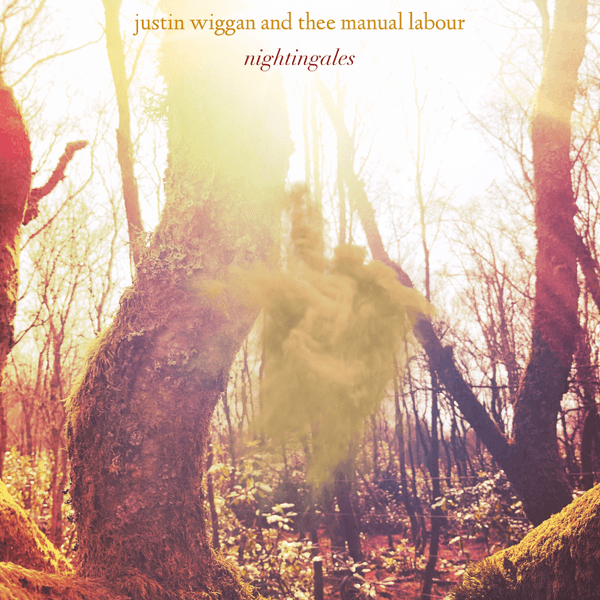
Perth and Kinross 'Nightingales'

room 6 ECHOES

Location: Blairgowrie, Perth And Kinross, Scotland, United Kingdom

A remote collaboration between two artists in Cornwall and rural Aberdeenshire. Initially based around the notions of parenthood, whilst also considering personal, geographical and political space. Composition naturally began to accommodate responses to the pandemic as the album was written during the COVID19 lockdown of 2020. The first five tracks use only the voice and audio production techniques, field recordings, an impulse response harvested from a cave on the north east coast of Scotland, and radio excerpts, whilst the final track contains additional instrumentation.


Clutch Daisy
Clutch Daisy

DOWNLOAD OUR APP TO DISCOVER THIS TOUR AND MANY OTHERS.

play-storeapp-store

The Echoes


Nightingales (raw)

This is the first track composed by Justin Wiggan, prompted by the lyric submitted as provocation by…

Nightingales (second movement)

Created in the first few weeks of the COVID19 lockdown. It is composed of snippets of speech from ne…

Nightingales (third movement)

The spoken word element of Wiggan's original performance, woven together with sampled sounds from th…

New Echo 4

Nightingales (vox profugo)

A happy accident; during the mixing process of the previous track, for some reason the completed fil…

Nightingales

By far the most conventionally straightforward piece on the album. The synthesizer part is based upo…

Discover more geolocated content in our apps.
play-storeapple-app-store

Or start creating tours, treasure hunts, POI maps... Just let your imagination guide you.


Other walks nearby

Dedication...becoming who we are

Dedication...becoming who we are

These sound tracks have been compiled by artist Liz Crichton from autobiographical interviews with people baptized as infants at St Michael and All Angels, Ballintuim. Read more about this project or listen from your computer here: **[www.revelationarts.org.uk/dedication](https://dedicationtheproject.weebly.com/)** Each person was asked to talk about their life, what had influenced them and what had made them who they are, and what traces may they leave behind. Starting at the font of the church in Ballintuim and ending in the graveyard at Kirkmichael, the audio trail had been designed to be an immersive and emotional listening experience, stimulating a sustained time based and ordered engagement with other peoples stories. You are invited to make a pilgrimage along the Cateran trail from Ballintuim to Kirkmichael listening to the audio tracks, and reflecting on them in these beautiful surroundings, to perhaps discover something not just about those who were interviewed, but also about yourself. Come and share in the tracks and traces of those who traveled this road ahead of you With grateful thanks to Delia Napier and Ettrick, Michael Nairn, Melinda Measor, John Kiszley, Caroline Steel, Neil Constable, Simon Fairclough, Kerry Faucett-Reid and Erica Hunter for agreeing to share their thoughts with us all. I do hope you enjoy the trail. Please let me know what you thought of this experience by completing this online **[feedback form](https://forms.gle/8dQTN3gNFJZrVsQw8)**
free
SAND, SILT, FLINT - BESSIE BELL

SAND, SILT, FLINT - BESSIE BELL

RIVER ALMOND - BESSIE BELL AND MARY GRAY FROM THE ALBUM "SAND, SILT, FLINT" BY FIONA SOE PAING https://FionaSoePaing.bandcamp.com The sad tale of Bessy Bell and Mary Gray has been sung by many since their tragic death from the plague in 1666 including British folk rock band Steeleye Span. Bessy and Mary were "twa bonnie lassies" and the daughters of two Perthshire gentlemen. According to tradition, Bessy’s father was the Laird of Kinvaid and Mary’s the Laird of Lynedoch. Bessy and Mary were the best of friends and said to live together at Lynedoch House to the west of Perth. However, as plague spread they decided to leave the house and instead live in total seclusion to avoid getting infected. They moved into a bower in an isolated spot called Burn Brae close to the north bank of the River Almond. A local lad, said to be in love with both Bessy and Mary, kept them supplied with food, however this lifeline tragically led to their deaths as the lad became infected with plague and in turn passed it onto Bessy and Mary. All three died and because it was the ‘pestilence’ that killed the girls they weren’t allowed to be buried in the traditional burial grounds of their respective families. Instead, Bessy and Mary were laid to rest near where they died in a secluded grave at Dronach Haugh by the edge of the river. The Walk The grave of Bessy Bell and Mary Gray is tucked away in a very off the beaten track spot and not easy to find. The walk culminates in a steep scramble down to the river bank which should only be attempted in good weather. The walk starts on a track that leads though forest off the B8063 at Murrayfield north west of Perth. Follow the gravel path south as it leads through woods of ash, sycamore, beech and birch trees before it emerges into flat farmland and then again through woods of sitka spruce. Look out for red squirrel and listen hard for the cries of jays and crows. Turn right at a T junction and follow the track as it curves downhill and becomes increasingly grassier as it leads through birch and then spruce forest dotted with bright blue containers filled with feed for the many pheasants reared in these woods. The track ends at a gate which opens into a large field. Don’t go through the gate, instead turn towards the river and keep walking straight until you come to a steep scramble down a woodland path to the banks of the River Almond which flows wide at this melancholy spot, whose peace is disturbed only by the sound of fast flowing water. The grave lies against the steep bank and within tall iron railings beneath the branches of a large yew tree. Breath in deep the smell of damp earth and look out for old graffiti carved into the moss covered stone that marks the spot where Bessy and Mary lie eternally together. Practical Information Getting There The B8063 is a small road that leads west off the main A9 a few miles north of Perth. Follow the road as it winds west through flat Perthshire farmland and a series of tiny hamlets. Although the walk starts at Murrayfield, a better place to park is by the gates of utility station further west along the road. The B8063 is not served by public transport. Toilets & Refreshments The nearest public toilets and refreshments are either in Perth or at one of the chain coffee shops off the A9 at either the junction with the A912 to the north (Starbucks) or the intersection with the M90 to the south (Costa Coffee). Accessibility This walk is not accessible to wheelchair users. An alternative place to listen to this track is Huntingtower Castle located off the A85 near Perth and owned by Historic Environment Scotland. Text for the Soundwalk researched and written by Lesley-Anne Rose at https://OpenRoadLtd.co.uk , with greatest thanks. Image with thanks to Isla Goldie Photography
free
SAND, SILT, FLINT - LASS O' THE LECHT

SAND, SILT, FLINT - LASS O' THE LECHT

THE WELL 0' LEHT - LASS O' THE LECHT - FROM THE ALBUM "SAND, SILT, FLINT" BY FIONA SOE PAING https://FionaSoePaing.bandcamp.com The tragic death of 19 year-old Margaret Cruikshank has been forever immortalized in the ballad of the Lass o’ the Lecht. One day in February 1860 Margaret set out from Auchriachan near Tomintoul with the intension of crossing the Lecht Pass and walking over the Ladder Hills to Corgaff. However, as Margaret discovered to her peril, sudden changes of weather can happen all too often in the Cairngorms and as she was walking a violent blizzard descended over these remote hills. Margaret soon became lost in the snow, and so legend tells us, she decided to follow a stream in the hope it would lead her back to safety. Unfortunately for the poor Lass o’ the Lecht it did the opposite and took her even deeper in to the wintry hills and ultimately to her untimely death. Despite the efforts of a large search party the next day, it wasn’t until three months later in the spring thaw that Luke Grant a local shepherd boy discovered Maragret’s frozen body in Strathdon, on the banks of the river Earnan. The Lass o’ the Lecht was laid to rest in the churchyard in Corgaff and the ballad, as well as telling her story, warns us all to take care in the hills ‘lest unprepared we’re called away, to meet our doom some morning.’ The Lecht Walk An easy flat walk from the Well of Lecht, located just off the A939 north of The Lecht Ski Centre, to the Mine of Lecht leads along the edge of a stream that could been the one Margaret Cruikshank followed to her peril. The walk starts at a small car park and picnic area at the Well of Lecht and follows a short public pathway to a disused mine building about a mile away, which can be seen from the start of the walk. The pathway is lined with juniper bushes and runs along level ground and over a small bridge across the stream. Look out for grouse, merlin and golden eagles as well as roe deer and mountain hares along the way. Not long past the bridge there’s a signpost for a public pathway over the hill to Chapeltown. Ignore this and carry straight on to the mine building. The Lecht Mine produced iron ore in the 1730s and manganese, used for making bleach, in the 1840s. The mine shafts pushed deep underground in the hills just past this building which was used a crushing mill, powered by a large waterwheel now long gone. Studies of the surrounding area have also revealed the remains of medieval shieling huts which would have been used by farmers whose once cattle grazed here in the summer long before the mine shafts were dug. The stream leads on past the abandoned mine deep into the hills and moorlands beyond and it’s not hard to imagine the Lass o’ the Lecht getting lost within the landscape as blizzard closed in. Before heading home take time to drop into Corgarff Castle close to the churchyard where Margaret Cruikshank is buried and whose history is linked with Auchindoun Castle which features in another walk. This fortress like white castle stands aloft in spectacular landscape at the foot of The Lecht at Cockbridge. It’s reached via a short walk from a dedicated car park and has served as both a fortified home and army barracks. Take time to walk the circle of Corgarff’s star shaped perimeter wall to take in 360 views of the wild landscape dotted with hardy sheep and filled with the distinct peewit call of lapwings piercing through the sounds of the wind. A final stop has to be The Watchers, situated high in the hills north of Corgarff Castle. Swing into a large signposted layby off the A939 to this natural viewpoint marked with a large modern standing stone whose engraved text encourages us to ‘take a moment to behold, as still skies or storms unfold’. These moments can be behold from The Watchers, four sheltered seats made from Scottish Larch which sit within steel sculptures standing over two meters tall. The Watchers are perfect for anyone who can’t or doesn't want to walk, to take in the sweeping landscape where the Lass o’ the Lecht met her untimely end. Practical Information The Lecht is a famous pass located in the eastern Cairngorms, Scotland’s largest National Park. The road itself is a stretch of the A939 leading from Strathdon in the south to Tomintoul in the north which at this point is one of the highest main roads in Scotland. The pass leads through a stark, dramatic landscape whose rolling baren hills are unforgiving in winter. Be warned, the road over The Lecht is very steep – 20% in places- and in winter the road often closes if the snow is heavy. The Lecht Ski Centre sits about half-way along the Pass roughly at the county line between Aberdeenshire and Moray and at a height of 645 meters above sea level. The car park for the Well of Lecht, and start of the walk, is reached via a sharp turning right north of the Ski Centre along a narrow potholed road. The car park for Corgarff Castle located just off the A939 at Cockbridge. The castle is managed by Historic Scotland and you walk up to and around it at anytime. If you’d like to explore inside Corgarff is open from April to September from 9.30am – 17.30pm (closed for lunch from 12.30pm – 1.30pm). For more information see: https://www .historicenvironment.scot/visit-a-place/places/corgarff-castle/overview/ and for access information see: https://www .historicenvironment.scot/visit-a-place/places/corgarff-castle/access/ There are no public facilities at the Well of Lecht, Corgarff Castle or The Watchers. A popular place for refreshments is Goodbrand and Ross, a café, ice cream parlour and gift shop off the A939 east of Corgarff. This chalet style building boasts wide views of the surrounding hills and outdoor picnic tables. Text for the Soundwalk researched and written by Lesley-Anne Rose at https://OpenRoadLtd.co.uk , with many thanks. Image with thanks to Isla Goldie Photography
free

Are you a creator?

START HERE

Privacy & cookie policy / Terms and conditions

© ECHOES. All rights reserved / ECHOES.XYZ Limited is a company registered in England and Wales, Registered office at Merston Common Cottage, Merston, Chichester, West Sussex, PO20 1BE

v2.5.3 © ECHOES. All rights reserved.