Saxons to the Seventies

room 13 ECHOES

Location: Bristol, City Of Bristol, England, United Kingdom

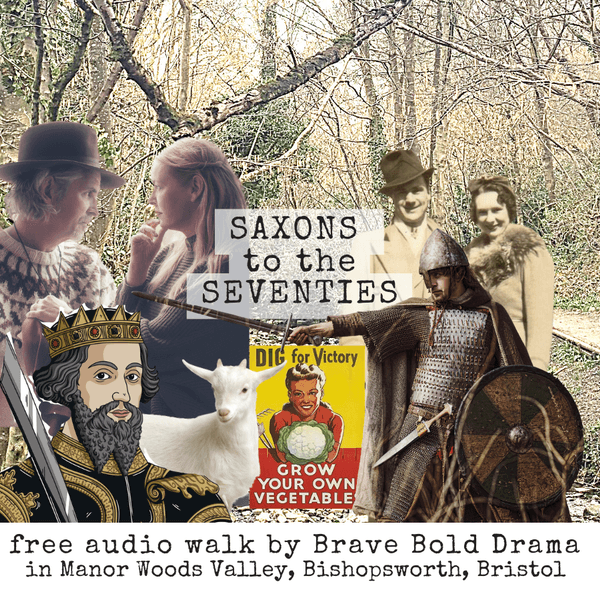
The Saxons to the Seventies: a free audio walk in Manor Woods Valley, Bishopsworth, south Bristol.

Discover the amazing hidden history of Manor Woods Valley, a small patch of ancient woodland in Bishopsworth. Listen in to pockets of the wood's history from the Saxons to the Seventies retold through narration, dialogue, humour and song. Expect local history with a pinch of dramatic licence.

A circular route just under one mile, lasts approx 45 mins. Some hills. Partly paved, partly woodland underfoot. Sturdy footwear recommended.

Content is appropriate for children aged 8+ to adult due to the concept and length of the experience. One sound spot features a bomb explosion.

You can access this walk on the 75 bus, getting off just past Bishopsworth Library. The entrance to Manor Valley Woods is opposite St Peter's Rise Convenience Store, 6A St Peter's Rise, BS13 7LU. Dogs on leads are welcome. There is street parking near the start of the walk.

Written and performed by Brave Bold Drama, an award-winning theatre and community arts company based close by Manor Woods Valley, in Withywood.
Brave Bold Drama
Brave Bold Drama

DOWNLOAD OUR APP TO DISCOVER THIS TOUR AND MANY OTHERS.

play-storeapp-store

The Echoes


1: Welcome

Welcome to "The Saxons to the Seventies", an historic audio-walk by Brave Bold Drama, a locally base…

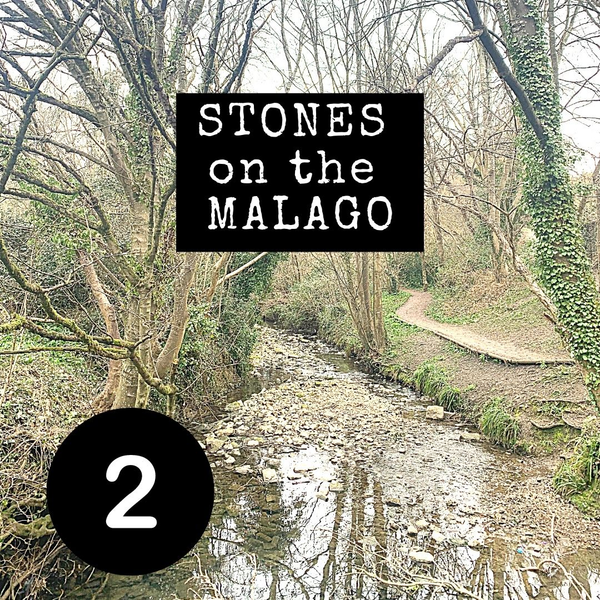
2: Stones on the Malago

Stones that built St Mary Redcliffe and Bristol Cathedral were transported to the build site in medi…

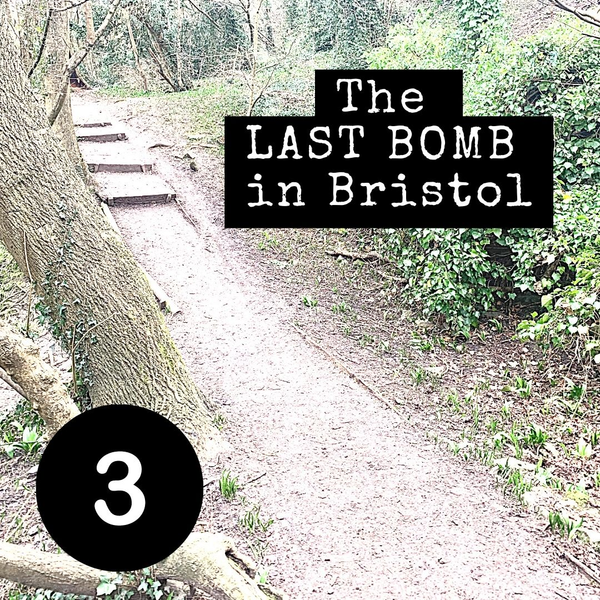
3: The Last Bomb in Bristol

You're standing in a bomb crater, made on 14th May 1944 at around 0200hrs. There were no fatalities.…

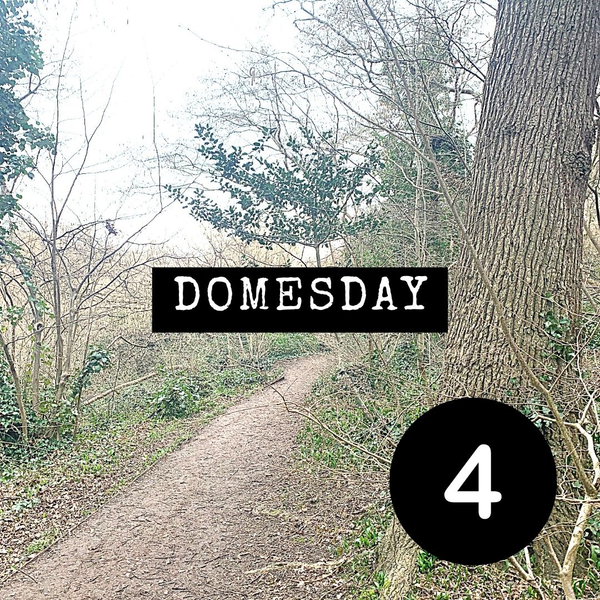
4: Domesday

This part of the woodland is very ancient, and is mentioned in The Domesday Book, recorded between 1…

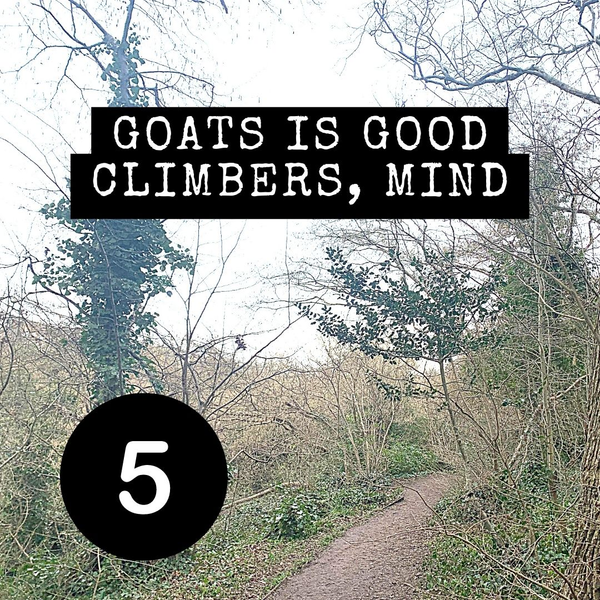
5: Goats is good climbers, mind.

This land was farmed from the 1600s until the 1920s, including mixed livestock and arable farming. I…

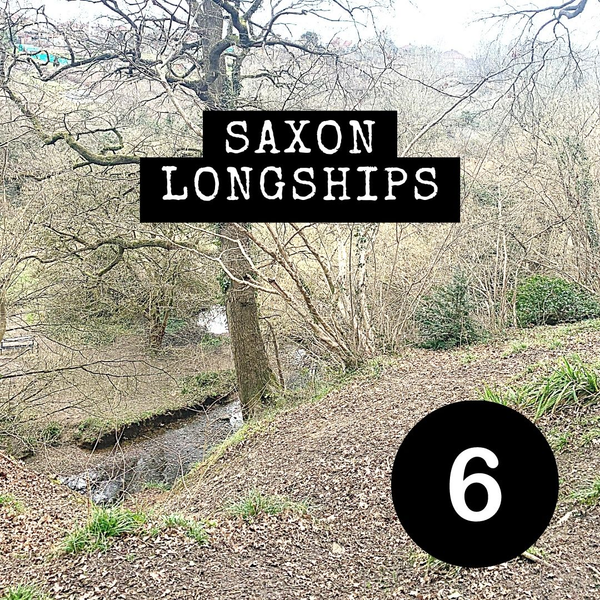
6: Saxon Longships

In 450AD, Saxons from Denmark, Germany and the Netherlands sailed longships to Britain in search of …

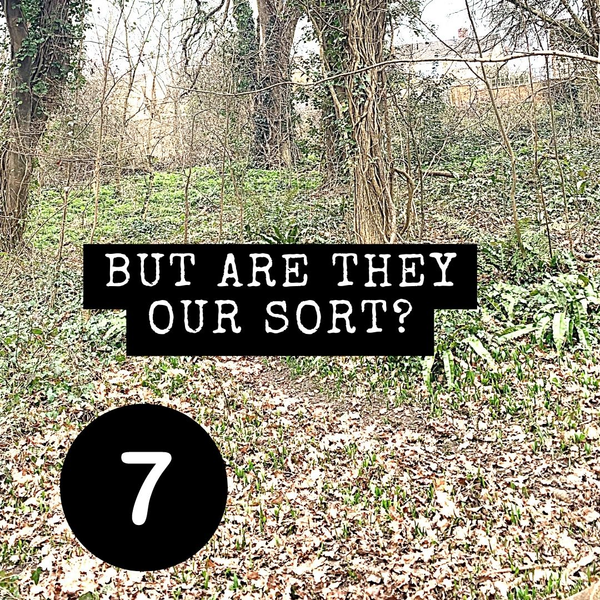
7: But Are They Our Sort?

A middle-class couple from the 1930s wonder if the new builds going up in Headley Park (built betwee…

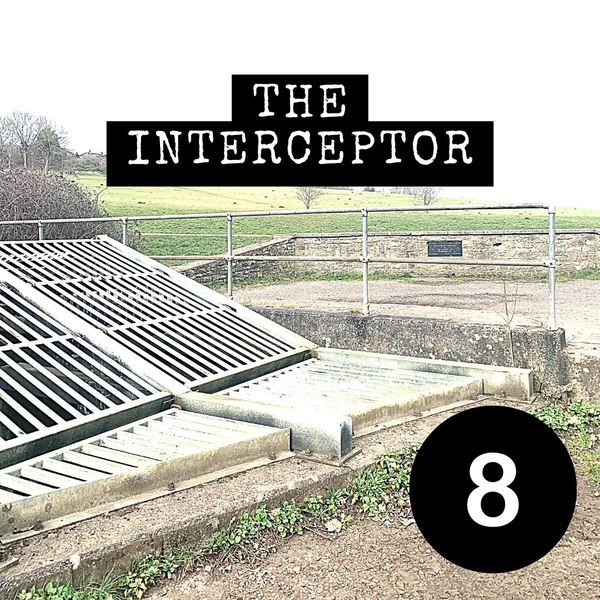
8: The Interceptor

The Malago Storm Interceptor (nicknamed "Dreadnought") was officially opened on 23rd April 1976 by M…

9: Self Sufficiency in the Seventies

Listen to a young couple attempting to give self-sufficiency a go in the 1970s, having read John Sey…

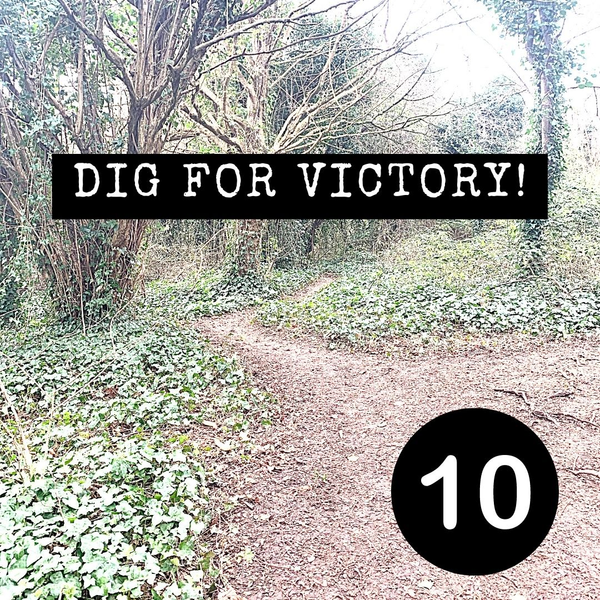
10: Dig For Victory!

You're currently standing in some Dig for Victory allotments, created during the Second World War. A…

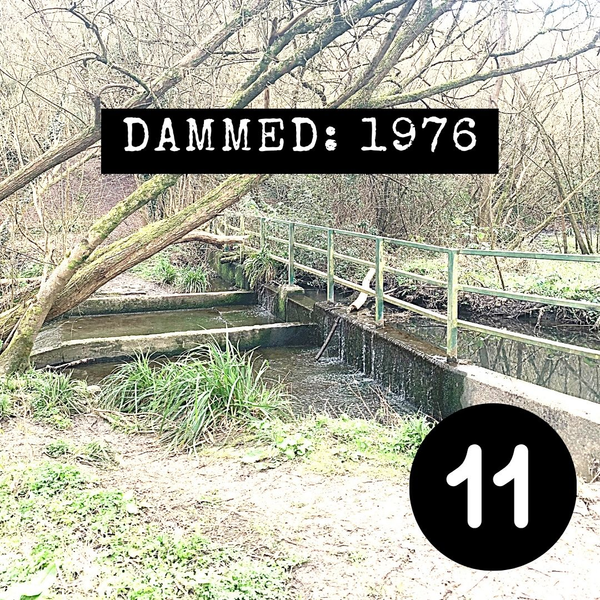
11: Dammed - 1976

This dam was constructed in 1976 along with the Interceptor to deal with issues of rising silt. The …

12: Malago Flows

A song that re-orders all the history you've heard about into chronological order, whilst also borro…

and 1 more echoes…
Discover more geolocated content in our apps.
play-storeapple-app-store

Or start creating tours, treasure hunts, POI maps... Just let your imagination guide you.


Other walks nearby

Extraordinary Streets: Withywood

Extraordinary Streets: Withywood

Let the memories, dreams and imaginations of BS13 residents transform an apparently ordinary short pavement walk into something extraordinary. Brave Bold Drama, a Withywood-based professional theatre and community arts company, worked with adults who live in BS13 people for 8 weekly sessions, meeting in the evenings at Campus Pool Skatepark cafe. The creative writing takes inspiration from local features on a short, mile-long pavement walk in Withywood between Campus Pool Skatepark and Withywood Park. Voiced by the writers themselves: Diana, Helen, Jacob, Jan and Sophie. This walk covers fairly easy terrain suitable for pushchairs and wheelchairs. There is free street parking in the area, and toilets are available when Campus Pool Skatepark is open. Editing and sound design by Gill Simmons. Funded by Arts Council England.
free
Walking Words: SS Great Britain to Underfall Yard

Walking Words: SS Great Britain to Underfall Yard

Poems by Jo Eades The Underfall Yard was commonly referred to as "The Underfalls" and takes its name from the underfall sluices. The construction was completed in 1809 under the direction of William Jessop and substantially improved by Isambard Kingdom Brunel in the 1830s. In the early nineteenth century the engineer, William Jessop was engaged by the Bristol Dock Company to create a Floating Harbour to eliminate the problem of ships being grounded at low tide. Jessop built a lock to retain the water in the harbour; this was completed in 1809, and allowed ships to remain floating at all times, unaffected by the state of the tide on the river. Part of the project included building a dam at the Underfall Yard with a weir, known as the Overfall, to allow surplus river water to flow into the New Cut, an excavation which by-passed the Floating Harbour and joined the River Avon near Temple Meads. The docks' maintenance facility was established on the land exposed by the damming of the river to construct the harbour, and remains sited at this location to the present day. By the 1830s the Floating Harbour was suffering from severe silting and Isambard Kingdom Brunel devised the underfall sluices based on William Jessop's original plans and recommended the use of dredgers as a solution.
free
Walking Words: Wapping Wharf to SS Great Britain

Walking Words: Wapping Wharf to SS Great Britain

Poems by David Punter Bristol Docks In the 18th century, the docks in Liverpool grew larger and so increased competition with Bristol for the tobacco trade. Coastal trade was also important, with the area called "Welsh Back" concentrating on trows with cargoes from the slate industry in Wales, stone, timber and coal.[7] The limitations of Bristol's docks were causing problems to business, so in 1802 William Jessop proposed installing a dam and lock at Hotwells to create the harbour. The £530,000 scheme was approved by Parliament, and construction began in May 1804. The scheme included the construction of the Cumberland Basin, a large wide stretch of the harbour in Hotwells where the Quay walls and bollards have listed building status.[8] Launch of the SS Great Britain, the revolutionary ship of Isambard Kingdom Brunel, at Bristol in 1843 The tidal new cut was constructed from Netham to Hotwells, with another dam installed at this end of the harbour. The Feeder Canal between Temple Meads and Netham provided a link to the tidal river so that boats could continue upstream to Bath. However, the new scheme required a way to equalise the levels inside and outside the Dock for the passage of vessels to and from the Avon, and bridges to cross the water. Jessop built Cumberland Basin with two entrance locks from the tidal Avon, of widths 45 and 35 ft (13.7 and 10.7 m), and a 45-foot-wide (13.7 m) junction lock between the Basin and what became known as the Floating Harbour. This arrangement provided flexibility of operation with the Basin being used as a lock when there were large numbers of arrivals and sailings. The harbour was officially opened on 1 May 1809
free
Walking Words: SS Great Britain

Walking Words: SS Great Britain

Poet: Marie Papier SS Great Britain is a museum ship and former passenger steamship that was advanced for her time. She was the largest passenger ship in the world from 1845 to 1854. She was designed by Isambard Kingdom Brunel (1806–1859), for the Great Western Steamship Company's transatlantic service between Bristol and New York City. While other ships had been built of iron or equipped with a screw propeller, Great Britain was the first to combine these features in a large ocean-going ship. She was the first iron steamer to cross the Atlantic Ocean, which she did in 1845, in 14 days. The ship is 322 ft (98 m) in length and has a 3,400-ton displacement. She was powered by two inclined two-cylinder engines of the direct-acting type, with twin high pressure cylinders (diameter uncertain) and twin low pressure cylinders 88 in (220 cm) bore, all of 6-foot (1.8 m) stroke cylinders. She was also provided with secondary masts for sail power. The four decks provided accommodation for a crew of 120, plus 360 passengers who were provided with cabins, and dining and promenade saloons. When launched in 1843, Great Britain was by far the largest vessel afloat. But her protracted construction time of six years (1839–1845) and high cost had left her owners in a difficult financial position, and they were forced out of business in 1846, having spent all their remaining funds refloating the ship after she ran aground at Dundrum Bay in County Down near Newcastle in what is now Northern Ireland, after a navigation error. In 1852 she was sold for salvage and repaired. Great Britain later carried thousands of emigrants to Australia from 1852 until being converted to all-sail in 1881. Three years later, she was retired to the Falkland Islands, where she was used as a warehouse, quarantine ship and coal hulk until she was scuttled in 1937, 98 years after being laid down.
free
Walking Words: Wapping Wharf to Bathurst Basin

Walking Words: Wapping Wharf to Bathurst Basin

Poems by Agata Palmer The original Bristol Harbour Railway was a joint venture by the GWR and the Bristol and Exeter Railway, opened in 1872 between Temple Meads and the Floating Harbour. Its route included a tunnel under St Mary Redcliffe church and a steam-powered bascule bridge over the entrance locks at Bathurst Basin. In 1876 the railway was extended by 1⁄2 mi (800 m) to Wapping Wharf. In 1906, new branches from the south via the Ashton Avenue swing bridge were built to Canons Marsh on the north side of the Floating Harbour and to Wapping via a line alongside the New Cut. A Coal Concentration Depot owned by Western Fuels was established at Wapping Wharf just behind the Industrial Museum but this closed in 1987. The Bristol Gaol Site The original New Gaol was designed by Henry Hake Seward and opened in 1820. In 1831, it was destroyed during the Bristol Riots and was rebuilt to designs by Richard Shackleton Pope, but was never properly completed until 1872. The gaol was closed in 1883 due to poor conditions and was largely demolished in 1898. In 1884, Horfield Prison was built to replace it. In 1821, three days after his eighteenth birthday, John Horwood was the first person to be hanged at the Gaol for murdering Eliza Balsum by hurling a pebble at her which hit her on the right temple and she then tumbled into a brook. English Heritage designated The Gaol entrance wall and gateway and the south-east perimeter wall as a Grade II listed building. It is now the centre-piece of a redevelopment project in this area of the city. Bathurst Basin Bathurst Basin is a small triangular basin adjoining the main harbour of the city of Bristol, England. The basin takes its name from Charles Bathurst, who was a Bristol MP in the early 19th century.[1] The basin was built on an area of an old mill pond, Trin Mills.[i] The pond was supplied by the River Malago, from Bedminster to the South. It lost its water supply as the New Cut was created in 1809, running to the South of the enlarged Floating Harbour and catching the flow of the Malago. After this it formed a connecting basin, through two sets of locks, between the Floating Harbour and the tidal River Avon in the New Cut.[2] The connection enabled smaller vessels to bypass the main entrance locks in Cumberland Basin. From 1865 a deep water dock with a stone quay front was built. The area used to be an industrial dock with warehouses and numerous shipyards at the adjoining Wapping Shipyard and Docks, including Hilhouse, William Scott & Sons and William Patterson. Now there is a small marina, with residential quayside properties. The Bristol Harbour Railway connected to the main line system at Temple Meads, via a lifting bascule bridge over the northern entrance dock to the basin and a tunnel beneath St Mary Redcliffe. The tunnel still exists, but is now blocked,[ii] and the original railway bridge has been replaced with a swing footbridge. This bridge is manually swung by a hydraulic pump action.(wikipedia)
free
Misfits on the Move - Bristol Harbourside

Misfits on the Move - Bristol Harbourside

Misfits On The Move is a short poetry walk around the harbour - from the mirror-ball to M Shed - by The Misfits Poetry Group. Misfits Theatre Company are a unique theatre and social group, led by people with learning disabilities. To listen just download the ECHOES app!
free
One Day in Bristol

One Day in Bristol

A spoken tour to guide you through the hidden gems and untold stories of central Bristol. The recommended time is a leisurely 2 hours. There are fourteen stops altogether. Tweet @echoesxyz to tell us what you thought!
free
Walking Words: Queen's Square to Arnolfini

Walking Words: Queen's Square to Arnolfini

Poets: Liz Cashdan and Agata Palmer A walk around Queen's Square taking in Madame Tussaud and Kosciuszko, the Polish Patriot. The square was named in honour of Queen Anne, who visited Bristol in 1702, and it became the home of the merchant elite. It was conveniently placed for both arms of the harbour, but its low-lying position surrounded on three sides by a tidal river had disadvantages too: an 'assemblage of nastiness' floated in the river, and when the tide failed to carry this away it offended the eyes and nostrils of those living in the square. This was one of the factors which ultimately led the wealthy to the move up the hill to Clifton. Privateer Woodes Rogers lived on the west side of the square; a plaque commemorates this on the building that now occupies the site of his former home. Rogers circumnavigated the globe in 1707-1711, rescuing Alexander Selkirk (the inspiration for Dafoe's Robinson Crusoe) from Juan Fernández Island during his voyage. In 1831 Queen Square was the focus of a riot, in which half the buildings in the square were destroyed. The trigger for this was the arrival in Bristol of Recorder Sir Charles Wetherell, who misjudged Bristolians' support for some of his earlier positions to mean that they agreed with his opposition to the Reform Bill. There followed three days of rioting, looting and arson, fuelled by plentiful supplies of alcohol from the well-stocked cellars of residents, which were finally brought to a halt when Lieutenant-Colonel Thomas Brereton of the 14th Dragoons led a charge with drawn swords through the mob. Hundreds were killed and wounded and the mob dispersed. Brereton was later court-martialled for leniency because he had initially refused to open fire on the crowds, but shot himself before the conclusion of his trial. In the centre of the Square is an idealised equestrian statue of William III by John Michael Rysbrack, cast in 1733 and erected in 1736 to signify the city's loyalty.
free
Walking Words: Queens Square to St Mary Redcliffe

Walking Words: Queens Square to St Mary Redcliffe

Poets : Martin Rieser and Elizabeth Parker Chatterton at St Mary Redcliffe's past and Present Thomas Chatterton (20 November 1752 – 24 August 1770) was an English poet whose precocious talents ended in suicide at age 17. He was an influence on Romantic artists of the period such as Shelley, Keats, Wordsworth and Coleridge. Although fatherless and raised in poverty, Chatterton was an exceptionally studious child, publishing mature work by the age of 11. He was able to pass off his work as that of an imaginary 15th-century poet called Thomas Rowley, chiefly because few people at the time were familiar with medieval poetry, though he was denounced by Horace Walpole. At 17, he sought outlets for his political writings in London, having impressed the Lord Mayor, William Beckford, and the radical leader John Wilkes, but his earnings were not enough to keep him, and he poisoned himself in despair.
free

Are you a creator?

START HERE

Privacy & cookie policy / Terms and conditions

© ECHOES. All rights reserved / ECHOES.XYZ Limited is a company registered in England and Wales, Registered office at Merston Common Cottage, Merston, Chichester, West Sussex, PO20 1BE

v2.4.30 © ECHOES. All rights reserved.