Historic Coventry Cultural Tour

7 ECHOES

Coventry University - Lanchester Archive

Explore some of the historic buildings of Coventry and discover the stories behind them.

If you know where you’re going then feel free to go off and explore, but if you’re not sure where to go, then you can follow the directions of this mini-tour via Google Maps – starting from Swanswell Gate and finish at the London Road Cemetery. If you’re streaming the Echos app in the background, you’ll hear the information as you get close to each landmark. https://goo.gl/maps/728LiYSh25Dfejr98

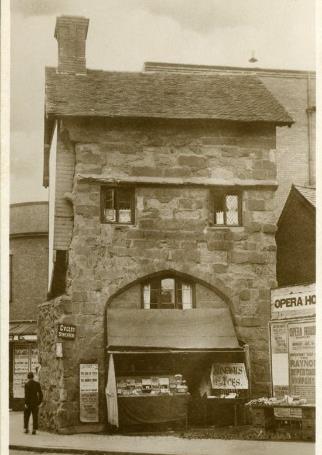
City Gates - Swanswell Gate

Swanswell Gate and Cook Street Gate are the only two surviving gatehouses that once punctuated Coventry’s medieval city wall. Construction on the city wall began in 1356 and was initially completed in 1400, although ongoing alterations to the route meant that it was not completed in its final form until 1534. The wall was just over two miles long, 12ft high and 9ft thick and originally incorporated 12 large gatehouses to control passage in and out of the city.

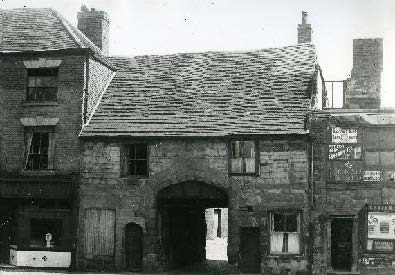
Completed around 1385 Cook Street Gate was one of the earlier gates to be built, and Swanswell Gate was completed in 1440. Swanswell Gate was originally known as Priory Gate as it used to serve as the entrance to the prior’s land. During the Civil War Coventry supported the Parliamentarians, and in 1642 denied Charles I entry into the city. After the restoration of the monarchy, Charles II ordered the city walls to be destroyed. The wall was mostly demolished in 1662, leaving only the gatehouses intact. A civil survey of 1748 shows that the 12 gates were still standing, however by the end of the 18th century most had been lost as the city developed and only Swanswell and Cook Street Gates remained.

Swanswell Gate was converted into a cottage in the mid-19th century. The roof was raised and replaced, windows were created, and the large archway was filled in in 1856. In 1913, Cook Street Gate was given to the city of Coventry by local philanthropist Colonel Sir William Fitzthomas Wyley, and was restored in 1918. Swanswell Gate, having been used first as a cottage then a shop. was later acquired by the city in 1931 from Sir Alfred Herbert. The gatehouse battlements were restored, and the roof that was added when the gate was used as a residence was removed. Today, the city gates stand in the city centre separated by one of the last surviving sections of medieval city wall and surrounded by Lady Herbert’s Garden. The gates are Grade I listed and are being brought back into use by Historic Coventry Trust.

Find out more on our website: https://www.historiccoventry.org.uk/coventry-city-gates-a-history/

1 sound

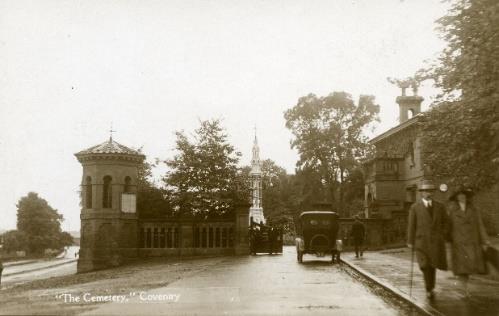
London Road Cemetery

London Road Cemetery encompasses 17 hectares of land, including a vast collection of notable trees species and monuments extending past the railway line. Being built on a former stone quarry, it is subject to hills and dells and is surrounded by mature elms now incorporated as the cemeteries main design.

Designed by Joseph Paxton in 1845 (renowned gardener, engineer and architect), it was originally called Coventry Cemetery and was formally opened in 1847. This was the only cemetery that Paxton designed, and the layout leads visitors into the space to enjoy the natural beauty of the space whilst visiting deceased loved ones. Born in 1803, Paxton was best known for his work in designing Crystal Palace for the Great Exhibition in 1851, and the re-design of Chatsworth Gardens. As London Road was the only cemetery Paxton designed, it has a unique design and layout. Paxton believed that public parks and cemeteries should incorporate a wide range of exotic trees to provoke excitement and interest in the space. The cemetery's buildings are designed to accommodate the layout of the trees and enhance the beauty of the landscape, to reflect tone of peace and remembrance.

The entrance lodge and prospect tower are prominent to create an air of dignity and elegance. The promenade allows visitors to view the cemetery holistically from an alternative angle, allowing for a more reflective experience. Two chapels were built for the cemetery. The design of the Nonconformist chapel is influenced by classical architecture to compliment the surrounding evergreen trees, whilst the Anglican chapel demonstrates a Norman architectural style and is surrounded by deciduous trees.

Find out more on our website: https://www.historiccoventry.org.uk/project/london-road-cemetry/

1 sound

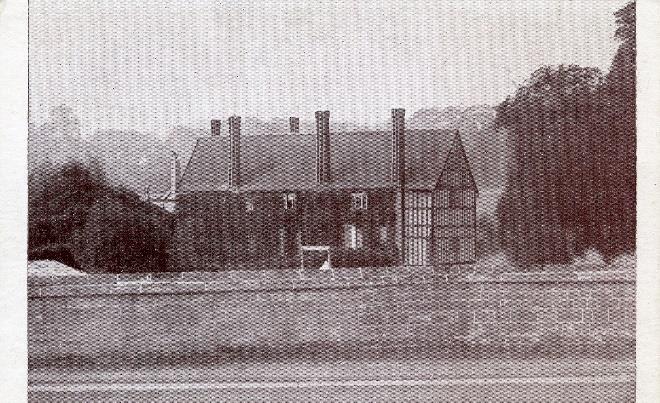
Charterhouse

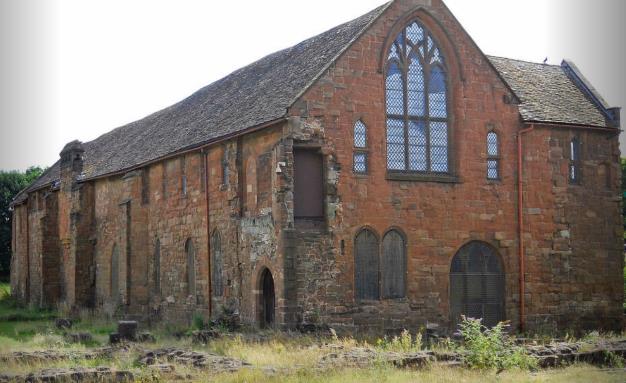
Charterhouse is a Grade I listed 14th century Carthusian priory and refectory, which was founded in the late 14th century by the monk Robert Palmer. Charterhouse is the English name for a Carthusian Monastery, reflecting a religious order that originated in France, which is a strict monastic order centred around a life of solitude, silence, and religious contemplation. The order spread throughout Europe in the medieval period, but only 9 Carthusian monasteries were ever built in England. Charterhouse would have been home for up to 12 monks and several lay brothers, with its foundation stone laid by Richard II in 1385. Each monk lived in an individual cell, two storeys high with separate spaces for worship, studying, sleeping and eating.

During the 15th and 16th century it had numerous Royal benefactors, which included Richard II and Henry VII. The dissolution of the monasteries in the 1530s marked the end of Charterhouse’s use as a priory and saw the destruction of the original monastery buildings. In the 1560s Charterhouse was bought by Robert Dudley, the Earl of Leicester, who added a second floor and commissioned the upstairs murals. During the 18th century Charterhouse became the home to John Whittingham, a local horticulturalist working for the Inge family who owned the building at the time. It changed hands regularly in the 19th century, the last private owner being local philanthropist Colonel Sir William Fitzthomas Wyley. The Wyley family owned Charterhouse from the 1890s, and upon his death in 1940 Colonel Wyley bequeathed the house and grounds to the people of Coventry.

Its main historical significance lies in the archaeological remains in the grounds of a former Great Cloister alongside the rare medieval and Elizabethan wall paintings in the refectory. In 2011 the Charterhouse Preservation Trust was formed who acquired the buildings and some land, who made alterations to keep it up.

Find out more on our website: https://www.historiccoventry.org.uk/project/charterhouse/

1 sound

Drapers' Hall

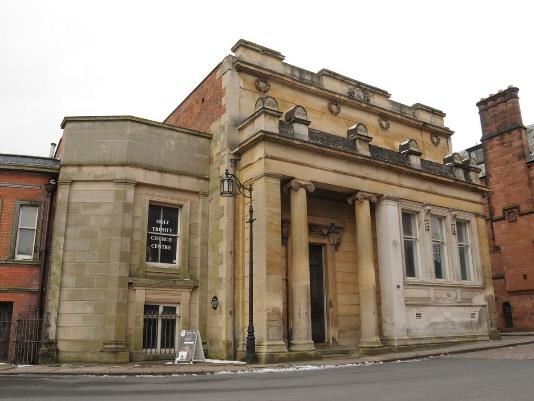
Drapers’ Hall was built in 1832, designed by renowned architects Thomas Rickman and Henry Hutchinson in the Greek revival style. The building was Grade II listed in 1957 for its historical significance, including the buildings association with the cities weaving heritage, being one of the only designs of Henry Hutchinson and how the extent of the alterations over the years has not affected the illustrative heritage value. Being one of the few Regency buildings in the city, the hall was designed to provide function rooms for the Worshipful Company of Drapers, Coventry’s Drapers’ Guild. The Coventry drapers have occupied the site from the 14thcentury, and Drapers’ Hall was inserted into a tight line of medieval buildings.

The current St Mary Street was then the site of The Drapery, a busy market environment within long sheds displaying cloth. In 1841 the Orchestra in Ballroom was added by young architect Charles Francis Hansom, who later became a successful architect of many catholic churches, houses and schools. Drapers’ Hall was further extended in 1864 when adjoining land became available and the extension comprised a new Card Room. In the 1940s the building’s basement structure was strengthened and used as shelter during Blitz. In 1961 the building was acquired by Coventry City Council and the Worshipful Company of Drapers left the Hall. The buildings were last used as a Youth Magistrate Court, and have been vacant since 1987.

Find out more on our website: https://www.historiccoventry.org.uk/project/drapers-hall/

1 sound

DOWNLOAD OUR APP TO DISCOVER THIS TOUR AND MANY OTHERS.

play-storeapp-store

Or start creating tours, treasure hunts, POI maps... Just let your imagination guide you.


Other walks nearby


Are you a creator?

START HERE

Privacy & cookie policy / Terms and conditions

© ECHOES. All rights reserved / ECHOES.XYZ Limited is a company registered in England and Wales, Registered office at Merston Common Cottage, Merston, Chichester, West Sussex, PO20 1BE

v2.5.15 © ECHOES. All rights reserved.