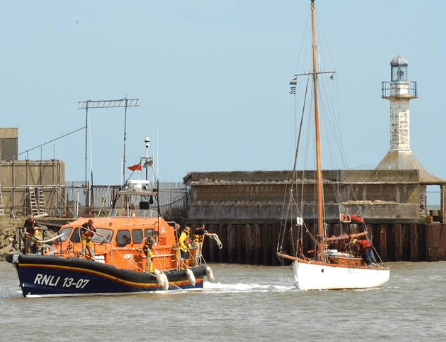
The Royal National Lifeboat Institute, Lowestoft

1 sound

The Lowestoft Lifeboat Station is one of the oldest in the nation, and was founded in 1801, 23 years before the Life Boat Service was established.

The first lifeboat at Lowestoft was built by Henry Greathead who, 12 years before, had built for South Shields the first lifeboat of all, the famous Original. Six years later Lowestoft took her place in the history of the lifeboats by having the first sailing lifeboat.

There have been some extraordinary rescuers such as Robert Hook, John Swan, and Alan Spurgeon, all of whom won medals for gallantry, heading up the 45 awards the stations has earned over the years.

The Lowestoft lifeboat "Michael Stephens" was among the 19 of the Institution’s boats, which went over to Dunkirk in 1940 to help in bringing off the British Expeditionary Force, her crew was officers and men of the Navy. The Michael Stephens worked in Dunkirk Harbour itself, carrying men through the crowded darkness to the ships outside. She was twice rammed by motor torpedo boats but she went on with her work and returned to Dover under her own power.


Part of this walk

Lowestoft, The South Pier and Royal Plain

Lowestoft, The South Pier and Royal Plain

Before the Harbour and the cut to Lake Lothing was created, there was no real harbour here but a wide shingle beach. You could walk across from Kirkley to Lowestoft. If the tide was high sometimes men would carry people on their backs through knee-deep water. Lake Lothing, in Oulton Broad, was a freshwater lake completely divorced from the sea. In the 1830's and 40's a group of men wanted to create a way to get merchant boats up to Norwich without having to pass through (and pay the tolls to) Great Yarmouth and so created a series of cuts and canals through the Broads and by way of Lake Lothing that linked Lowestoft to Norwich. Then they went bankrupt. Good idea. Bad accounting. Sir Morton Peto saw the potential of turning Lowestoft from a sleepy fishing village to a major port and stepped to in finish dredging, build a proper harbour and lay down the most easterly rail line in Britain. Within the space of 15 years, Lowestoft changed completely. The town went from pastoral to posh in the space of a generation. The Royal Plain and the South Pier were two early tourist developments and were immediately ringed with grand hotels, a promenades and soon, a bustling town with trendy shops and fancy houses. A bridge was built, the first of several, linking this part of Peto's new development with the old High Street and the fishermen's beach village and soon 1850's Lowestoft was one long, narrow town stretching from the High Light to Carlton Road. This area was the gateway to the south part of Lowestoft and has grown, changed, been demolished and rebuilt along with each phase of the town's development.
free

Privacy & cookie policy / Terms and conditions

© ECHOES. All rights reserved / ECHOES.XYZ Limited is a company registered in England and Wales, Registered office at Merston Common Cottage, Merston, Chichester, West Sussex, PO20 1BE

v2.5.15 © ECHOES. All rights reserved.