Palazzo del Bargello
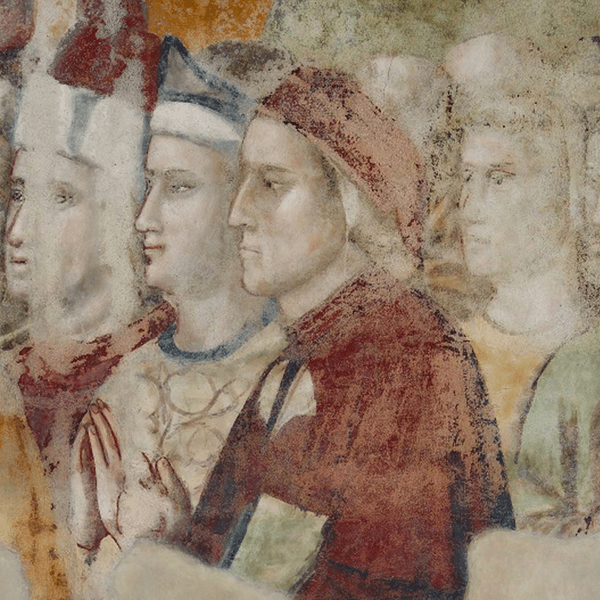
Although not mentioned in the Comedy or Dante’s other works. I think it is worth pointing out on the map as this is where Dante was condemned and sentenced to exile on March 10th, 1302, for the museum originally served as the highest magistrate of Florence city council, containing judicial offices and detention cells. Although according to Boccacio, the first seven cantos were written before Dante’s exile, the sentence nonetheless marked the beginning of the composition of the Divine Comedy and the parallel between Dante the traveler’s pilgrimage from hell to heaven and the poet’s wandering across the Italian land. It is also the exile that gave Dante a distance from and a fresh perspective into the political turmoil in his city, leading to the formulation of his later view that went beyond the split between Guelf and Ghibelline, expressed in both the Comedy and his more political work like Monarchia. On the other hand, on the walls of the Cappella del Podestà in the museum, there was the first known portrait of Dante by Giotto as part of the fresco in the cappella, done during 1333 and 1337, only a decade after Dante’s death. Here Dante is portrayed among the blessed in paradise, under the light of God, which is exactly the eternal afterlife that Dante envisioned for himself in the Comedy. Opposite to the blessed, there is a painting of Inferno and Satan that echoes Dante’s description of him at the end of Inferno. This work of Giotto suggested Florence’s belated recognition of Dante’s genius and in a way can be viewed as the return Dante never realised in his earthly life.

