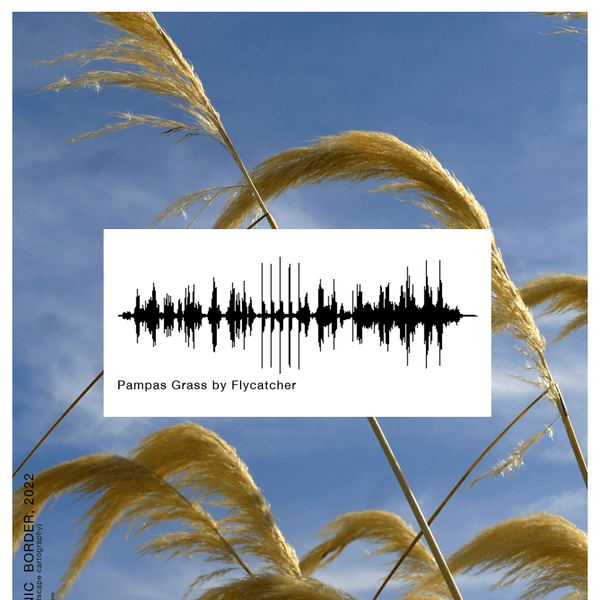
Pampas Grass by Spotted Flycatcher
1 sound
Cortaderia selloana Common name: Pampas Grass Native to: Pampas regions of South America, including parts of Argentina and Brazil and the whole of Uruguay.
This is a type of grass in the Poaceae family. This grass is considered an invasive nuisance in parts of North America and is banned in Hawaii and New Zealand.
Pampas Grass’ latin name, Cortedaria selloana, is named after the German botanist Friedrich Sellow who collected and sent many plants to Europe when working in South America in the early 19th Century.
Pampas grass is non-toxic to animals though care needs to be taken of it’s sharp-edge leaves.
Spotted Flycatcher (Muscicapa striata)
Catching sight of the fleeting flash of a Spotted Flycatcher, as it darts into the air to snatch an insect, is usually our first sign that this long-distance trans-Saharan migrant has returned once again to breed in the gardens and woodlands around us.
All populations winter in Africa south of the Sahara, with most crossing the Equator. They are locally common in southern West Africa, Camerron, and Eas Africa, and common ans widespread from the southern Congo Basin and Zambia throughout southern Africa.
Spotted Flycatchers use a variety of breeding habitants from sea-leve; to c900 m and occasionally up to 1,500 m elevation. Common components of preferred habitants include raised perches, often in mature trees and shrubs, telephone wires, fences and buildings. They require open woodland which clearings or glades, and are often found near open water, rivers or streams, and sling the edges of dense woodland. Dry deciduous woodland is preferred but they are also found in native pinewoods.
In the wintering quarters, the habitants chosen are often similar to those used when breeding. Secondary woodland, disturbed land, and suburban areas are preferred but they will utilize habitat along logging tracks in forest.

