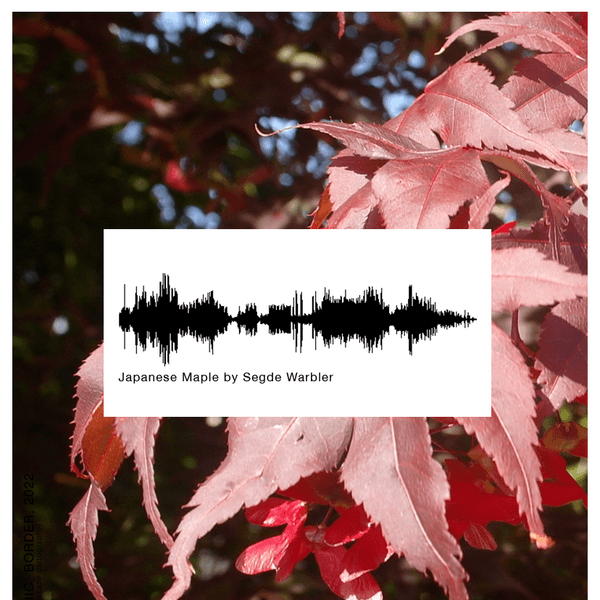
Japanese Maple by Sedge Warbler

1 sound

Acer Palmatum (Japanese Maple) Native to: Eastern China, Korea and Japan.

A deciduous shrub or small tree, growing up to 10meters in the wild. It's natural habitat is woods, hills and mountains. The Japanese Maple enjoys any moist soil in part shade, sheltered from wind. It flowers in April/May.

The first trees came to Britain in the 19th Century but they had been cultivated in Japan for centuries before any specimens reached Europe.

Sedge Warbler (Acrocephalus Schoenobaenus)

Sedge Warbler are long-distance trans-Sahara migrants that lay down extensive fat reserve in northern Europe in preparation for long-haul flights to the African wintering grounds.

Sedge Warblers breed extensively within both Britain and Ireland, with strongholds in the fens and coastal levels of eastern England and in lowland areas of Scotland and east-central Ireland. Preferred breeding habitants are lowland marshes and waterways, although dry scrub, young conifers and even crops are sometimes used. Although knowledge is scant, Sedge Warblers seem to utilize a range of habitats in the African winter quarters but most commonly those associated with fresh water, such as reed beds, papyrus and the marshy fringes of lakes.

Pre-migratory movement of Sedge Warbler begin in late July with birds apparently searching for sites with high densities of Plum-reed Aphids, an important but ephemeral and unpredictable food source. In West Africa, spring migration begins in late February, and the first birds reach their breeding grounds inFrance by the late March and Britain by early April.


Part of this walk

Sonic Border by Januario Jano

Sonic Border by Januario Jano

Huntly
A new sound installation by artist Januario Jano is situated across seven sites in Huntly, Aberdeenshire. The public artwork, developed whilst on residency at Deveron Projects, traces (and imagines) the journey of migratory birds, primarily passing through Angola, reaching the north of Scotland. The project began with a focus on Huntly’s infamous swift population and has evolved to include seven migratory birds. Through archive and newly recorded sounds of Common Swifts, Spotted Flycatchers, Red Knots, Common Starlings, Sedge Warblers, Common Terns and House Martins, Januario has composed a complex soundscape that reflects on migration and assimilation of human and non-humans. Moving above geographic borders, a process of assimilation for birds is distinctive from people and plants, and politics, but equally requires hospitality for survival. Habitual in their migration, Swifts return to the exact home (nesting in roofs, under tiles, under eaves and within gables) annually. So methodical in their nature that should the home have been removed, the Swifts will continuously knock themselves against the spot that their nest resided that the impact will often kill them. To what end to we, humans, require the kindness and considerations of others to be at home? The soundscape maps a 45-minute circular path and the sites for each track are marked by seven 'non-native' plants, imbedded into Huntly's landscape: Crocosmia, Pampas Grass, Cotoneaster, Peiris Japonica, Hydrangea, Japanese Maple and Lavender.
free

Privacy & cookie policy / Terms and conditions

© ECHOES. All rights reserved / ECHOES.XYZ Limited is a company registered in England and Wales, Registered office at Merston Common Cottage, Merston, Chichester, West Sussex, PO20 1BE

v2.5.15 © ECHOES. All rights reserved.