Servitude and an Unknown Future (3:24)
1 sound
Joan Sullivan is played by Arielle Yoder
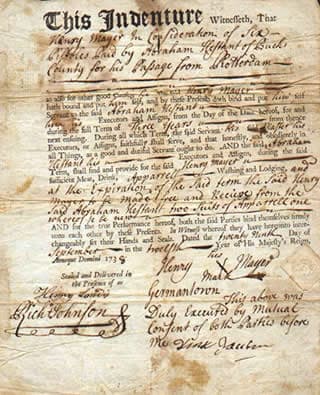
For much of the colonial period in 17th century Massachusetts and elsewhere in the colonies, indentured servitude was widespread. So widespread in fact, that anywhere between one-half and two-thirds of European immigrants to the Thirteen Colonies between 1630 and the American Revolution came under indenture contracts at some point. This was usually an agreed-upon term of employment to pay for passage to the colonies, and was used to encourage population in various places. If the indenture was a teen or younger, the certificate would be signed by a parent, usually a father. Certificates of indenture typically lasted between 3 and 7 years on average, but could be extended due to instances such as accrued debt, increase in needs, or truancy if an indentured servant ran away. People who were prisoners were often given the option of signing an indenture contract and being shipped to the colonies to avoid jail time, and more often than not, took the offer. The difference, however, is that an indenture contract would eventually end, and the indentured person would receive “freedom dues,” and become a free member of society. This is what differentiates the system of the African slave trade from the lives of indentured servants like Joan Sullivan. The indenture system started to die off toward the end of the 17th century, and by 1775, this economic system would start to give way in favor of the African slave trade.

