Passages of the Past

27 ECHOES

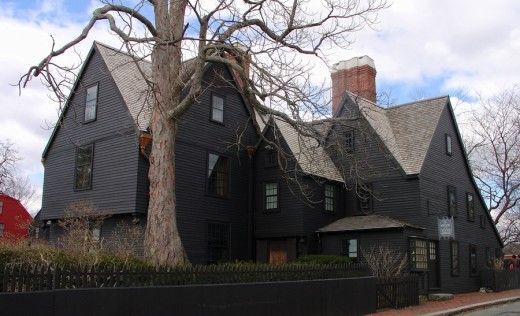
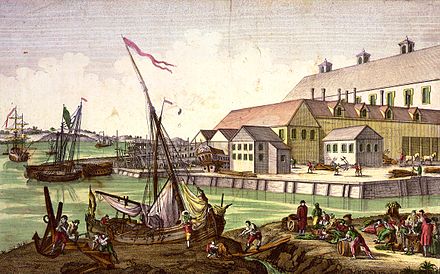
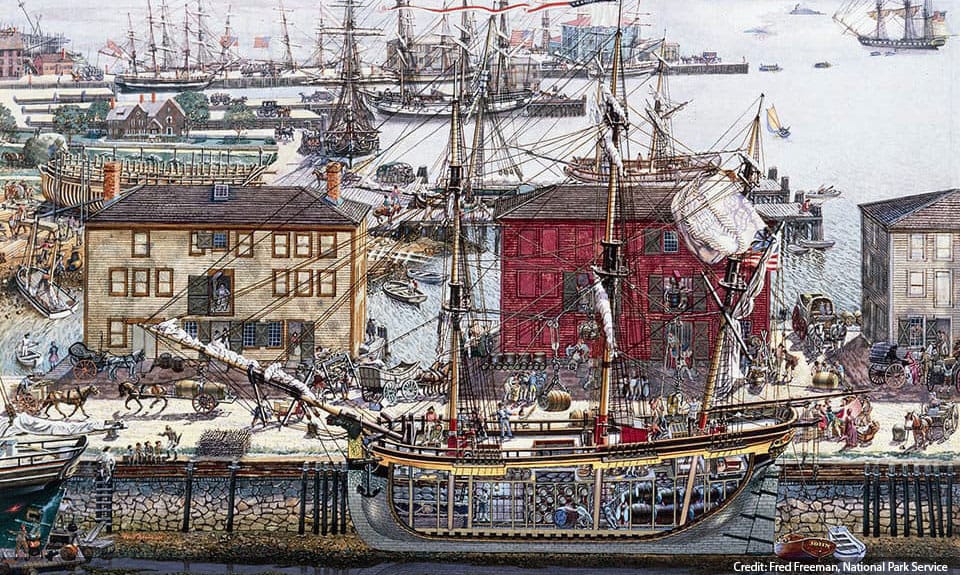
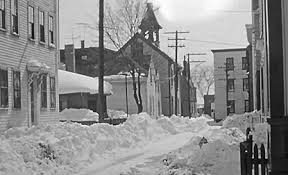
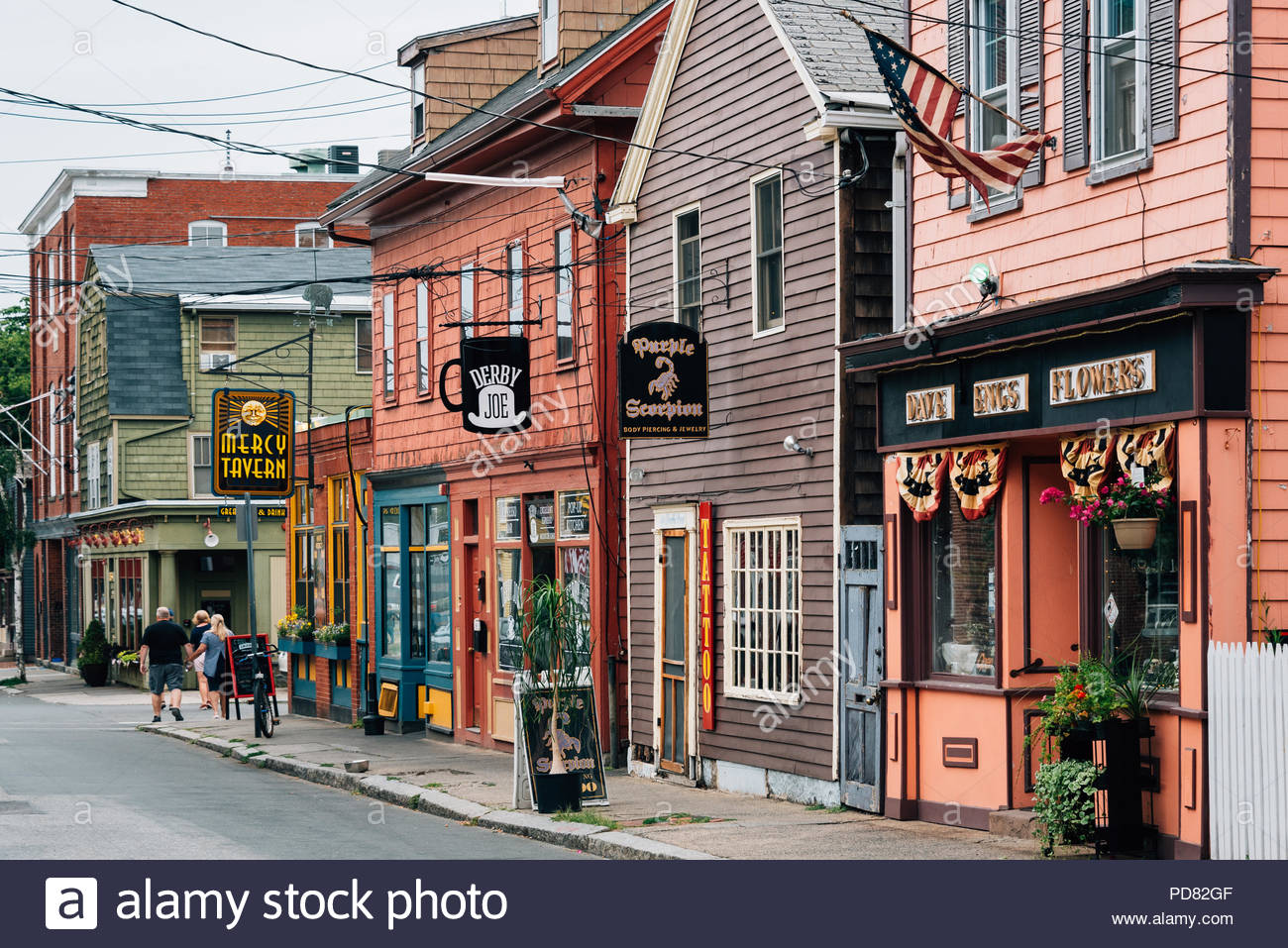
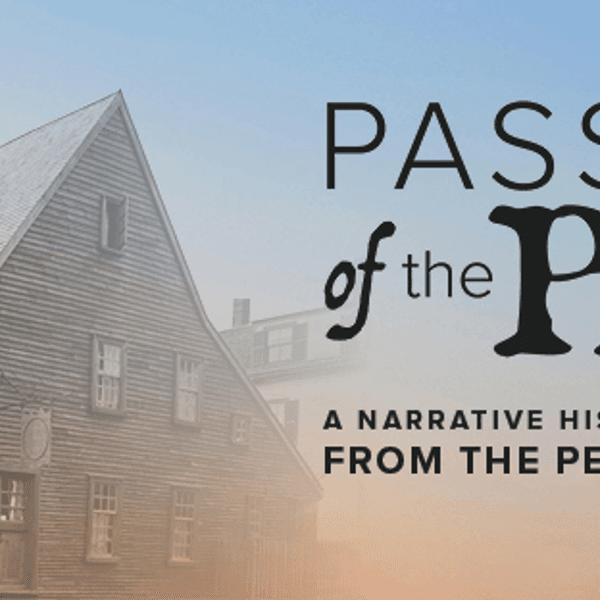
This immersive audio experience will take you through the historic working class neighborhood around the famous House of Seven Gables in Salem MA. You can access this tour 24/7 as all Echoes are located both on and off the campus. You will follow a walking route exploring Turner St., Essex St, Daniels St, Derby St to the waterfront and end back at the House of 7 Gables on the Hardy St side. Please makes sure your phone is charged and this tour works best when it is downloaded to your device. While you can enjoy this through your device speaker it was designed to be listened to with headphones. We hope you enjoy this walk through one of Salem's oldest neighborhoods. This tour was made possible by a grant from the Salem Cultural Council and the support of the House of Seven Gables
Welcome!

Hello this is Carly Dwyer, founder and Creative Director of Intramersive Media LLC. We wanted to thank you for joining us today in exploring 500 years of communities that have formed the neighborhood in which you stand. We want to take a moment to give you some tips and heads up so that you can get your full enjoyment out of this tour. This tour was made possible by a grant from the Salem Cultural Council and the House of Seven Gables. Please support these amazing organizations who are keeping communities, art and culture alive.

This tour can be experienced on your own time. You can start and stop as you choose. We encourage you to stop and enjoy the shops and restaurants you will encounter along the way, all of these businesses are a part of this community and your patronage becomes a part of the story of the future of this neighborhood.

Please respect the private properties that are on this tour, while the businesses appreciate your company, not all the private citizens will. Please stay on the sidewalk when possible and keep an eye on traffic if traversing a narrow street.

Stay alert of your surroundings. We have designed an audio experience to be immersive but please please please stay aware of crossings, traffic and even footing. This neighborhood has been around for hundreds of years, sidewalks and streets are not always level and narrow driveways might be hard for a motorist to see you if they are backing out.

Check the text box in the app! We provide information about the people and languages you’re hearing and more information and follow up reading you can do if something piques your interest.

We hope you enjoy this immersive cultural experience and please check out our website for more ways to interact and play.

If you have any questions concerns or comments on this tour or the app please email us at info@intramersive.com

1 sound

Madame Please I Beg Your Aid (2:06)

Joan Sullivan is played by Arielle Yoder Mrs. Turner is played by Arielle Kaplan

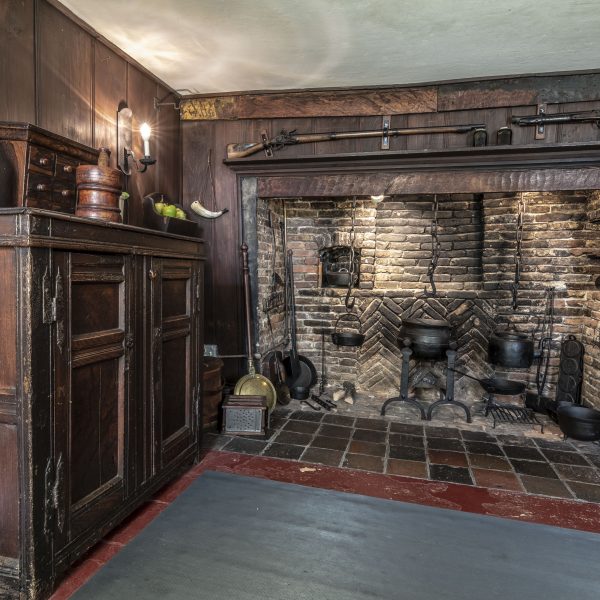
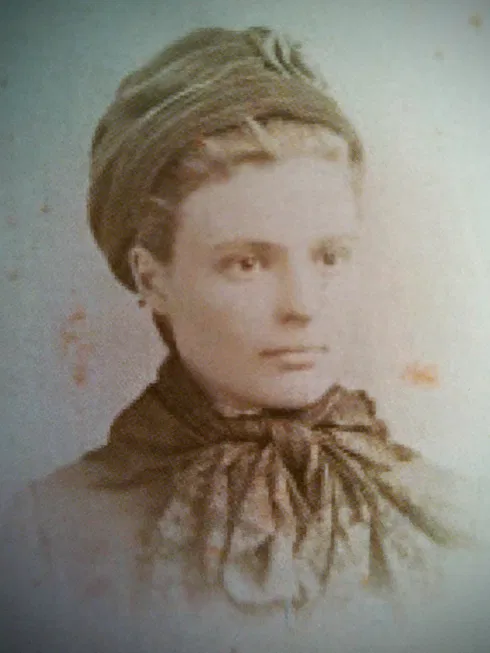
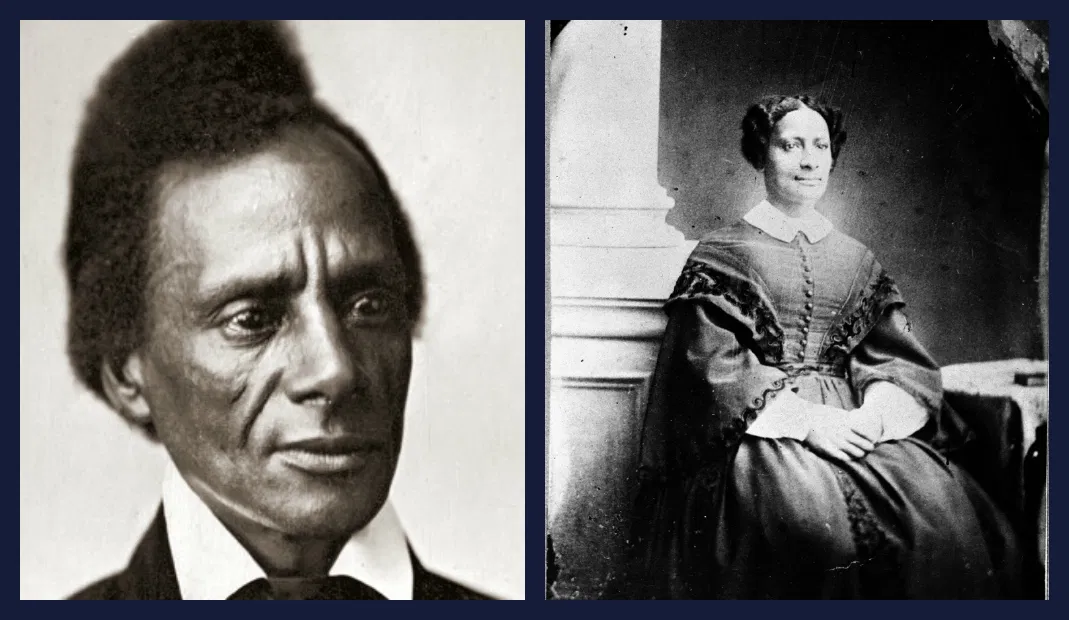
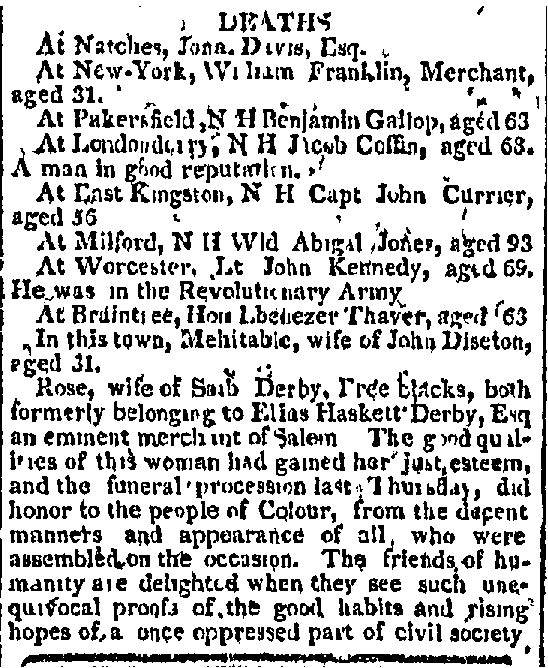
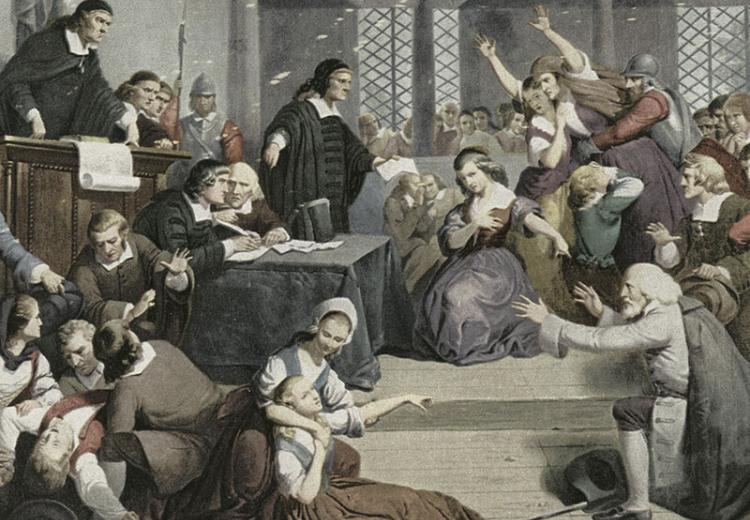
Joan Sullivan was an Irish indentured servant who was briefly indentured to the Turner family, but at some point before 1681, her certificate of indenture was transferred to Thomas Maule, a Quaker who lived on the Northside of Salem, on Essex St. In November of 1681, she became one of the first indentured servants to bring a civil suit of abuse against a master. Typically, certificates of indenture last for a period of 7 to 10 years, and there are several recorded cases of abuse of this system, that would often result in an indefinite period of indenture, that would leave the contractee indebted to the previous contract holder, and therefore helpless to escape a system of servitude. Joan most likely came from County Cork or County Kerry in the far southwest of Ireland. Before Joan’s certificate of indenture was sold to Thomas Maule, she worked in the household of Captain John Turner, and his wife Elizabeth Roberts Turner, and we now know this home as the House of the Seven Gables. Historians surmise that Joan was probably transferred to Maule sometime either immediately before or after the death of John Turner in 1680. Her contract was transferred for 9 pennies, the approximate price for a pound of bacon in 1660. She took her case to the tavern of Bartholomew Gedney, a wharf owner and town magistrate of Salem, who would later go on to serve on the Court of Oyer and Terminer during the Salem witchcraft trials of 1692. Joan’s case was ultimately dismissed, and Maule was only charged with breaking the Sabbath for making Joan work on Sundays. The abuse charges were dismissed, though Maule himself would have several run-ins with the court later in his life. Joan stands as a testament to the resilience of a young woman with no help in this colonized nation, who used the court system and took a stand against an instance of patriarchal abuse. Though she was discredited in court, and did not see any kind of justice, her story is a reminder of the struggles of many who built the neighborhood you now stand in, and admire.

1 sound

Morning Drop Off (1:08)

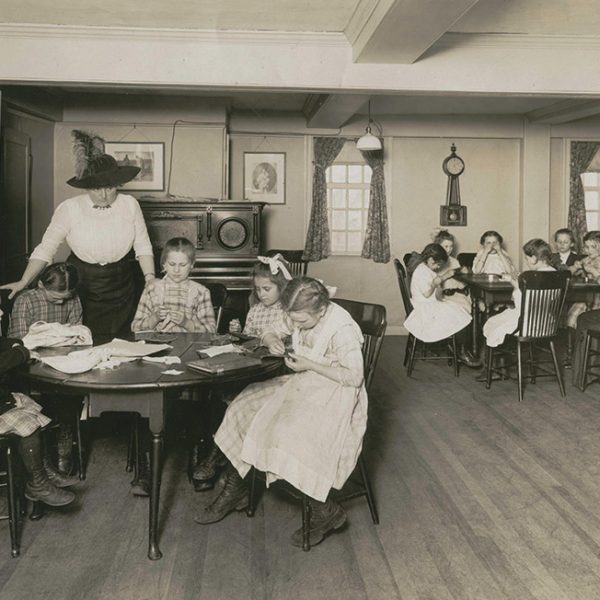
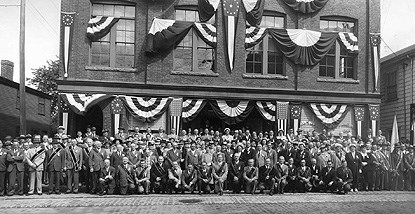
The following text box contains a series of excerpts (in quotations) from Caroline Emmerton: An Unbounded Vision by David Moffat, published by the House of the Seven Gables Settlement Association in 2016, with an addendum at the end by Kristin Harris (available in the Gift Shop at the House of the Seven Gables): According to local author David Moffat, “the first settlement house was founded in London in 1884. The American settlement house movement developed directly from the establishment of Toynbee Hall in London. In 1886 the first American settlement house-- The Neighborhood Guild-- opened on the Lower East Side of Manhattan. The Neighborhood Guild adopted the British model to have middle class social workers “settle” among the urban poor, learn about the effects of poverty, and provide services in response to their findings.” Other such settlement houses popped up all over urban cities in America, including the famous Hull House, started by Jane Addams and Ellen Gates Starr in Chicago in 1889. Moffat states that “by 1890, four years after the establishment of The Neighborhood Guild, there were 400 settlement houses in the United States. [...] In Salem, Massachusetts, the growth of textile manufacturing and the leather industry attracted waves of immigrants. Though not a large urban center, the need for a settlement house existed. [...]” Caroline Emmerton, whose family had been active in various public circles was on the committee for establishing a settlement house in Salem, and was successful in acquiring the Turner-Ingersoll mansion, now the House of the Seven Gables, and according to Moffat, “The House of the Seven Gables Settlement expanded its services after the restoration of the Turner-Ingersoll Mansion was completed in 1910. Settlement residents, the people who worked for the organization, lived on the second floor of the house. A kindergarten, part of an early slate of programs, evolved into a summer school. Offerings from 1915-1916 included gymnastics, bead-work, knitting, embroidery, basketry, woodworking, and gardening. Arts opportunities included dramatics clubs, a brass band, a stringed orchestra, a girls’ choir, and violin instruction.” While the settlement house movement aimed to use philanthropic ideals to aid immigrant communities, it should be noted also that the main goal was to “Americanize” immigrants to assimilate into our cultural practices and societal expectations, especially in major cities, which is why a majority of settlement houses ended up centering in New York, Chicago, and Boston. Settlement workers were very aware that by teaching certain skills and arts, they were creating an “ideal” immigrant in the vision of white Yankee culture. You can read more about Caroline Emmerton’s work in Moffatt’s book, as well as in several other selections available at the House of the Seven Gables gift shop, or by visiting their website. https://7gables.org

1 sound

Servitude and an Unknown Future (3:24)

Joan Sullivan is played by Arielle Yoder

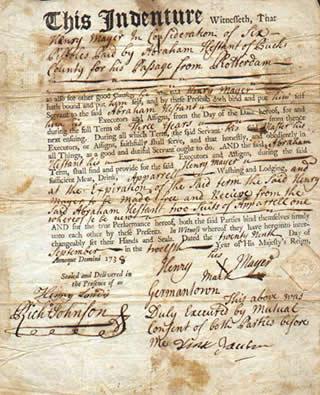
For much of the colonial period in 17th century Massachusetts and elsewhere in the colonies, indentured servitude was widespread. So widespread in fact, that anywhere between one-half and two-thirds of European immigrants to the Thirteen Colonies between 1630 and the American Revolution came under indenture contracts at some point. This was usually an agreed-upon term of employment to pay for passage to the colonies, and was used to encourage population in various places. If the indenture was a teen or younger, the certificate would be signed by a parent, usually a father. Certificates of indenture typically lasted between 3 and 7 years on average, but could be extended due to instances such as accrued debt, increase in needs, or truancy if an indentured servant ran away. People who were prisoners were often given the option of signing an indenture contract and being shipped to the colonies to avoid jail time, and more often than not, took the offer. The difference, however, is that an indenture contract would eventually end, and the indentured person would receive “freedom dues,” and become a free member of society. This is what differentiates the system of the African slave trade from the lives of indentured servants like Joan Sullivan. The indenture system started to die off toward the end of the 17th century, and by 1775, this economic system would start to give way in favor of the African slave trade.

1 sound

Joan meets a mariner (1:29)

Mariner is played by Deity Dionysus Joan Sullivan is played by Arielle Yoder

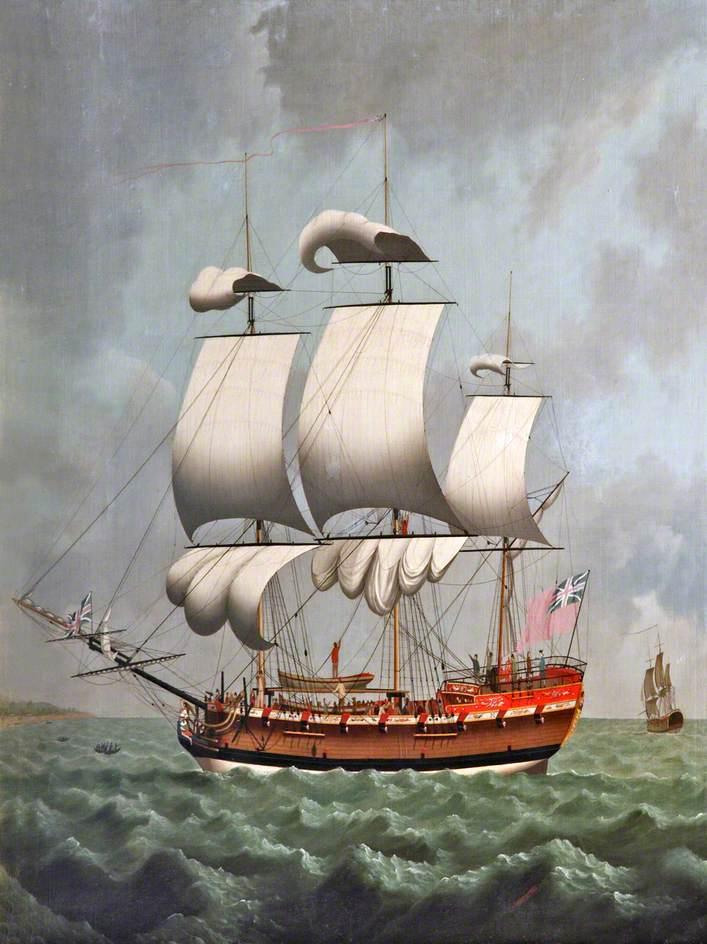
In the late 17th century, and onward toward the American Revolution, due to changes in the English colonies, and differing labor demands, the system of indentured servitude declined. This increased the demand for enslaved African labor, thus creating a new system of laws needed to uphold a system of involuntary servitude. In 1662, a European law was adopted in the Virginia House of Burgesses, that quickly spread into use throughout the colonies. Partus sequitur ventrem, often abbreviated as partus, was a legal doctrine that dictated that the status of the mother would fall to the child. In short, children born to enslaved mothers would themselves be enslaved at birth. Partus was the beginning of what would become the system institutionalized chattel slavery that lasted centuries in the Americas. On February 28, 1638, governor John Winthrop wrote about a ship coming in from Bermuda that had enslaved Africans on board. According to the letter, “Mr. Pierce, in the Salem ship, the Desire, returned from the West Indies after 7 months. He … brought some cotton, and tobacco, and Negroes.” While this was probably not the first ship to bring enslaved Africans to Massachusetts Bay Colony, this is the first documented case. While the system of partus was passed in 1662, Massachusetts Bay Colony itself became the first English mainland colony to make slavery legal in 1641. For more on the impact of the African slave trade on Massachusetts, please visit: https://www.massmoments.org/moment-details/first-slaves-arrive-in-massachusetts.html

1 sound

A Spoonful of Sugar (1:48)

Mary Spencer is played by Arielle Kaplan

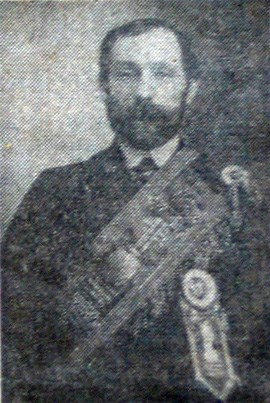
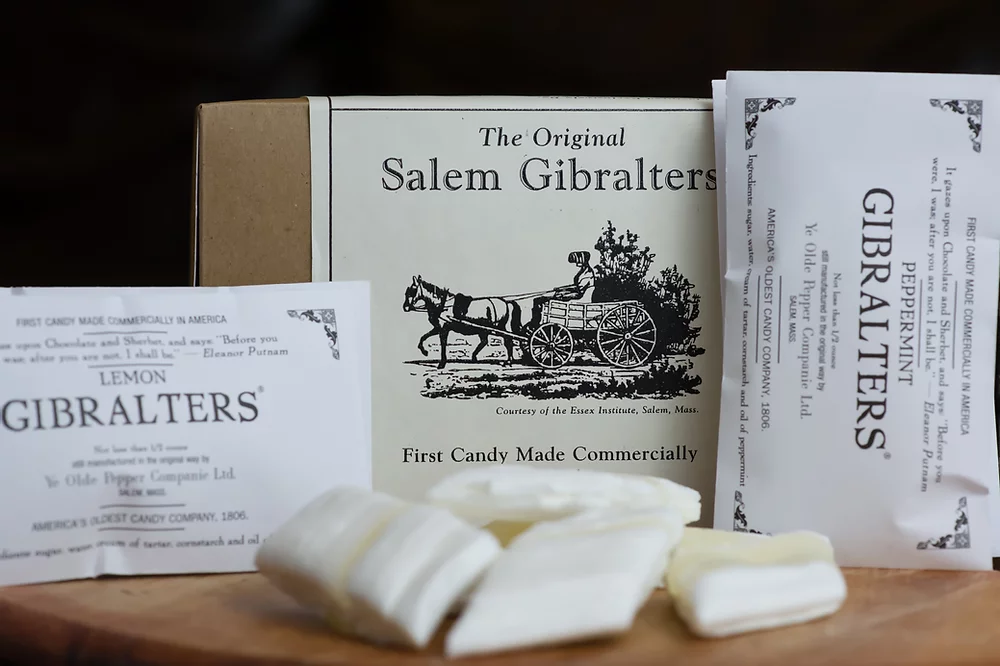
From the Ye Olde Pepper Companie website: Early in the 19th century an English family, Spencer by name, sailed for this country. On the passage they lost all their worldly goods in a shipwreck and the family arrived in Salem in a rather destitute condition. They took up a residence in North Salem, on Buffum Street, and such were their privations that their neighbors determined to offer assistance. It became known that Mrs. Spencer was a candy maker, so a barrel of sugar was donated. It was this barrel of sugar which laid the foundations of the well-known ‘Salem Gibralter’ business.

There is no need to say “What’s in a name?” No other name would ever apply to these sweet memories of our childhood. Their fame has gone forth and people come from far and near to buy these delightful little dainties, done up so mysteriously.

When one is enjoying the purity and delicious flavor of this confection it is hard to realize that they are made and wrapped in exactly the same way as sold by Mrs. Spencer from a pail, on the steps of the Old First Church, over 200 years ago. Gibralters at once became very popular and the storekeepers placarded their windows with their name. A prosperous business was established and so rapidly increased that Mrs. Spencer bought a wagon from which to peddle her wares, and might be seen driving this quaint outfit, a picture of which is reproduced here, through the streets of Salem and surrounding towns. Isn’t it amazing that a woman in that day could start and own a business, all starting with a piece of candy. Today the Peabody Essex Museum has custody of her wagon and the firkins she used to deliver her sweets.The Gibralter needed not the insignia of nobility to make them popular is very true, for their fame went out so broadly that they were known from Salem to the Far East, China, India, the East Indies and Africa. In the days of Salem’s commercial prosperity her sea-captains would not think of making a voyage without a case of Salem Gibralters. Their purity is proved as they keep fresh in all climates.After Mrs. Spencer’s death in 1835 her son Thomas Spencer continued the business for a short while, and the surprise was very general when people learned one day that Thomas had fallen heir to a fortune and Title in England. He disposed of his business to a local confectioner from Salem, John Pepper. After proper arrangements concluded Thomas would leave for England with all his household goods, taking with him the body of his mother. That they had been expecting this event there is no doubt, as the body of his mother was embalmed and placed in a metallic casket, a thing so unusual then that it caused one old gentleman to remark, “I guess she will never hear Gabriel’s trumpet through that thing.”

1 sound

Settlement House and Lending a Hand (1:08)

Joan Sullivan is played by Arielle Yoder

From the House of Seven Gables website: Emmerton used proceeds from museum visitors to fund The House of the Seven Gables Settlement Association. In the early 20th century, the settlement house movement was seen as the progressive method to help newly arriving immigrant families adapt to life in their new cities. Settlement houses offered a variety of services including classes, medical care, and recreational opportunities.
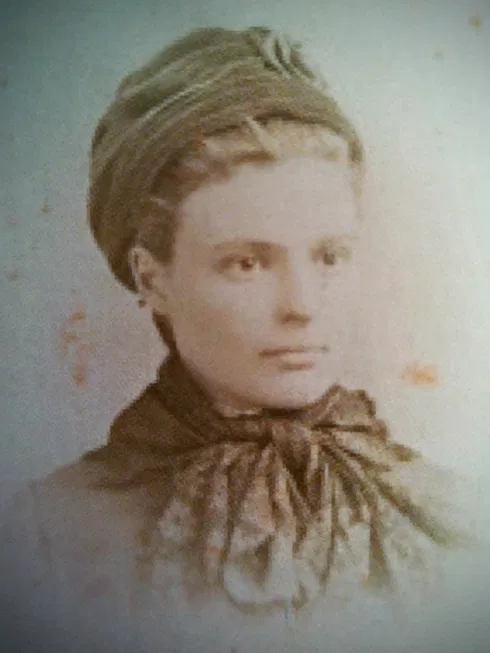
In Salem, the first settlement house was run by the YMCA. By 1908, the YMCA settlement house was located in the Seaman’s Bethel at the bottom of Turner Street where The Gables’ seaside lawn is today. The Bethel was a church for sailors associated with the Young Men’s Bethel Society that formed in the 1820s. In 1908, Emmerton assumed responsibility for the settlement house. She said the offerings included, “sewing…and some of the other handicrafts, dancing and gymnasium work.”

Emmerton expanded the programs and services of the settlement house to the point that they exceeded the capacity of the Seaman’s Bethel. When Emmerton learned that the neighboring Turner-Ingersoll Mansion was up for sale, she purchased it as the settlement’s practical and collective center.

Emmerton wrote of her choice: “If, as is generally conceded, the settlements do the best Americanization work, should not this settlement excel whose home is the ancient House of Seven Gables, the foundations of which were laid by the first immigrants who came here long ago, strangers in a strange land?”

Residents in the surrounding Derby Street neighborhood were the primary beneficiaries of the settlement house. The area was an enclave for Eastern European immigrants, especially from Poland and Russia. Other communities served by Emmerton’s work included the Irish, Italian, Syrian, and African. https://7gables.org/

1 sound

DOWNLOAD OUR APP TO DISCOVER THIS TOUR AND MANY OTHERS.

play-storeapp-store

Or start creating tours, treasure hunts, POI maps... Just let your imagination guide you.


Other walks nearby

Sound on Mystic

Sound on Mystic

Sound on Mystic is an outdoor audio installation combining music, spoken word, sound art and ambience into an immersive experience. It is located along a two-mile stretch of the Mystic River in Medford and Arlington, Massachusetts, and is accessed through ECHOES, a free mobile app that uses GPS data to cue different sounds at various sites. Once you download the app, just put on a pair of headphones, take a walk within the installation’s extensive boundaries, and you'll hear a diverse set of sound works that are all united by the river itself, and its complex legacy as a place of history and nature, community and conflict, labor and recreation. Access Instructions: Install the ECHOES app (the link is below, skip to step 3 if you've already found the walk in ECHOES) Search for "Sound on Mystic" inside the app Download the walk (this will function better than streaming the walk) Close out other apps on your phone that access your location and may interfere with ECHOES Go to the river and open the walk. You will see a map with areas highlighted in blue. As soon as you enter a highlighted area, sound will automatically begin to play. Depending on how fast you walk, some pieces will overlap with each other, or some pieces will play completely leaving a period of silence. Don't worry, that's all just part of the experience -- enjoy! Sound on Mystic is created by Ian Coss, Dwayne A Johnson, and Gary Roberts, with funding from the Medford Arts Council and Arlington Cultural Council, and support from the Mystic River Watershed Association. Contact us at soundonmystic@gmail.com.
free
Traces

Traces

Boston Common
Let your route be arbitrary. There is no particular place you need to be. Feel free to sit down and rest whenever you'd like. If you move through the Common in a non-goal oriented way, the score will stay with you and shift based upon the path you choose and wherever you end up. Traces (2025) A soundwalk for Boston Common What happens when we change the soundtrack of a place we think we know? Traces is a user-guided geolocated soundwalk through Boston Common that invites listeners to imagine the history of an iconic landscape through a radically altered composition of the park's sounds. A musical composition of electronically processed field recordings, found sounds and archival recordings are woven into a lush soundscape designed to deepen perception of this historic place. By shifting our attention from sight to sound, Traces offers a spherical experience of place, rather than a linear one: a layered sonic architecture where personal associations and echoes of history are omnidirectional. Rather than telling a fixed story, Traces amplifies quiet voices and ephemeral impressions, making the participant both witness and storyteller. In the private seclusion of headphones, listeners move through the park, free to wander and imagine—remapping The Common on their own terms. Traces offers us a chance to slow down, listen, and discover our own relationship to the unseen contours of a public space. Created and Produced by Christina Campanella Music composed and performed by Christina Campanella (field recording, sampling, keys, synth) and Mark Spencer (electric, baritone and bass guitars, pedal steel, kalimba, harmonica, percussion). .. -- .. ... ... -.-- --- ..- to live is to leave traces walter benjamin .- -.. .- -.. -... . for elizabeth
free
Nature Walk

Nature Walk

Boston
Nature Walk is set in Boston Common and Public Garden. Enter or dwell at any point. It is in three sections: The Great Elm Remembers surrounds The Great Elm in Boston Common and is a meditation on deep memory — both public and private. The Great Elm is no longer standing, yet it endures in our public memory. And for many — those still living and those now passed — it holds personal memories, some of which are woven with its public history. These memories have a power to connect us across time — to a moment, a people, or perhaps a person. In cultures native to this place, the songs of birds are sometimes heard as messages from the spirit world. It seemed fitting to place virtual flocks on this now phantom tree. Inhabiting its absence are sonic populations of local birds. At the tree’s core, these birds resonate wind chime bells to aid their messaging. These in turn resonate down through its roots — and its still- remembering rhizosphere. Gibbons in The Garden presents a tropical forest surrounding the Boston Public Garden Lagoon. There is a tradition at the Garden of planting tropical flora in the summer months. This stems from a Victorian era fascination with the Tropics. We extend that here with recordings of a 130 million year-old forest - among the oldest on earth - that I made in Sabah, Malaysia (Borneo) in the Fall of 2024. Several recordings are set around the Lagoon. A small group of gibbons have broken free to sing throughout the Garden along with a few of their Sumatran cousins. Near the entrance on Charles St, one of the forest soundscapes is mixed with tones derived from a mRNA sequence that is the focus of the next section. Running between the above two biomes between Charles Street and The Great Elm is Ribosome Retune. The name is a play on the focus of this section - exploring Just Intonation on scaffolding of gene expression. This section of the walk dives into a smaller scale of nature, but in a way with significance for Boston. Musically, I was interested in spatial animation of harmonic tunings mirroring natural patterns and processes. I was drawn to Just Intonation (JI) for its clarity and richness of harmony that defies Western tuning’s (12-Tone Equal Temperament) 12-TET categorizations of consonance and dissonance. This unmooring from 12-TET categorical intervals is abundant in the finer details of intervalic combinations and their relation to functional harmony. This more nuanced psychological space is what I wanted to explore. But it’s a vast and chimeric domain. So I sought a natural architecture on which to structure this exploration. I chose gene expression for a couple of reasons. Our recent experience with the Covid-19 pandemic brought broad public awareness (and gratitude!) to the field of biochemistry in its rapid development of mRNA vaccines. Secondly, for this ICMC, it seemed a modest way to honor the enormous contributions to this field from across Boston’s great research institutions. Indeed, last year (2024), Victor Ambros at Massachusetts General Hospital and Gary Ruvkun at Harvard Medical School were awarded the Nobel Prize in Physiology or Medicine for their work on microRNA regulation of mRNA. But what is that? Might it offer a “natural scaffolding” on which to explore JI? This piece is that exploration - a personal adventure to learn about the fundamentals of gene expression voiced through spatial JI. It is an exploration, not an explication. That is, I wouldn’t claim today’s result is a salient “sonification” of RNA transcription and translation. But I’ve tried to represent the biochemical qualities and processes coherently, and - as for any musical work - hopefully in ways that offer worthy listening. This section uses the coded section of the LIN-14 gene (that used in Ambros and Ruvkun's work) to generate tones from its bases and spin out chords of their coded amino acids using the amino acids' molecular weight, polarity, and charge to affect their chords' tones, size, spread, and rotation. The short LIN4 miRNA sequence enters above the walk and moderately stifles amino acid chords in its proximity. More information on the mRNA to Just Intonation mappings is found in their zones: "Ribosome Retune - LIN-14 Coding Region (CDR) Nucleotides and Amino Acids" and "Ribosome Retune - LIN-14 5' Untranslated Region (HTR)". The cover image is from Nature Walk, by Teresa Parod. This painting is one of Teresa's garage door murals in Evanston, IL, USA. See @teresaparod (IG) or teresaparod.com for more work and a map to her ~100 public art works.
author avatar
Bill Parod
free
Hydrophonic Discoveries: Sonic Ecologies of Global Rivers

Hydrophonic Discoveries: Sonic Ecologies of Global Rivers

Boston
River Listening is an interdisciplinary project that invites participants to explore the hidden acoustic ecologies of waterways through an immersive, technologically mediated listening experience. Drawing from a decade of hydrophone recordings and scientific research, this soundwalk transforms the site into a dynamic sonic environment that reveals the rich life beneath the water’s surface. Hydrophonic Discoveries is an immersive soundwalk that reflects on the project’s last decade of work and unveils the hidden acoustic ecologies of river ecosystems through cutting-edge underwater sound recording technologies. This interdisciplinary project transforms scientific research into an artistic experience, inviting participants to explore the soundscapes of global river systems. Drawing from over 300 hours of hydrophone recordings collected from global river systems, the soundwalk bridges art, science, and environmental awareness. The artistic outcomes from River Listening are central to our public engagement efforts, which include soundwalks and live-streaming hydrophone arrays. These artistic projects have contributed to the advancement of scientific recording techniques and ecoacoustic methods. The River Listening project has presented over 35 soundwalk projects on the Echoes platform since 2014 and was an early adopter of this platform. Created by Dr Leah Barclay and Dr Toby Gifford for ICMC Boston 2025 www.riverlistening.com \#RiverListening
free

Are you a creator?

START HERE

Privacy & cookie policy / Terms and conditions

© ECHOES. All rights reserved / ECHOES.XYZ Limited is a company registered in England and Wales, Registered office at Merston Common Cottage, Merston, Chichester, West Sussex, PO20 1BE

v2.5.15 © ECHOES. All rights reserved.