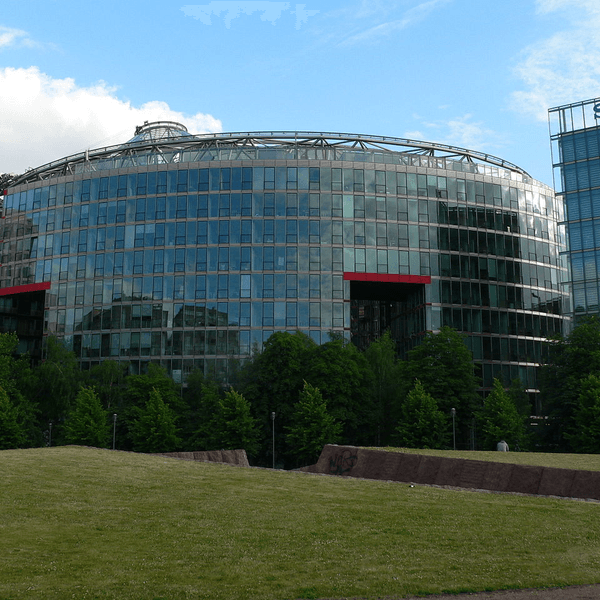
Station 3: Zafraan Ensemble: »UA Berlin – Die 1920er: Exil« Morton Feldman: Durations 1 [Route]

1 sound

[DE] Irma Schoenberg holt Stefan Wolpe zunächst nach Bukarest. Am Tag seiner Einreise wird dort der liberale Premierminister Ion Duca durch die faschistische Eiserne Garde ermordet. Der Aufenthalt in Bukarest konnte somit nur kurz sein. Die nächste Station ist Jerusalem, wo sich beide am Aufbau der späteren Rubin Academy of Music and Dance beteiligen.

Nachdem wegen Wolpes radikaler musikalischer Anschauungen die Anerkennung als Komponist aber ausbleibt, bleibt nur noch die Ausreise in die USA. Dort wird er zum gefragten Lehrer. Ab 1944 unter anderem für Morton Feldman, der ihn als Lehrer hoch verehrt und in seinem Verständnis von Form und Parametern stark beeinflusst wird.

In Feldmans Worten: Ich lernte, dass das alte Sprichwort „Regeln sind da, um gebrochen zu werden“ eine Lüge war. Sie waren in Wirklichkeit Hindernisse, über die man springen musste – dass unsere Musikgeschichte und das Vorgehen, Noten in Formen zu bringen ein trügerischer Hindernislauf war.

In der Mitte des kleinen Parks, kreuzen sich vier Wege, so wie sich die vier Stimmen in Feldmans Quartett annähern, aber doch nie ganz aufeinandertreffen. Diese Kreuzung ist, obwohl dort Wege aufeinandertreffen, ein merkwürdiger Ruhepunkt in der geschäftigen Umgebung des Sony Centers.

Für den Sound Walk Berlin hat das Ensemble eine Route erstellt, die das Berlin der 20iger Jahre musikalisch nachvollzieht, in denen es unweigerlich auch ums Exil geht. Die Route basiert auf einer Reihe mit zehn Kammerkonzerten, in der das Zafraan Ensemble die Geschichte Berlins von den 1910er Jahren bis heute als eine musikalische erzählt. Jeder der Konzertabende stand für eine Dekade, bei dem ein in diesem Jahrzehnt in Berlin uraufgeführtes Werk den programmatischen Auslöser bildet.

Das Zafraan Ensemble steht für Musik, die das heutige Leben, die heutige Gesellschaft, die heutige Realität in all ihren Facetten reflektiert. Die aus zehn festen Mitgliedern aus Spanien, Frankreich, Neuseeland, Australien und Deutschland bestehende Gruppe formierte sich 2009 in Berlin und spielt hauptsächlich aktuelles Repertoire, das von der Kernbesetzung mit Violine, Viola, Cello, Bass, Flöte, Klarinette, Saxophon, Harfe, Klavier und Percussion abgedeckt abgedeckt wird. In Zusammenarbeit mit Dirigenten wie Manuel Nawri oder Titus Engel, mit Künstlerinnen wie Chiharu Shiota und Aliénor Dauchez, mit Komponisten wie Samir Odeh-Tamimi, Yoav Pasovsky, Elena Mendoza, Stefan Keller, Lula Romero, Eres Holz oder Johannes Boris Borowski gehen sie ans Limit, riskieren und schaffen Neues.


[EN] Stefan Wolpe was first invited to Bucharest by the pianist Irma Schoenberg. On the day of his arrival however, the liberal Prime Minister Ion Duca was assassinated by the Iron Guard, cutting short Wolpe’s stay in the city. Both Wolpe and Schoenberg then traveled to Jerusalem where they were involved in the establishment of what is now known as the Rubin Academy of Music and Dance. However, after extensive criticism of Wolpe's radical musical views, the pair then departed for the USA. It is here, that Wolpe was able to establish himself as a teacher.

Morton Feldman, a former student who regarded Wolpe highly, wrote: ”I learned that the old adage 'rules are made to be broken' was a lie. They were, in fact, obstacles to be jumped over - that our musical history and approach to putting notes into forms was a deceptive obstacle course”.

In the middle of the small park, four paths cross, just as the four voices in Feldman's quartet approach, yet never quite meet. This intersection, although paths meet there, is a strange resting point in the busy environment of the Sony Center.

For the Sound Walk Berlin, the ensemble has created a tour that musically traces Berlin in the 1920s, which is inevitably also about exile. The route is based on a concert series in which the Zafraan Ensemble tells the story of Berlin from the 1910s to today as a musical one. Each of the concert evenings stood for a decade, with a work premiered in Berlin in that decade forming the programmatic trigger.

Zafraan stands for music that reflects all facets of life, society and reality today. The ensemble constitutes ten fixed members from Spain, France, New Zealand, Australia and Germany. It predominantly performs contemporary repertoire that is covered by its core instrumentation of violin, viola, cello, double bass, flute, clarinet, saxophone, harp, piano and percussion. The group challenges itself and the audience; they experiment and surprise. In collaboration with conductors such as Titus Engels or Manuel Nawri, artists such as Chiharu Shiota, Aliénor Dauchez and Louise Wagner, and composers such as Samir Odeh-Tamimi, Alexander Schubert, Elena Mendoza, Stefan Keller, Johannes Borowski, Eres Holz and Helmut Oehring, they push at boundaries, provoke, take risks, and create something new.


Part of this walk

Sound Walk Berlin | field notes

Sound Walk Berlin | field notes

Berlin
Hier geht es zum Download der DRIFTER App mit dem Sound Walk Berlin: (https://www.poligonal.de/drifter/ev296v9bdwJd85h7/) \[DE] Was macht die Stadt mit der Musik und umgekehrt die Musik mit ihr? Mit dem Sound Walk Berlin möchte die inm / field notes die Debatte über die soziale und politische Bedeutung der Musik im urbanen Raum und ihre Repräsentanz in der Stadt vertiefen, wobei auch der Klang der Stadt selbst in den Blick genommen wird. Mit dem Sound Walk Berlin erobert die zeitgenössische Musikszene den Stadtraum und macht die Straßen Berlins zur Bühne. Künstlerinnen, Ensembles und Bühnen der zeitgenössischen Musik haben für den Sound Walk diverse Orte in Berlin klanglich erweitert oder neu definiert. Die Sound- und Musikbeiträge interagieren mit den urbanen Klängen des Ortes aus Verkehr, Stimmen, Spielplätzen, U-Bahn und Baustellen und kommentieren dessen architektonische Beschaffenheit, Geschichte und Umgebung. Der Sound Walk Berlin lädt Bewohnerinnen und Besucherinnen dazu ein, die Stadt aus Perspektive der Künstlerinnen zu erfahren. Die persönlichen Hörerlebnisse sensibilisieren für den individuellen Klang unserer Wohn- und Lebensräume, schärfen den Blick bzw. das Gehör für die Verbindung von Klang und Stadt und regen vielfältige Diskussionen über den Klang der Stadt und zu Räumen für Musik an. Bei den Spaziergängen kann im selben Zug die Stadt und die zeitgenössische Musikszene (neu) entdeckt werden. Die inm – initiative neue musik berlin e.V. bündelt und vertritt als Dachverband der freien Szene der neuen Musik die Interessen der Akteur\*innen der Berliner Szene gegenüber Politik und Verwaltung. Sie ist als Sprachrohr und Partnerin im Dialog etabliert und als Förderinstitution ein wichtiger Bestandteil der Berliner Kulturlandschaft. Das field notes Programm ist seit 2016 die zentrale Informations- und Beratungsstelle für die zeitgenössische Musikszene Berlins der inm – initiative neue musik berlin e.V. Mit seinem breit aufgestellten Informationsangebot aus online Plattform www.field-notes.berlin und dem field notes Printmagazin trägt es zur Stärkung der Sichtbarkeit der zeitgenössischen Musik im Berliner Kulturleben bei. Zur Professionalisierung der Szene bietet das field notes Programm kostenfreie Beratungen, Workshops und Informationsveranstaltungen zu Fragen rund um die Arbeit in der Freien Szene an. Mit einer jährlichen Konferenz zur zeitgenössischen Musik im globalen Kontext regt es außerdem zur Reflexion über die Rolle der zeitgenössischen Musik in der heutigen Gesellschaft an und vernetzt Berliner Akteur\*innen mit einem Internationalen Fachpublikum. Als Querschnittsthema setzt sich das Programm bei all seinen Aktivitäten zum Ziel, die gesellschaftliche Vielfalt stärker im Programm, Personal, Publikum und bei den Partnern abzubilden und (strukturelle) Diskriminierung abzubauen. \[EN] What is the relationship between music and place? With the Sound Walk Berlin, inm / field notes aims to deepen the debate surrounding the social and political significance of music in urban space and its representation, while also observing the sound of the city itself. With the Sound Walk Berlin, the contemporary music scene is reclaiming its urban space and turning the streets of Berlin into a stage! Artists, ensembles and venues of the contemporary music scene expanded or redefined various places in Berlin in terms of sound. Sound and music interact with the existing urban sounds of a place (such as traffic, voices, playgrounds, subway and construction sites) or comment on its architecture, history and surroundings. With the Sound Walk Berlin, residents and visitors can experience the city from the perspective of the artists. These personal listening experiences sensitise the listener to the unique sounds of our living spaces, and to the connection between sound and city, and thus stimulate diverse discussions about the relationship between sounds of the city and spaces for music. On the walks, both the city and the contemporary music scene can be (re)discovered. The inm is an association of musicians, ensembles, composers, musicologists, cultural managers, and organizers who are active in the field of contemporary music. An aesthetically and structurally open institution, its main effort is to secure and improve the working and production conditions for New Music. field notes is a central resource of information and mentoring for the contemporary music scenes in Berlin provided by inm – the initiative neue musik berlin e.V. Its goals are to strengthen and improve production conditions for the independent contemporary music scenes in Berlin, and to raise public awareness of social relevance of the art form. By connecting and catalysing the rich potential of Berlin's contemporary music scene, field notes actively raises general interest in new music. It gathers information on events and developments in the contemporary music scene and presents them online at www.field-notes.berlin and in the bimonthly field notes magazine. Each year in September, the Month of Contemporary Music promotes current works by Berlin ensembles, artists and composers, in established concert halls as well as in independent venues. The festival’s focus is on today's music and attracting new audiences. To strengthen the scene itself, field notes offers free consultations, workshops and events. With an annual conference on contemporary music in a global context, it also encourages reflection on the role of contemporary music in today's society and connects Berlin-based actors with an international audience of experts. As a cross-cutting theme, the programme aims in all its activities to reflect social diversity in the programme, staff, audience and partners and to reduce (structural) discrimination.
free

Privacy & cookie policy / Terms and conditions

© ECHOES. All rights reserved / ECHOES.XYZ Limited is a company registered in England and Wales, Registered office at Merston Common Cottage, Merston, Chichester, West Sussex, PO20 1BE

v2.5.15 © ECHOES. All rights reserved.