The Barbed Tongue

1 sound

The Barbed Tongue

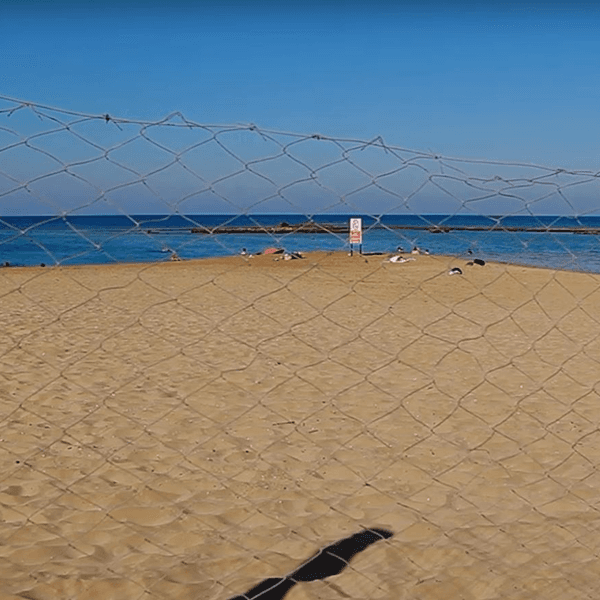
look at your own feet, know where you stand you stand at a barbed tongue of an island sea-ty hidden under the sand

the sea ebbs and flows shows the beached remnants of life sea-born moves the people of the land like grains of sand removes the barb of a conquering military mind

indifferent to the border, the political order of things indifferent to barbaric attire, this barbed wire indifferent to past or whoever is passing the sea is indifferent, take a step in

look at your own feet, know where you stand you stand at a barbed tongue of an island sea-ty falling behind

welcome – you too shall pass

pass knowing where you stand at the medieval suburbs of the walled glory the sea-tizens are forced to leave by approaching bombs the homes are fenced off to host the army for decades long

ghost city they say, not knowing the sea-tizens dream on they live elsewhere to return one day they dream on you shall know you stand where they come to dream on dream with them to revive the sea-ty for all of us this time around

take a step out of the sea and sit for a coffee where you sit now used to be a fish tavern the Faliron of Varosi and the ancient port of the Athenian Sea look at your feet when it’s time to walk, walk onwards in the sea-ty

Don Quixote is right ahead on the wall in his solitude awaiting to meet you through the painter’s window of the Blue Bungalow the blue of the sea will look through you too balancing the weight of eternal dreams and memories in a backpack

Nafia Akdeniz


Part of this walk

We Are Not Ghosts

We Are Not Ghosts

Αμμόχωστος
While the Varosha area is increasingly open to visitors, this work focuses on the human impact of Famagusta / Varosha history and aims at creating empathetic understandings for both locals and visitors. The poet explores place memory and refers to the interrupted life trajectory in Varosha, a place marked by forced displacement. By tapping into the collective memories of several public spaces, such as the Glossa Beach, the Municipal Garden, the Municipal Agora, the Greek Gymnasium and others, Akdeniz aims to identify the familiar and foster a deeper understanding of the refugee experience and the complex realities of the Cyprus conflict. These geo-triggered poems are accessed through the application ‘Sound Walking’ on location and on-line with printed QR codes at specific locations in Famagusta. The title, We Are Not Ghosts, echoes a common phrase used by Varosha refugees. It serves as a counter-response to labelling the city a “ghost town”. Instead, it reclaims the collective memory of its former inhabitants, and the possible future of the city. With these poems, Akdeniz, skilfully navigates the memory of this historical place and merges it with the present experience of the city as a post-war site. This work is produced from Akdeniz’s belief in poetry, aiming to enhance the human experience by involving all the senses and making both tangible and intangible aspects of human existence visible. The sound walk is a collaborative work of the poet Nafia Akdeniz, curator Alessandro Vincentelli, cultural director Argyro Toumazou, sound designer Inal Bilsel, visual designer Andriana Lagoudes, and application developer Jason Murray Winn. The project is produced by D6:EU, a visual arts organisation based in Cyprus, developing new opportunities for artists and cultural collaborations in Cyprus, Europe and the Middle East. Supporters: the Famagusta City Museum, Famagusta Avenue Garage, Famagusta local community, Paralimni – Deryneia Municipality, and Jason Murray Winn – Narrative Infrastructure. The project is a collaboration between the poet Nafia Akdeniz and D6:EU and funded as part of the Art for Social Action small grants programme.
free

Privacy & cookie policy / Terms and conditions

© ECHOES. All rights reserved / ECHOES.XYZ Limited is a company registered in England and Wales, Registered office at Merston Common Cottage, Merston, Chichester, West Sussex, PO20 1BE

v2.5.15 © ECHOES. All rights reserved.
