Inside an Ant Hill
1 sound
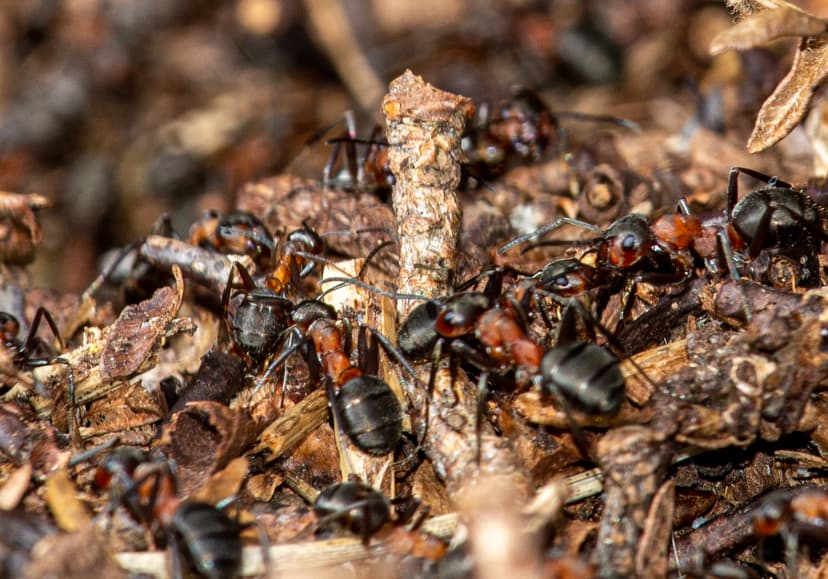
In the warmer parts of the year, you can find many species of ant foraging throughout the dunes. One of the most conspicuous is the red wood ant, Formica rufa. These ants primarily eat honeydew from aphids, so you will see them climbing the trees at Studland. Nests of these ants are large, dome-shaped mounds of conifer needles and other detritus, often built against a rotting stump, usually in a sunny location. Large colonies may have up to 400,000 workers and 100 queens. Here we listened in to the workings of a colony by placing microphones inside one of their nests. As you can imagine, the ants were not pleased about having an intruder, so the sounds you here are partly defensive, as they swarm over the microphone and attempt to bite and sting it. Some of the sounds are made by the legs and feet of the ants as they move through the nest, but you can also hear them making other noises such as the clicking of their mandibles. Are these ants communicating with each other through sound? Some ant species are known to do this, but whether this is true for red wood ant is unknown. However, if you listen carefully, you can hear chirping sounds produced by the ants.
Photo by Neil Davidson. Sound by Adrian Newton 2021.

