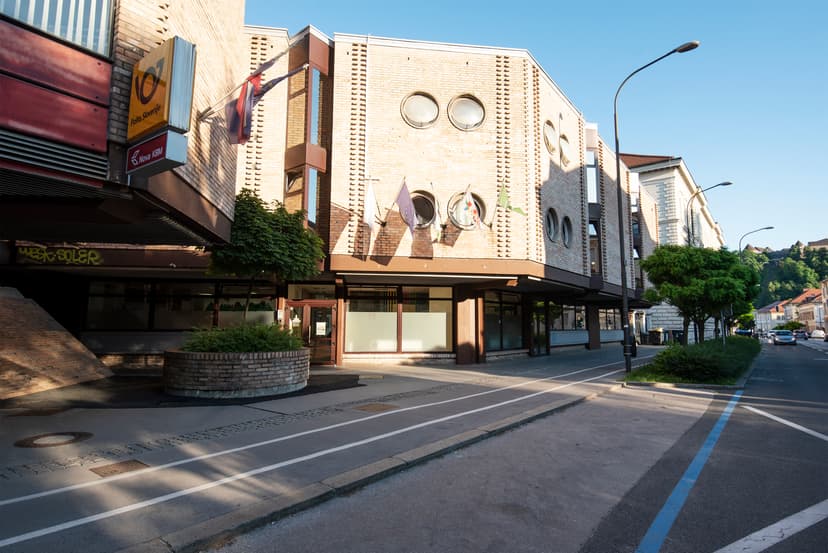
7. Kindergarten on Resljeva street
1 sound
A heat island is a phenomenon typical of larger urban areas, including Ljubljana. In urban or urbanised areas, temperatures are significantly higher than in the surrounding rural areas. The entire mechanism of the phenomenon is based on the absorption of solar energy and the way it is consumed and stored. Solar energy can be used to evaporate water, leaving less energy for warming, but if there is no water to evaporate for some reason, most of the energy received is transformed into heat. In the rural environment, the areas are covered with forest, grass, cultivated plants, while in urban areas, parks and other green areas play a similar role. The soils are soaked with water and also retain it. In winter, when there is snow cover, the surface turns white, reflecting most of the received sunlight. And now, look around. What do you see? Pavement, concrete, and more concrete. Perhaps a tree or two. The situation in cities is therefore reversed. There are few green areas, most of the surfaces are covered with concrete and asphalt, which retain energy perfectly and slowly radiate it back into the environment in the form of heat. In the case of rain, the water drains quickly due to drainage systems, leaving the surfaces dry again, and the snow is ploughed or removed. In these cases, there is no “barrier” that would prevent solar energy from transforming directly into heat, causing higher temperatures and more hot nights, which makes it increasingly unbearable to live in cities during the summer. Another important factor in this respect is climate change, which further increases the heat.

