Section 2: Across the causeway
1 sound
Orasaigh III
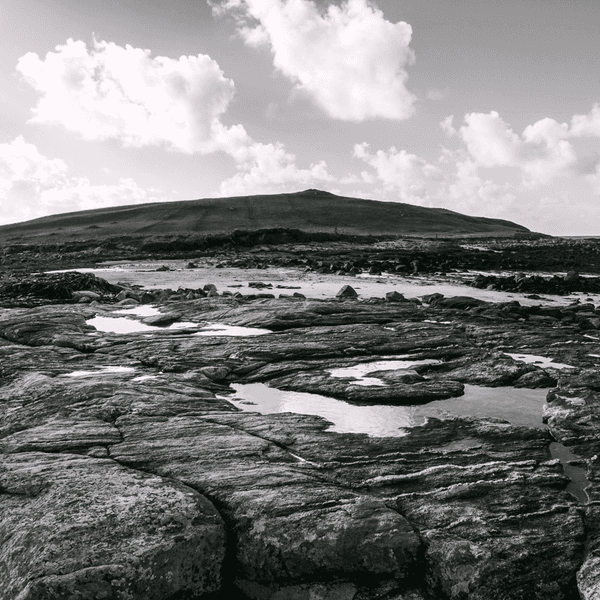
Low tide. I pick my way between wrack-matted bouldersand banks of rotting kelp to the storm-gouged gate
to the island. Turf sags above the sand-cliff,
the edge of collapse. A brace of shelduck
bob out on the heave, ducklings strung
like rosary beads between them. Weather-wrecked
stump posts, damp plateau of cotton-grass,
silverweed, bent. Corncrake crexing from the iris beds,
scissor-billed oystercatchers bombing and screaming.
Neolithic, Bronze Age or Pictish stones rise from the turf
like curious seals and note my bold approach.
I climb the slope to the Big Top summit
in the stripes of the evening sun’s relief:
sheep paths, turf-sunk boundary walls, run-rig shadows
of long-abandoned plough. Great black-backed gulls
and ravens, circling overhead; one predatory,
the other wary. Cronk. Twin peaks, a rushy cleft
between. Exposed gneiss, a tumbled fank
(or dun, or bothy). Each peak is crowned
by a wild-stone menhir: to the south a summit-slipped
altar stone reclines on the wind-cropped turf;
the dorsal fin of a great white shark breaks
the moat of the north peak’s sacred pool—
agitated pipits, windy crescendos of towering larks.
The high ground’s wide panopticon—due west,
four thousand miles of ocean, the calves of Saglek Bay.
To the east, the cloud-capped, herded hills
of Stùlabhal, Easabhal, Chionnich.
The toytown townlands spread before me
along the Viking shore—Cille Pheadair, Baghasdail,
Leth Meadhanach, Smercleit, Geàrraidh na Mònadh;
white horses of Eriskay, blue hills of Barra beyond.
The back of the island slopes down to its hunkered cliffs.
Wave-hewn riprap, tide-heaved tethers of kelp.
Great northern divers ride the waves, on their summer cruise
to Iceland. Cormorants, mocking the crucifixion.
On the topmost ledge of a storm-gouged cove,
a shit-fligged heap of kelp; a family of ravens,
aloft above the menhirs. Fulmars cut the sunlit slope’s
bright spindrift—one summer I fell asleep here,
and had to wade to land: otter breaking from its flounder,
disbelieving. I drop to the path above the rocks
looking north along Tràigh na Doirlinn. Jewels glinting
in the grass: primrose, violet, tormentil.
Sentinel oystercatchers, incessant and ubiquitous,
their piping alarums ripped off on incessant,
ubiquitous wind. Crab boat anchored in the headland’s lee,
where the Northmen dragged their longboats
up on to the sandy haven. Ringed plover tight
on the driftwood strandline. Wind-wrecked fence post.
Turf sags above the sand-cliff. I pick my way
between wrack-matted boulders and banks of rotting kelp
to the storm-gouged gate to the island.

