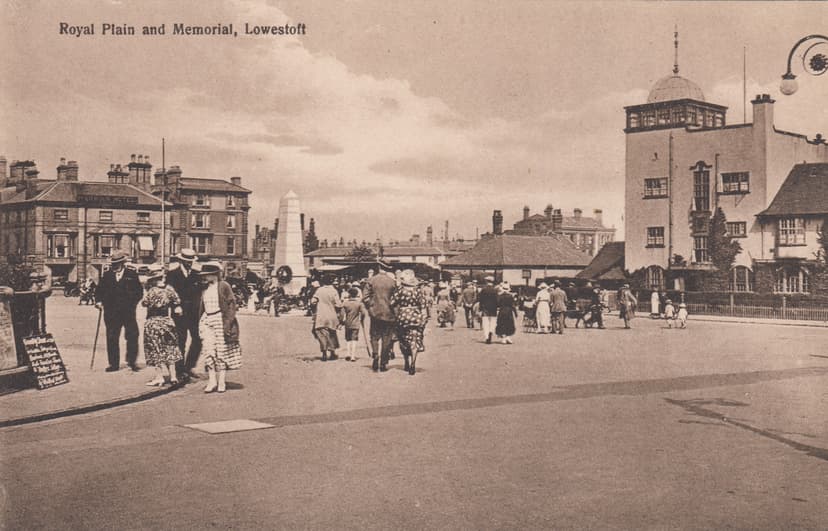
The War Memorial
1 sound
The War Memorial commemorates all soldiers, but was built to remember the many from Lowestoft who died in WW1.
It was unveiled on August 11, 1921.
The obolisk style was common throughout Britain after the Great War. The author Rudyard Kipling lost his son in the war and spent the rest of his life working with the Graves Commission to dedicate monuments to the war dead.
Lowestoft's monument has buried under it a Roll of Honour of 716 names of the local war dead. The wounded far outnumbered those who didn't make it back, and they are remembered, too.
When you consider that Lowestoft had only about 33,000 inhabitants in 1911, that meant about 3,300 men of service age lived in the town and so about a quarter of ALL of the service age men never made it back home. There were very few people in Lowestoft who didn't have a WW1 casualty or death in the family.
Lowestoft was also one of the few towns in Britain that was directly bombed during the war and there are gaps you can see in today's promenade terraces are the results of the bombardment.

