Bazaar Vest
1 sound
Cabbage, this humble plant, which often is used for fermentation, has been cultivated for thousands of years. Native to Europe, this species was named Brassica oleracea by Carl Linnaeus, the father of classification system of Animal and Plant kingdoms, in 18th century.
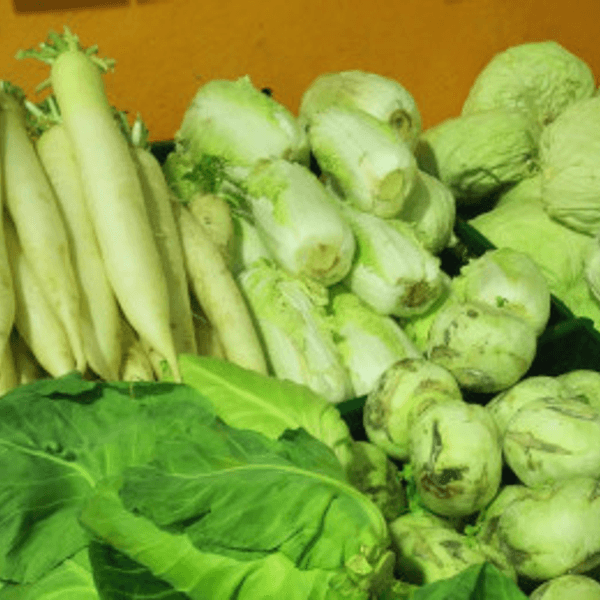
Cabbage is also known as part of cruciferous vegetables together with broccoli, cauliflower, brussel sprouts, kale, bok choi and many others. You can find all of these vegetables here in this bazaar. Can you see them? If not, go and find that part of the market where vegetables are sold. Look at the broccoli: its pale green colour of the stem and darker green of the flowers. Broccoli is like a miniature tree.
When cooked it becomes brighter and the green seems fluorescent. Unless it is too long in boiling water when it looses its vibrancy and much of its goodness.
Cabbage, like the rest of cruciferous vegetables contains essential vitamins and minerals including vitamins A, C and K, and minerals such as magnesium, potassium, calcium, iron, and selenium. It is full of fiber, which is so important to gut health, microbes feast on fiber. It is also full of antioxidants which protect your body from free radical damage and oxidative stress. Vitamins, minerals, brassicas, cruciferous vegetables are different categories which help to group things together. Such groupings result from classification systems, which are intended to arrange and organise similar or related entities.
In this market, look how sellers organised their vegetables.
For example, are all cruciferous vegetables grouped together? because of how the flowers in plants belonging to this family have cross-like appearance. Yet while all brassicas are cruciferous vegetables, not all cruciferous vegetables are brassicas, see a common radish which is not a brassica but it is a cruciferous vegetable.
We also know about a “a certain Chinese encyclopedia” invented by the writer Jorge Louis Borges, in which all the beasts of the world are divided into 14 categories:
Those that belong to the emperor
Embalmed ones
Those that are trained
Suckling pigs
Mermaids (or Sirens)
Fabulous ones
Stray dogs
Those that are included in this classification
Those that tremble as if they were mad
Innumerable ones
Those drawn with a very fine camel hair brush
Et cetera
Those that have just broken the flower vase
Those that, at a distance, resemble flies
Borges plays with the idea of an objective taxonomy and introduces doubt into the conception of categories as firm values. And so this is a phantasmagoric taxonomy, proposing fantastic names for unspecified beasts, that might or might not have anything to do with reality. Yet, in its weirdness, the lists provokes pragmatic questions: who names what/who? Under what conditions and with what tools they are defined and named? For what and who these names are created?
Naming a child is a ritual in which a family takes part, but it used to be an event that involved much bigger communities in a village, a tribe.
And so, if you were to create a list of categories for your ferments, what would they be? Who would be part of this naming? What would be the protocol? How would they be known and presented?

