From Spirituals to Syncopation: Early Jazz Connections in Wales
1 sound
Jazz and Welsh Music: A Shared Language
Jazz in Wales did not simply arrive from overseas — it evolved through a complex web of musical exchange, political solidarity, and cultural reinterpretation. Long before the genre was formally named, Wales had deep ties to African American musical traditions through the abolitionist movement, transatlantic religious networks, and the working-class musical life of port cities like Swansea and Cardiff.
From the 1870s, choirs of freed slaves such as the Fisk Jubilee Singers toured Wales, performing spirituals that resonated with Welsh choral traditions and left a lasting cultural legacy. Their music found eager audiences in churches, concert halls, and community gatherings across the country.
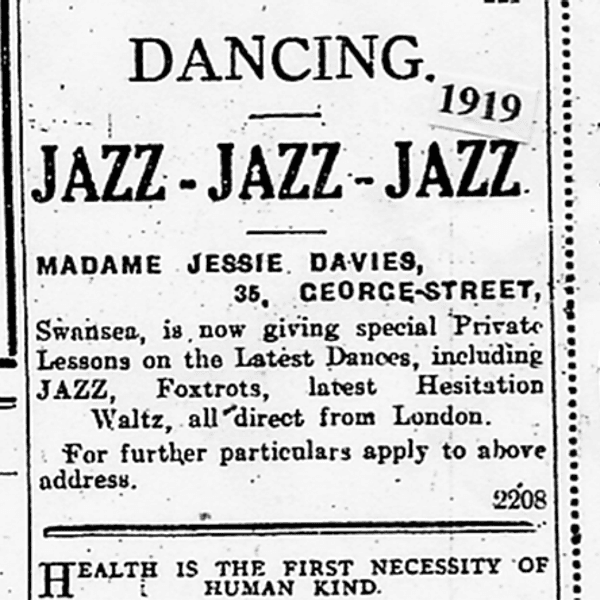
By the early 20th century, ragtime and minstrel shows were performing to packed theatres and workhouses throughout south Wales. When In Dahomey — the first all-Black musical written and performed by African Americans — appeared in Swansea in 1905, it brought syncopated rhythms, satire, and Black American voices directly to Welsh audiences. These encounters helped lay the groundwork for jazz’s integration into Welsh society during the 1920s Jazz Age.
The Robert ap Huw Manuscript
Composer and trumpeter Cris Haines has explored these connections in depth. His research into the Robert ap Huw manuscript — a 17th-century collection of harp tablature — informed the compositional structure of a suite of compositions which included POuM and Defaid Harris.
The ap Huw manuscript is one of the oldest surviving sources of Welsh music, containing complex chordal patterns, rhythmic modes, and scale structures that predate Western classical harmony. Many of its musical devices — such as flattened thirds, fifths, and sevenths — mirror the blues tonalities found in African American music. Haines’s work demonstrates how this ancient repertoire can be reimagined through a jazz idiom, highlighting a surprising affinity between Welsh folk traditions and Black Atlantic musical forms.
The Welsh Tradition of Cerdd Dant
Though often overlooked in jazz history, Welsh musical culture holds deep improvisational roots of its own — particularly through the tradition of Cerdd Dant. This practice, sometimes translated as “string music,” involves the art of singing poetry over a pre-existing harp melody. The harpist plays a set tune (known as the “air”), while the singer weaves a countermelody that interacts with — but does not directly follow — the accompaniment.
Cerdd dant requires a sophisticated understanding of both harmony and poetic phrasing. It is a collaborative, improvised dialogue between voice and instrument, rooted in oral tradition, and often performed competitively at Welsh eisteddfodau (cultural festivals). This complex interaction of melody and meaning finds resonance in jazz’s own use of improvisation, harmonic variation, and call-and-response.
Tylwyth Twrch, the composition featured in this section was directly informed by Cris Haines’ research into Cerdd Dant.
About the Music: Tylwyth Twrch
The music heard in this zone is Tylwyth Twrch, composed by Cris Haines. Drawing inspiration from Cerdd Dant, the Robert ap Huw manuscript, and oral traditions surrounding myth and folklore, the composition reinterprets Welsh musical heritage through the lens of improvisation, modal harmony, and collective performance. In Tylwyth Twrch, the listener is invited into a musical space where ancient and contemporary, Welsh and global, written and improvised traditions intersect.
Meet the Musicians
Cris Haines – Trumpet, Composer: A composer and trumpeter deeply engaged with Welsh musical heritage and modern improvisation. His work with Jazz Heritage Wales and his commissioned suite for Swansea’s UK Year of Literature (1995) reimagined Welsh medieval harmony through a jazz lens.
Delyth Jenkins – Harpist: A leading figure in Welsh folk music, Delyth Jenkins is known for her evocative harp performances that draw on Celtic mythology, storytelling, and improvisation. Her contribution to Tylwyth Twrch connects centuries-old folk traditions to a modern jazz context.
Paula Gardiner – Double Bass, Composer: A celebrated jazz bassist, composer, and educator. Former Head of Jazz at the Royal Welsh College of Music & Drama, Paula is an active advocate for women in jazz and currently serves as Deputy Chair of the Ivors Academy Jazz Council.
For further context on these themes, as well as the foundation of Jazz Heritage Wales, see Jen Wilson’s Freedom Music: Wales, Emancipation and Jazz 1850–1950 — and explore related materials at the Jazz Heritage Wales Archive.

