Machair soundwalk, Music and/as Process

5 ECHOES

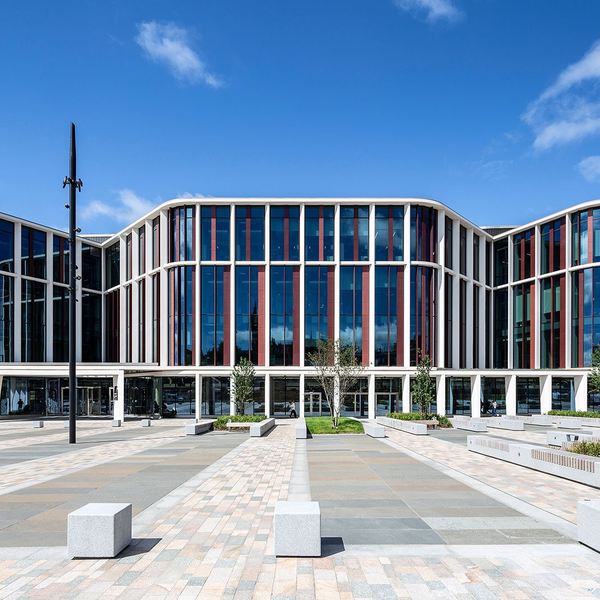
This 40-minute soundwalk starts in St Mungo Square, outside the University of Glasgow Advanced Research Centre Building (11 Chapel Ln, Glasgow G11 6EW). The walking route is a 2-mile loop mapped to established paths around Kelvingrove Park, returning to St Mungo Square.

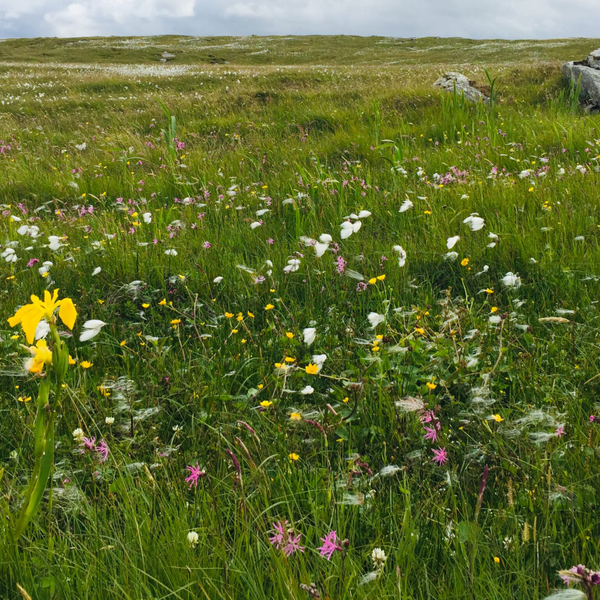
About the soundwalk: Commissioned by Taigh Chearsabhagh Museum & Arts Centre, this soundwalk explores the traditions and ecology of Uist’s machair. A Gaelic word meaning fertile, low-lying grassy plain, machair is one of Europe's rarest yet most species-rich habitats; only occurring on the exposed west-facing shores of Scotland and Ireland, 70% of which is found on Uist. Generations of low-intensity farming have shaped this unique landscape and encouraged wildlife over millennia. Developed in partnership with the local community, this work combines spoken narratives, field recordings, and compositions with archival sound recordings from Edinburgh University’s School of Scottish Studies, that chart over 70-years of oral history.

Contributors: Freddie MacDonald, Seoras MacDonald, Alisdair MacEachen, Anne MacLellan, and Matthew Topsfield.

Production team: Duncan MacLeod (composer), Kirsty MacDonald & Mairi McFadyen (creative ethnologists), and Sorcha Monk (creative producer).

Cover photo: Liniclate machair, Tara Drummie, 2022.

If you have any questions or feedback about this soundwalk, please email contact@uistsoundwalks.org

© 2024 Duncan MacLeod. Unauthorised copying, hiring, lending, public performance and broadcasting of this soundwalk is strictly prohibited.

Version: RMA V1.0 (290624)
Section 2: Collecting and using seaweed on the machair

Directions: Continue the path along the south bank of the river. As the path divides at the war memorial, take the right-hand path and follow this around the northern edge of the park, leading behind the football pitch.

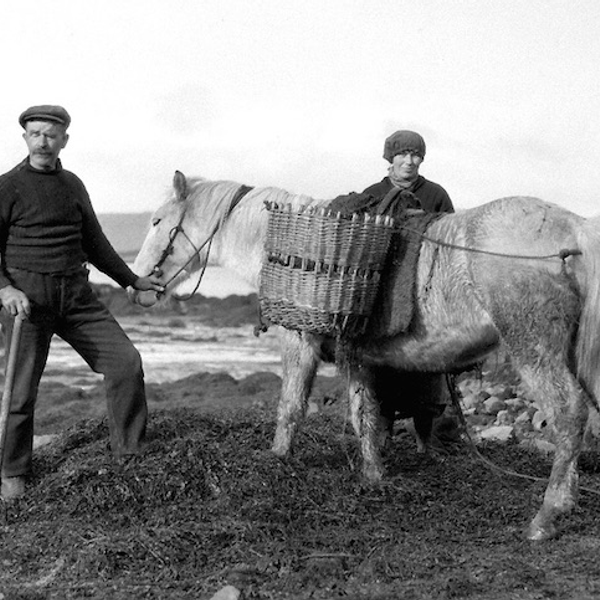
About this section: In this Section we learn about the historical and contemporary uses of seaweed as a natural fertiliser on the machair. In this section, we hear from islanders Roderick MacKillop, John MacIver, Angus MacKenzie, and John Morrison interviewed by Emily Lyle in 1977, who describe harvesting seaweed to fertilise soil on the machair. Local crofter Alasdair MacEachen and Matthew Topsfield provide insight into how these practices continue today. Accompanying these narratives, we hear a selection of puirt à beul {mouth-music} dance tunes sung by Kenneth MacIver (recorded in 1959), and the waulking song Mhòrag 's na Hòro-gheallaidh (Morag and the Promised) recorded in 1973 that recounts a story of a love-lorn woman collecting seaweed performed by Christine Shaw and local residents from Bunavoneader, North Harris.

Credits: Nam Bithinn na mo Mhaighdeann, Kenneth MacIver (vocals), recorded by fieldworker James Ross (1959); Gathering Seaweed on Uist, Roderick MacKillop, John MacIver, Angus MacKenzie, and John Morrison interviewed by fieldworker Emily Lyle (1977); Using seaweed to grow potatoes and crops, Alasdair MacEachen interviewed by Mairi McFadyen (2022); Mhòrag 's na Hòro-gheallaidh, sung by Christine Shaw, recorded by Morag MacLeod (1973); Uist seaweed Matthew Topsfield (2022).

Photo: Gathering seaweed, Margaret Fay Shaw, c. 1932.

1 sound

Section 4: Cropping & Harvesting on the machair

Directions: Follow the path along the southern edge of the park and then join the path on the south bank of the River Kelvin. Cross the footbridge over the river and back up to St Mungo Square.

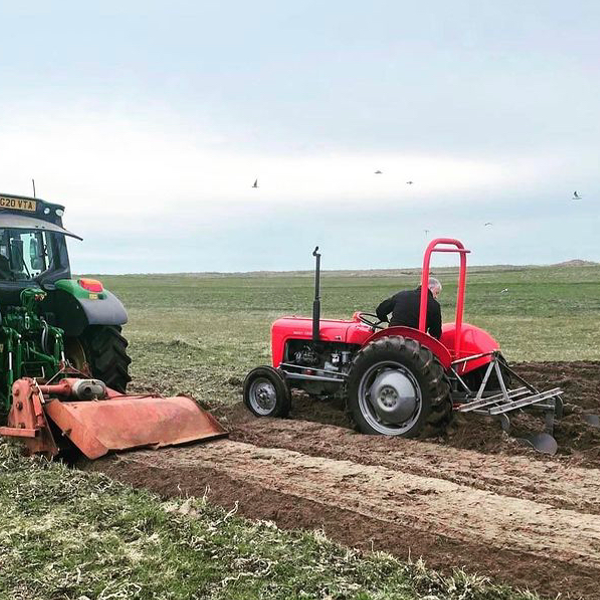
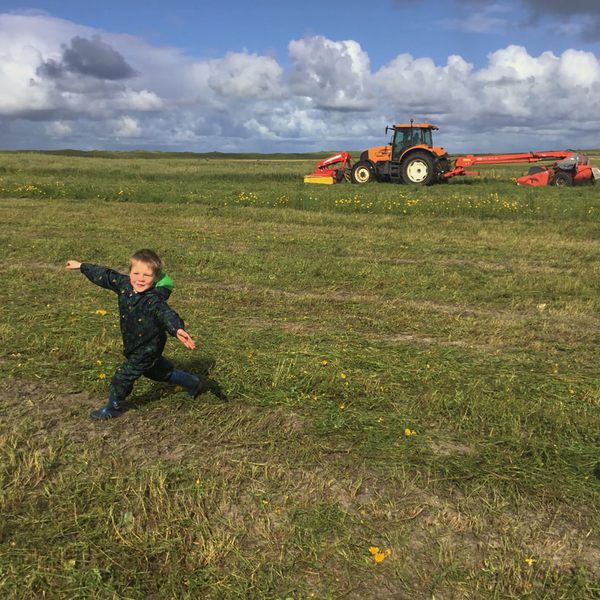
About this section: In this final section, we learn about planting and harvesting crops on the machair. Crofters Alasdair MacAchen and Matthew Topsfield talk us through the system of cropping, and the types of grain commonly grown on the machair. We then hear from the next generation of crofters, brothers Freddie (aged 7) and Seoras (aged 4) MacDonald, who provide a running commentary on their dad and grandpapa’s harvesting crops on the machair. Music featured in this section includes the children's harvesting song Orra Bhonnagan a Ghaoil (Dear Orra Bonnagan) sung by Nan MacKinnon, recorded in 1958. Kenneth MacIver returns with another set of puirt à beul (mouth-music) dance tunes, and we finish with Angus Fletcher singing Am Buntàta 's an Sgadan (The Potato and Herring) recorded in 1971.

Credits: Orra Bhonnagan a Ghaoil - sung by Nan McKinnon, recorded by James Ross (1958); Lifting potatoes - Alasdair MacEachen interviewed by Mairi McFayden (2022); Machair cropping - Matthew Topsfield interviewed by Mairi McFayden (2022); Cropping on the machair - Alasdair MacEachen interviewed by Mairi McFayden (2022); Cropping traditions on the machair - Matthew Topsfield interviewed by Mairi McFayden (2022); Nam Bithinn na mo Mhaighdeann, Tha Fionnlagh ag Inneireadh, Mac a' Phì - sung by Kenneth MacIver, recorded by James Ross (1959); Bailing on the machair - Freddie and Seoras Monk MacDonald (2022); Am Buntàta 's an Sgadan - sung by Angus Fletcher, recorded by Morag MacLeod & Ian Fraser (1971).

Photo: Harvesting on the machair, Sorcha Monk, 2022.

1 sound

DOWNLOAD OUR APP TO DISCOVER THIS TOUR AND MANY OTHERS.

play-storeapp-store

Or start creating tours, treasure hunts, POI maps... Just let your imagination guide you.


Other walks nearby


Are you a creator?

START HERE

Privacy & cookie policy / Terms and conditions

© ECHOES. All rights reserved / ECHOES.XYZ Limited is a company registered in England and Wales, Registered office at Merston Common Cottage, Merston, Chichester, West Sussex, PO20 1BE

v2.5.15 © ECHOES. All rights reserved.