Adam Smith Audio Trail

7 ECHOES

Location: Glasgow, Glasgow City, Scotland, United Kingdom

Stop 1: Pearce Lodge

Hello & welcome to the Adam Smith Audio Trail at the University of Glasgow

I’m Pheona Matova a JMS Scholar with the Adam Smith Business School and I am here with Craig Smith, professor of the History of Political Thought at the University of Glasgow.

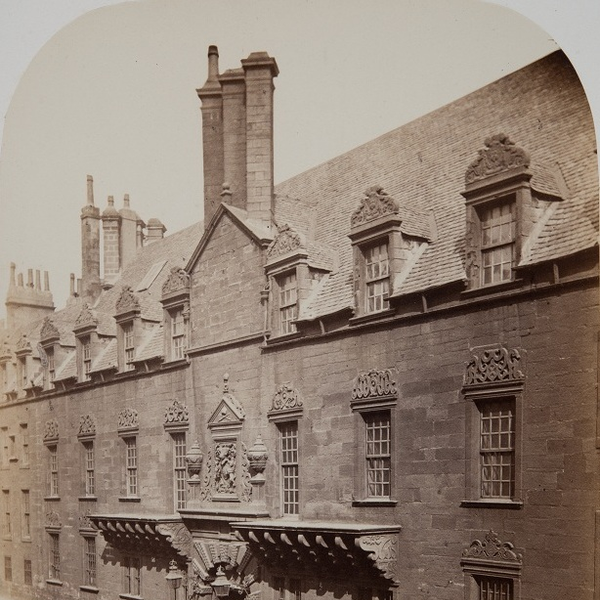
Why are we beginning under this archway you ask? Well, this arch here was once the entrance to the Old College Campus, moved here from its original location in the east end of Glasgow. That’s where Adam Smith would have studied and worked during his time at the University. That was almost 300 years ago, way back in the 1700s. Glasgow’s population was around 30,000 inhabitants – just 5% of the current population – but it was growing rapidly with an increasing focus on industry and plenty of provision for a burgeoning middle-class.

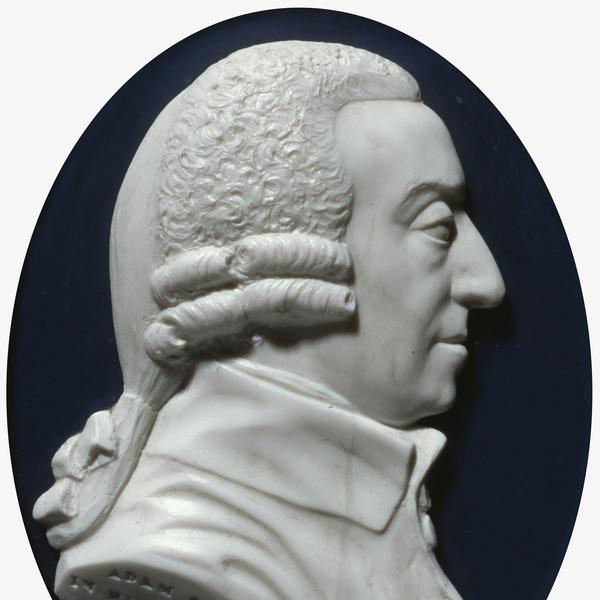
Adam Smith is the University of Glasgow’s most famous former student. He is known around the world as the founding father of modern economics and a great social science thinker - in part because his thinking went far beyond economic concerns. What was this great mind ultimately thinking about? Happiness. He understood that markets and morality are two sides of the same coin, and that they always need to be considered together. Look around and imagine yourself in Smith's shoes, walking into the University for the first time as a student in 1737.

It's easy to forget that before he was a world-renowned economist, he was a typical student - apologising to his mother for his lack of communication and asking if she could send him new socks. In one of his surviving letters to her, he writes: "I am quite inexcusable for not writing to you oftener. I think of you every day, but always defer writing till the post is just going, and then sometimes business or company, but oftener laziness, hinders me." “In my last Letter I desir'd you to send me some Stocking's, the sooner you send 'em the better!”

Funny how even though he was born 300 years ago he was not so different to you or I. Ok, let's pass through the archway and head up to the main building, we can keep talking as we go. So how did Adam Smith end up at the University of Glasgow?

Well Smith was born in the town of Kirkcaldy in Fife in 1723. His father, a customs officer, died before he was born. Smith was raised by his mother, Margaret, who came from a land-owning family.

You can tell from their letters that they had a close relationship!

Yes! Well, Smith came to the University of Glasgow in 1737, aged 14. He studied logic, metaphysics, maths and later Newtonian physics and moral philosophy under some of the leading scholars of the day.

14 seems young – but I suppose that was typical for the time.

Yes, not unusual at all. Smith's talent was quickly recognised by his school teacher at Kirkcaldy. Following study at Glasgow, Smith received a scholarship to continue his studies at Oxford University in 1740. It wasn’t plain sailing though, he left Oxford on the verge of a nervous breakdown! Upon his return to Scotland, he gave popular lectures on philosophy and literature and joined the clubs and societies of the Scottish Enlightenment alongside friends like the Philosopher David Hume.

And was it not the success of these lectures that led to him being appointed as lecturer at the University of Glasgow?

Yes that’s right, he was appointed as Professor of Logic, and then of Moral Philosophy, and taught at the University between 1751 and 1764. At this time Smith was able to see the rapid economic development happening around him - accelerated by the Atlantic slave trade - and he became fascinated by social and economic change. He learned about Glasgow's growing wealth from trading and manufacturing activities, then within his lectures reflected on what he saw as the related moral and economic challenges.

I think it's an important point to make here that although Smith was an abolitionist and against slavery on both ethical and economic grounds, he still indirectly benefited from the wealth and opportunities that slavery brought to the city of Glasgow. For example, a number of his students would have been the sons of those directly benefiting from slavery. There are roughly 60 Glasgow Street names with connections to the Atlantic Slave Trade, with a large chunk of them located in the Merchant City right next door to the Old College Campus.

That’s an interesting visual way of understanding the impact. The knowledge Smith gained from observing the moral and economic issues of the local merchants helped to establish his reputation as it was at this time that he published The Theory of Moral Sentiments. Published in 1759, the book is an attempt to understand everyday moral judgement. Instead of telling us what to think about morality, Smith tries to understand how people make moral decisions. He traces this to our feelings, the moral sentiments, and our relationships with others. Smith's most well-known and influential book, The Wealth of Nations, was published later on in 1776. But despite being relatively unknown in comparison, The Theory of Moral Sentiments provided the ethical, philosophical, economic, and methodological underpinnings to his later works.

So, if we want to find out how we can make people and nations prosperous in both an economic and moral sense - we should also be reading The Theory of Moral Sentiments.

Absolutely.

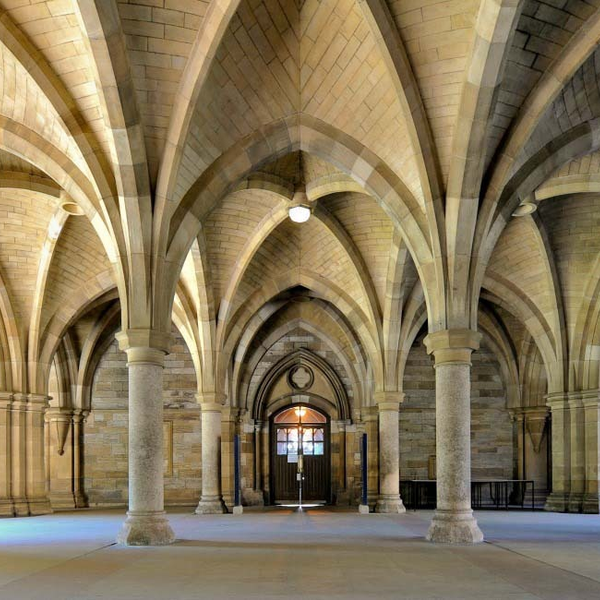
On your left should be the main building. Let’s go inside. I’ll meet you in the courtyard under the Cloisters – the pillared walkway in the centre. It will be the perfect place to discuss one of Smith’s key observations.

1 sound

Stop 2: The Cloisters

The Cloisters connect the East and West quadrangles and lead inside to the Hunterian Museum and Bute Hall, where the University’s graduation ceremonies are held. Be sure to check out these bonus stops if you have time.

For now, though, let’s take a seat on one of the benches surrounding the courtyard and observe the crowds of people walking by. How would you feel if I told you that some of the strangers walking past are suffering? Perhaps they are dealing with the death of a loved one, or maybe a chronic illness.

I'm sure I would feel sympathetic towards them – it’s not nice to think of people suffering.

Yes, I think on the whole most people would be empathetic towards the suffering of others. Now let's imagine this example on a bigger scale. Let's say tomorrow you open up your computer to a news article about an earthquake that has hit a country on the other side of the world, killing thousands of people. How would you respond?

Well, this isn't actually that strange to us - thanks to the 24-hour news cycle, we constantly hear about thousands of people suffering in different parts of the world.

Right, so how do you respond? Adam Smith says that when exposed to the death of a thousand of strangers, we will remark our disapproval, and say, oh what a terrible world, but then we will go on with our life, and that night we will sleep soundly, as if nothing has happened.

Yes I think that sounds about right.

Now, imagine something different. What if I told you that tomorrow you are going to lose your little finger?

I'm pretty sure I wouldn't sleep at all if I knew my finger was to be chopped off tomorrow.

Yes, I think it's fair to say the thought of losing a finger would bother us all a lot more than learning about strangers’ misfortunes. And this raises a question for Adam Smith: Since our emotional response is greater when we imagine losing a finger than it is to hearing about the death of a thousand strangers, would it follow that someone would sacrifice thousands of lives to save their little finger?

I'm sure most people would say that would be insane.

Yes, I would agree and so did Adam Smith. His answer was no, nobody would do that - human nature startles with horror at the thought of such a suggestion.

So why do we feel worse about losing our little finger than we do about the death of a multitude of strangers?

Well, Smith suggests that people are fundamentally self-interested, but stressed that this is not the same as selfish.

But given our self-interest, why do we so often act selflessly, sacrificing our own well-being to help others?

Well, he argues that our behaviour is driven by an imaginary interaction with what he calls the impartial spectator – it is this figure we look to when we consider what is moral or right.

So in other words our conscience? Like, a fellow human being looking over our shoulder, reminding us we are not the centre of the universe?

Yes exactly. This concept gives us a powerful tool for self-improvement. Adam Smith argues that we want to be seen as having integrity, honesty and good principles, and that paying attention to how your behaviour is perceived can lead to a happier and more fulfilling existence.

Life is punctuated by moments in which you have to choose between what is easy and convenient for you and what an impartial spectator would see as the right thing to do. This moral code includes an understanding that we are no better or more deserving than anyone else. Enough people watching though, let's get up and wander beneath those arches.

Good idea, let's go. Of course, not everyone acts selflessly at all times. A lot of the time we fail to live up to the ideals we champion and the principles we claim to embrace, and we often don’t want to be confronted with an honest assessment of our behaviour.

Yes, self-deception can be more comforting than self-awareness in these situations. But Smith has a solution for this too. He writes that we find it much easier to see the moral imperfections in others than our own shortcomings. Therefore, our flawed neighbours can act like a mirror that allows us to see our own imperfections and hopefully remedy them.

It makes sense to me that acting like a good person, and knowing you’re a good person, is an important part of being happy. That’s got me thinking about what else Adam Smith has to say about getting the most out of life. Let's head out of this courtyard now and walk around to the Lion and Unicorn Staircase, we can continue the conversation over there. If you have time be sure to check out the bonus stops along the way and we will pick up where we left off on the staircase when you're ready.


1 sound

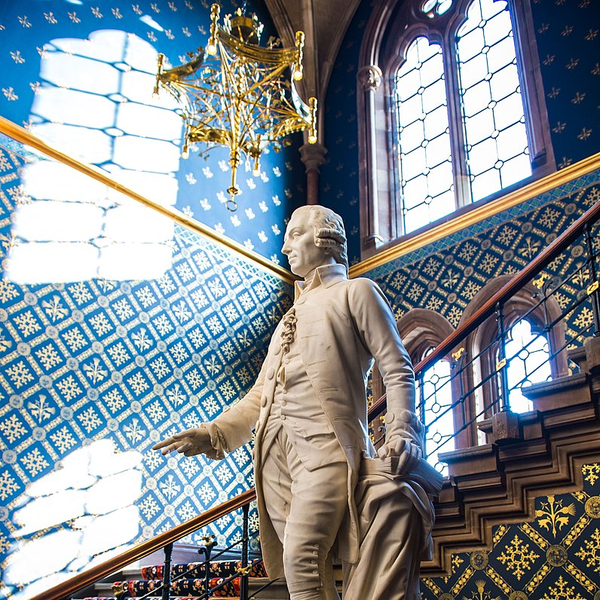
Stop 3: The Lion and Unicorn Staircase

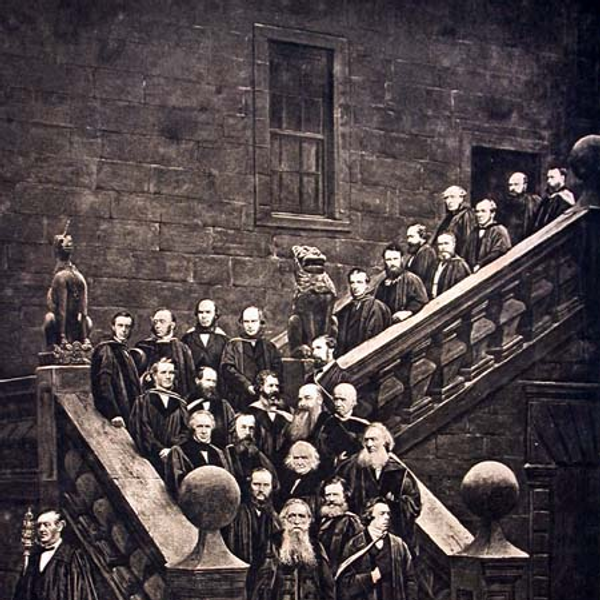
The Lion and Unicorn Staircase is another relic from the Old College Campus. It was moved brick by brick to its current location in the 1800s. The image you see on your device is the last photograph taken of the steps at the Old College before the move to the new campus. Let’s stand on the stair, as they did. Imagine posing for this photo with the faculty of the University, rubbing shoulders with the great minds of the day.

Imagine all the people who’ve walked this staircase before you.

Yes no doubt countless interesting and important people have climbed this staircase, both in the present day and in Adam Smith's lifetime during The Scottish Enlightenment period.

Tell us a bit about The Scottish Enlightenment Period.

The Scottish Enlightenment began in the mid-18th century and continued for the best part of a century. They were a group of thinkers who believed science, learning and education would help to banish superstition, ignorance and bigotry. It marked a paradigm shift from religion into reason.

They sound like some pretty important people. Were any of them women?

Outrageously, women weren't allowed to study at the University until 1892. But, we do know that Smith was influenced by female thinkers and writers such as Marie-Jeanne Riccoboni, and the Countess de Boufflers, to whom he presented a first edition of his most famous book – The Wealth of Nations. It’s likely there were female figures contributing to intellectual thought during The Scottish Enlightenment, though they could not reach great acclaim or wealth during their lives, as many of their male counterparts did. And we know from his correspondence that Smith himself benefited from the input of women such as Lady Frances Scott, who commented on drafts of his work.

How did Smith feel about this gender inequality?

There’s no evidence that Smith showed interest in this - which was the societal norm at the time.

No surprises there then!

Across his work, his accounts of women and their freedom & liberty are often contradictory, even though his ideas on sympathy were subsequently taken up by early thinkers of feminism, such as Mary Wollstonecraft.

So was wealth and acclaim the end goal for Smith?

Smith was not a big fan of the pursuit of fame and fortune and said that instead we should pursue wisdom and goodness. He expressed his view of what we truly want and what really makes us happy by stating that “Man naturally desires, not only to be loved, but to be lovely”.

What does he mean by being lovely?

Well, Smith's answer for how to be lovely was to be Virtuous - to have integrity, honesty and good principles. He believed you should strive to be genuine and modest about skills and successes.

So in other words "say little, do much".

Exactly, say little, do much and don't do unto others what you would not want done to you. He wrote "There can be no proper motive for hurting our neighbour, there can be no incitement to do evil to another, which mankind will go along with, except just indignation for evil which that other has done to us."

You can see why Smith was sometimes critical of the slave trade.

He also warned against pursuing power and fame for its own sake because he saw chasing after money, fame and power as part of the same temptation - various paths to being loved, in other words, paths to being relevant and noticed by others.

Vain or misguided attempts to boost our own egos?

Yes exactly, we imagine we'd be happier if only we were richer or more famous or had a better job. But Smith argued that money and fame should be kept in perspective.

I wonder what Adam Smith would have thought about our current celebrity culture then.

Well, interestingly enough Smith noticed that we live vicariously through the famous. Using our imagination, we put ourselves in their shoes and get a taste of the joyful emotions that we imagine accompany their nearly perfect life, without knowing how they might actually be feeling.

That notion still feels extremely relevant in the 21st Century.

Yes, many of the lessons we can learn from Smith's Theory of Moral Sentiments can still be applied today...

... even though Adam Smith's world was different to ours in many ways. Let's start walking towards the New Adam Smith Business School, as we talk further about how his philosophies can be applied to the modern world.

1 sound

Stop 4: New Adam Smith Business School

So, how can we make a positive impact on the world?

Well, Smith describes how individual choices can lead to important social outcomes. He argued that the role each of us plays collectively creates morality, trust and social cohesion - and that this happens without a grand design or oversight. Social interactions are important here. Good behaviour is encouraged by approval. Bad behaviour is discouraged by disapproval. These feedback loops have the potential to create a civilised society.

So in other words if you want to make the world a better place, set a good example.

Yes exactly, every good deed has an immediate impact, but the ripple effects of the impartial spectator and the norms that are created by both our actions and the approval and disapproval of others have an additional impact on the world. Smith says we should be focusing our love on those we see in our everyday lives and spend less time idolising the rich and famous as it’s wisdom and goodness we should be striving towards.

Right! And I think this helps us to answer how Smith's teachings can help us to make nations and people better in the modern world.

Yes, it certainly helps us to answer that question in part. We should be focussing on surrounding ourselves with good and virtuous people and working on these principles within ourselves. Smith sees the general rules of morality that we learn from the world around us as a way for us to bolster the voice of our own impartial spectator when our passions or desires might conflict with what we know is right.

But how can his work guide us in trying to answer the most pressing issues of our time: does Smith help us understand how we might approach the grand environmental challenges we face?

This is a great point, especially as we walk along this path and notice the green spaces around us.

Can you spot any wildlife? Adam Smith noted the natural beauty of Glasgow's setting. Glasgow still boasts lots of green spaces around the city, particularly in the West End where the University is located. But it has changed significantly since Adam Smith was alive.

Smith was writing on the cusp of the industrial revolution, at a time when the environmental impacts of the rapid development of industry were not yet widely recognised.

Yet, he was keenly aware of the ways that human societies had, throughout history, shaped their environment, and of the ways in which agriculture was changing the face of the earth. The Agricultural Revolution saw agricultural output grow faster than the population over the hundred-year period ending in 1770, and thereafter productivity remained among the highest in the world. Although he couldn’t have foreseen some of the important environmental issues we face today, he was nevertheless conscious that natural resources were not infinite, and that all societies, at some point, would run up against inevitable limits. One of the key arguments of The Wealth of Nations was that wealth was not simply money, but rather the ability of everybody to access the necessities of life – another important message for us today as we think about how to make our societies and economies more sustainable.

You’re right. He was certainly a great thinker of his era. I don’t think Smith would have a problem with us criticising and critiquing the limitations in his work – in fact, we know he did this himself by returning and reworking his own work, even after it was published.

In fact he might even suggest that it is vital we use new knowledge about climate change to alter our practices. While Smith might not give us direct guidance about how we should view the environment, in his essays on ‘A History of Astronomy’, he suggests that as our knowledge about the world improves, our ideas should change. Our ability to change as a result of new scientific enquiry is underpinned by our ability as learners. Our understanding and imagination should be disturbed and motivated by feelings of wonder and surprise that come from new forms of knowledge.

So the takeaway here would be that if we want to be enlightened, engaged and enterprising, we have to be constantly learning and engaging with new ideas that might disrupt our own thinking.

Yes, I think you've summed it up nicely. We should be nearing the Adam Smith Business School now. From here, follow the path until you reach the front entrance.

We are coming to the end of our time together. As you go about the rest of your day, maybe you’ll come across opportunities to reflect on Smith’s observations.

An easy and convenient option may present itself to you, think about the impact this decision might have for other people and the environment. Perhaps you will now consider what an impartial spectator would see as the right thing to do in that situation!

Indeed! Think on how the world could operate through a consideration of both markets and morality.

And strive towards wisdom, acting with goodness, integrity and honesty.

And in doing so you'll be loved and respected, becoming a world changer through your loveliness!

Thank you for joining us on this walk. We hope you've enjoyed discovering how relevant Smith's teachings continue to be whilst exploring the University campus.

Adam Smith made a difference during his time at The University of Glasgow with his world changing ideas – now it’s your turn!

1 sound

DOWNLOAD OUR APP TO DISCOVER THIS TOUR AND MANY OTHERS.

play-storeapp-store

Or start creating tours, treasure hunts, POI maps... Just let your imagination guide you.


Other walks nearby

Machair soundwalk, Music and/as Process

Machair soundwalk, Music and/as Process

Glasgow
This 40-minute soundwalk starts in St Mungo Square, outside the University of Glasgow Advanced Research Centre Building (11 Chapel Ln, Glasgow G11 6EW). The walking route is a 2-mile loop mapped to established paths around Kelvingrove Park, returning to St Mungo Square. About the soundwalk: Commissioned by Taigh Chearsabhagh Museum & Arts Centre, this soundwalk explores the traditions and ecology of Uist’s machair. A Gaelic word meaning fertile, low-lying grassy plain, machair is one of Europe's rarest yet most species-rich habitats; only occurring on the exposed west-facing shores of Scotland and Ireland, 70% of which is found on Uist. Generations of low-intensity farming have shaped this unique landscape and encouraged wildlife over millennia. Developed in partnership with the local community, this work combines spoken narratives, field recordings, and compositions with archival sound recordings from Edinburgh University’s School of Scottish Studies, that chart over 70-years of oral history. Contributors: Freddie MacDonald, Seoras MacDonald, Alisdair MacEachen, Anne MacLellan, and Matthew Topsfield. Production team: Duncan MacLeod (composer), Kirsty MacDonald & Mairi McFadyen (creative ethnologists), and Sorcha Monk (creative producer). Cover photo: Liniclate machair, Tara Drummie, 2022. If you have any questions or feedback about this soundwalk, please email contact@uistsoundwalks.org © 2024 Duncan MacLeod. Unauthorised copying, hiring, lending, public performance and broadcasting of this soundwalk is strictly prohibited. Version: RMA V1.0 (290624)
author avatar
Hebridean Soundwalks
free

Are you a creator?

START HERE

Privacy & cookie policy / Terms and conditions

© ECHOES. All rights reserved / ECHOES.XYZ Limited is a company registered in England and Wales, Registered office at Merston Common Cottage, Merston, Chichester, West Sussex, PO20 1BE

v2.5.15 © ECHOES. All rights reserved.