S+S: Time Below Our Feet

3 ECHOES

Location: London, Greater London, England, United Kingdom

Please listen to the following echoes with headphones. In order to access without locating the sites, please turn off autoplay.

This soundscape weaves together a series of site-specific histories - from the coal and ice trade industries of the 18th Century, to the 1878 Beaconsfield Buildings, and present day. Using sound as a means of excavation, we aim to uproot these histories that run below our feet.

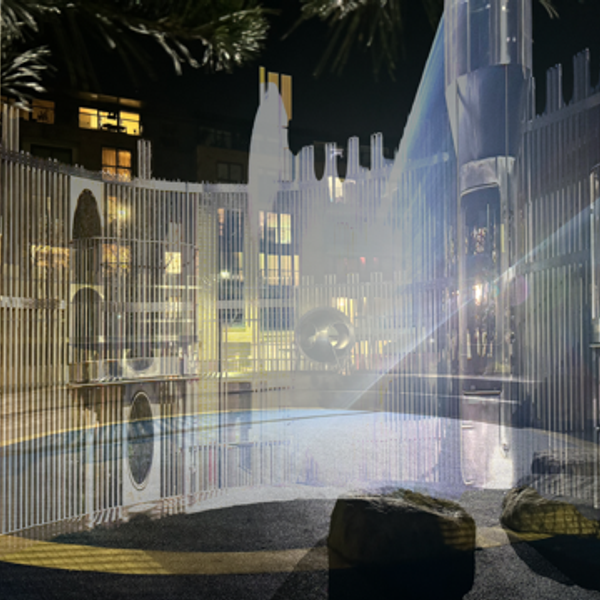
It opens at the border of our assigned area, with the ghostly echoes of the Beaconsfield Buildings, which is now home to a space-age playground, part of Bingfield Park. As a space that heavily evolved with its community, this sound piece emphasises the power we hold to shift a place's identity.

We then take you on a journey through the apex of the trade industry in the 18th Century. We give you this time to listen to the murmurations heard at the intersection of the ice trade market and thriving economy of this time.

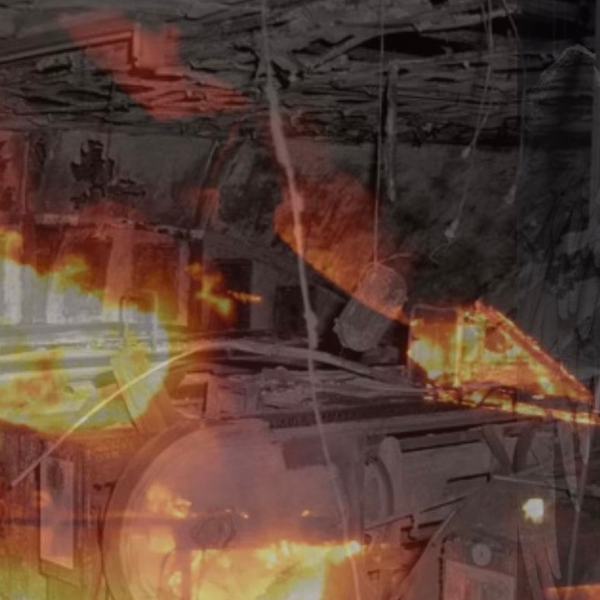
Just over 100 years later, London experiences its worst ever recorded tube fire at King’s Cross Station during the climax of 1990s rave culture. As we dive into this inferno, we ask you to consider the change that undergoes in the face of time.

We return you to the sound of silence in the wake of destruction to ask you to consider where we stand in this present moment as we hear the echoes of our past.
The 3 Stones Castle: when the party crumbles

The most recent castle playground (circa 2024) in Bingfield Park is more than just a space for children; it is a living, breathing echo chamber of the past and present. Long before the metallic towers and slides settled there, this land bore witness to the passage of the dead, as funeral trains rattled through Rufford Street. It later became a place of struggle, where Beaconsfield council estate earned the name “The Crumbles,” a label that would live on in the first castle-like playground that was later built in its place.

As we recorded sounds using a contact microphone, we interacted with the space as we were meant to - swinging, sliding, running - letting the structure itself tell its story through the creaks of metal, the thuds of footsteps, or the scrape of gravel. We also listened to what lingers after dark. A discarded Red Bull can, perhaps left by those who claim the park when the children have gone home, became our instrument as we dragged it along the railings. In Kings Cross, where much of the land around our college is dealt with as privately owned public space, places like these are playgrounds of freedom, where history, play, and the presence of those before us collide. Here, the sound of today intertwines with the past, shaping a space that never truly stops speaking. And so, in the spirit of those who came before us - those who built, played, and reclaimed this land - we too left our mark, giving the structure a name of our own: the Three Stones Castle, a quiet assertion that this space belongs to all who move through it.

1 sound

Click Click: Take a Seat

On a Monday afternoon, we met two women standing in this park.

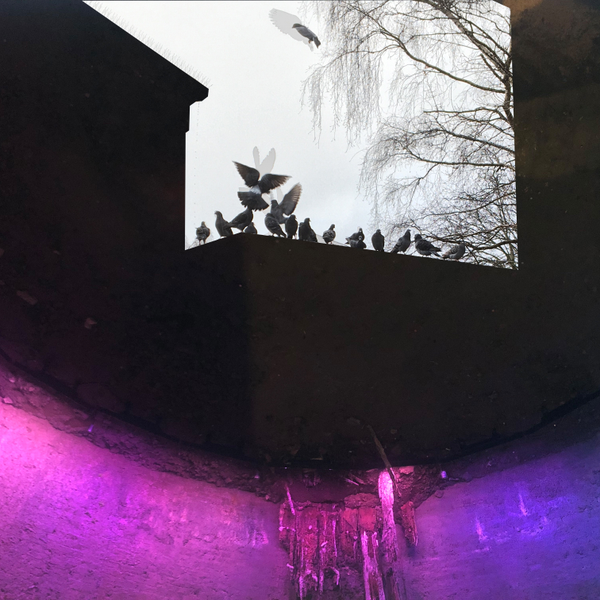
They told us about how they care for the pigeons here. They said the birds recognise their faces - the pigeons and the ducks. They know when they’re coming and they wait for them.

They told us about a flock of pigeons under the bridge - only noticed by those who care to look and children. She said children notice everything. They see her holding the pigeons and teach them not to disturb them.

Squirrels, robins, a fox with three cubs. She stood really still to watch them.

~

Ice melting, rhythmic canal boat engines and pigeons cooing. Sounds that appeared to us through chance encounters with three residents within King’s Cross: The man at the Canal Museum, and two women who feed the pigeons along the canal every day.

The Canal Museum is home to two ice wells, used for the production and trade of natural ice transported from Norway via the canals, until the introduction of artificial refrigeration in London in 1904. The fact that ice was once a scarcity that had to be housed deep underground, and its transportation via the canals speak to a time period where everything was much slower. Yet, the sounds of the canal boat engines, a repeated and rhythmic beat, bring to mind a more recent history: the raves that were held in the 1990s within the building that now holds Central Saint Martins. These easy misidentifications of sound - as canal boat motor or musical beat - speak to the fabric of the area as an ever-changing collage.

The two women we met who feed the pigeons spoke to us at length about how they care for the wildlife in King’s Cross. As we listened to their stories, the pigeons watched us from above. Two robins appeared in the hedgerow, and a squirrel scurried up a tree. We invite the listener to observe these inhabitants as they listen to this soundscape, considering not only the current living residents of the area, but also these histories that linger under the surface, within the canal that runs below this community garden, and onwards to the other sites on this walk.

In Visiting as an Indigenous Feminist Practice, Tuck et al. discuss a reciprocal way of being a part of a community: a giving and receiving of stories, knowledge and experiences, with close listening at its core. We would like to invite the listener to hear the sounds that emerged from these chance encounters, and to consider, in being present in a site off the beaten path, to invite a chance encounter of their own.

1 sound

DOWNLOAD OUR APP TO DISCOVER THIS TOUR AND MANY OTHERS.

play-storeapp-store

Or start creating tours, treasure hunts, POI maps... Just let your imagination guide you.


Other walks nearby

S+S:Can I ask you a question?

S+S:Can I ask you a question?

London
Can I Ask You a Question? is a sound piece and experiential walk that uses sound as a vehicle to investigate the tensions currently existing along the Regent’s Canal at Kings Cross. Between 1820 and 1960, the canal's primary function was trade, transporting timber, coal and building materials from King's Cross to the major industrial cities of northern England. More recently, due to population growth, housing development, and industrial activities the canal’s usage has changed from a transport route to a promenade. Presently, it is intended to be a place of recreation and relaxation for human inhabitants as well as an ecosystem for birds, insects and amphibians. However, this new usage of Regent’s Canal has led to a decline in the canal's water quality, air, and noise pollution. Interested in exploring the repercussions of these changes, Red Group 3 (RG3) utilized a socio-political lens to study and document human and non-human interactions, and create a sound piece that encompassed the daily activities happening on the canal. By deploying methodologies that included interviewing current residents, examining perspectives of the canal from the surrounding area, and inspecting the environment’s ecology, the group was able to gain a better understanding of the forced agreements the canal’s visitors and inhabitants must adhere to. Through this process, RG3 was able to uncover the realities that exist in this human-made waterway: Concerns of safety and excitement around a growing commercial area were consistent among interviewees; visible pollution and a large bird populations seemingly have an undisturbed coexistence; and the ever-present sounds of the surrounding city remind us that the canal is part of a larger ecosystem many of us are incapable of changing, while also being complicit in its functionality. These discoveries leave us with complex questions such as: with the existence of such contradictions, can the canal be considered a place for coexistence or are these human and non-human interactions artificial and imposed by humans onto animals and their ecosystem? For the humans living on the canal, is their perspective driven by a yearning for economic opportunities and a safe place they can return to for safe dwelling? And what is the role of a visitor that engages with spaces such as Regent’s Canal? These constant questions bring tension to even the most peaceful moments. RG3’s Can I Ask You a Question? captures the sounds representing these simultaneous happenings and encourages listeners to contemplate their overt and covert existence.
free
S+S Echoes of Origin x Moss and Metal Duet

S+S Echoes of Origin x Moss and Metal Duet

London
This sound walk explores the evolving relationship between nature and industry in St. Pancras Basin and its surroundings, where human intervention and organic regeneration continuously reshape the environment. Through two interwoven sound pieces—A Moss and Metal Duet and Echoes of Origin—we invite you to experience the layered sonic histories of where you stand, from its industrial past to its contemporary landscape. As you listen, consider how the remnants of industry coexist with the living, regenerating world around them—how the traces of human production persist, adapt, and ultimately merge with non-human life. A Moss and Metal Duet Serving as a sonic exploration of the elemental forces present within St. Pancras Basin, this piece acts in tangible and speculative ways to listen and learn from the conversations between moss and metal, highlighting the contrast between the organic and inorganic—the naturally regenerative and the human-imposed. Moss, a naturally self-sustaining life form, produces its soft but active “popcorn-ing” sound simply by existing—consuming water, absorbing carbon dioxide, and filtering toxins from its environment. Metal, by contrast, remains silent until acted upon, requiring human interaction to produce sound. It stands as a marker of the industrial presence that has shaped this landscape from the Industrial Revolution to the present day, a lasting reminder of human intervention. Now, metal remains within the site, shifting from an instrument of industry to a structure that coexists with the organic world. Echoes of Origin Extending on this exploration, Echoes of Origin traces broader human intervention surrounding the site through historically-tied sounds. This piece guides you through the rhythm of steam trains and their turning wheels, to the clatter of loading coal and the unloading of grains at what once was a granary. These historical echoes are set against the persistent pulse of contemporary life at Central Saint Martins—where the mechanical voice of the campus gate machine, the hum of sewing machines, and the buzz of electric irons add new sonic textures to the site’s ongoing transformation. By immersing you in these interwoven soundscapes, we hope to reveal the shifting balance between human industry and organic resilience. We invite you to deepen your connection with your surroundings, exploring and reimagining the often-overlooked interactions between human interception and the non-human, but living, world. Credits: MA Arts & Science: Yilei Lu, Ke Ma, Kira Oliver, Xuequin Peng. MA Culture, Criticism and Curation: Ant Beltrán, Emily Pond, Rae Storey. MA Fine Art: Sasha Shevchenko, Evelyn Torkington, Marina Trani, Faye Van Andel, Yinqi Yuan.
free

Are you a creator?

START HERE

Privacy & cookie policy / Terms and conditions

© ECHOES. All rights reserved / ECHOES.XYZ Limited is a company registered in England and Wales, Registered office at Merston Common Cottage, Merston, Chichester, West Sussex, PO20 1BE

v2.5.15 © ECHOES. All rights reserved.