Echoes of the Explosion: Isaac's Walk

10 ECHOES

Location: Halifax, Nova Scotia, Canada

Shanlon Gilbert
Shanlon Gilbert

Isaac is a soldier of the 25th battalion currently recovering at the Camp Hill Hospital. He has misplaced an important photograph, and needs help finding it. Walk with Isaac as he remembers what happened the morning of December 6th, 1917.

This walking tour explores the true events of the Halifax Explosion, December 6th, 1917, through the eyes of a fictional character.

This story contains details of a graphic nature which some listeners may find disturbing.

IMPORTANT: During the COVID19 pandemic, users are responsible for remaining up to date on the latest public health recommendations provided by the provincial government. Please maintain social distancing and observe all applicable public health guidelines during this time, as ever. Stay safe.


4. The Blast

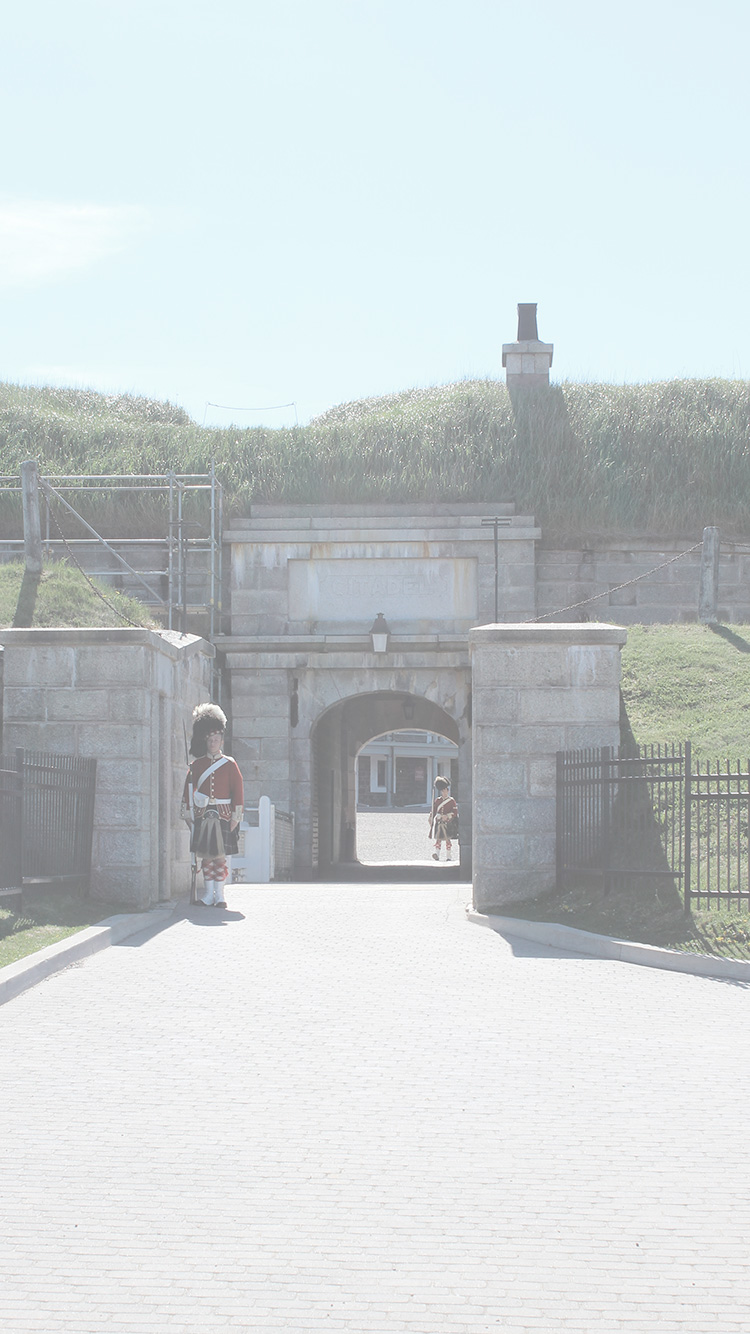
  1. The first Citadel, a wooden blockhouse, was built in 1749. The second, a larger wooden blockhouse, in 1776. The third was an earthwork fort built in 1793 with the labour of Jamaican Maroons, and the fourth and final Citadel of stone between 1828 and 1856.

The Citadel was used as an internment camp from 1 October 1914 to 3 October 1916 to confine immigrants from enemy nations who might pose a threat to Canadian security. Mostly these were German reservists. There was a second camp on Melville Island in the Northwest Arm. When the camp closed, its inmates were transferred to the camp at Amherst, NS.

  1. “The large cloud of yellowish gray rising skywards. As it rose, it took on the form of a huge flower unfolding in the air. (Dean Llwyd)” (See: Explosion -- -sight. #179, MG1 vol 2124, Archibald MacMechan fonds, Nova Scotia Archives, Halifax, Nova Scotia, Canada.)

  2. “The seven plate-glass windows in the front of the store broke into bits not bigger than a thumbnail.” from the personal narrative of Mr. L. A. Myers, who was in the National Drug Company store on the corner of Sackville Street and Bedford Row. (See: Personal Narrative of Mr. L. A. Meyers, #205, MG1 vol 2124, Archibald MacMechan fonds, Nova Scotia Archives, Halifax, Nova Scotia, Canada.)

“Ordinary glass was driven in like fine arrows in the opposite wall.” (See: Personal Narrative of Miss M. E. Doane, #140, MG1 vol 2124, Archibald MacMechan fonds, Nova Scotia Archives, Halifax, Nova Scotia, Canada.)

  1. Many people believed that the blast had been caused by a bomb dropped by a German zeppelin, or that a magazine somewhere in the city, most often that at Wellington Barracks, had gone up.

  2. Isaac is a fictional character. Lt. Harrison and Sgt Morton were real people, and they left alone. There is no mention of a third person with them.

“At about 9:30 the Adjutant took over and I left the Citadel with the Medical Orderly and as many bandages as could be procured and went North to the scene of the explosion.” (See: Personal Narrative of Lieutenant Harrison, #153, MG1 vol 2124, Archibald MacMechan fonds, Nova Scotia Archives, Halifax, Nova Scotia, Canada.)

  1. Usually a ship carrying so many explosives would not be allowed into the harbour for reasons of safety. The war changed many regulations.

--

While the events depicted in this walk are true, and we have endeavoured to represent them as factually as possible, it is important to note that the characters are fictional. As such, small details about their personal lives may not be accurate. These characters have been created from the remembrances of real people, and drawn from the communities present in Halifax in December of 1917.

1 sound

5. The Commons

IMPORTANT: During the COVID19 pandemic, please adhere to all public regulations regarding social distancing, and stay out of closed areas, including public parks and national sites such as the Halifax Citadel. Users are responsible for remaining up to date on the latest closures and restrictions. Please stay safe.

  1. Lieutenant Harrison and the medical orderly, Sgt E.T. Morton, made two trips between the North End and the Victoria General Hospital before he dropped the sergeant off at a dressing station by the Armouries. Isaac is a fictional character, there was no known third passenger. (See: Archibald MacMechan, The Halifax Explosion, December 6th, 1917. (Toronto: McGraw-Hill Ryerson, 1978).)

  2. “The empty quarters were quickly filled with injured and shelterless women and children. They were supplied with bedding from the military stores, and hot broth was served to them through “the untiring efforts” of one of the officers stationed at the armouries.” (See: Archibald MacMechan, The Halifax Explosion, December 6th, 1917. (Toronto: McGraw-Hill Ryerson, 1978), p. 36.)

  3. The comparison of Halifax to a French battlefield was made by several soldiers, such as Lt. Eric Grant, as well as journalists.

“Through fields three feet deep in snow a correspondent of the Associated Press on Saturday went over a strip of Halifax more utterly demolished than any section of Belgium or France.” (See: The Associated Press Correspondent. (10 december 1917). The Chronicle Herald.)

20 “They could hear the cries of the people underneath the ruins, shrieking or sobbing or giving directions. The next house to the one they were working on was on fire. He was told there were four children in it burning alive. The parents “Went on like maniacs.”
(See: Personal narrative of Andrew S. Cobb, Architect, #131, MG1 vol 2124, Archibald MacMechan fonds, Nova Scotia Archives, Halifax, Nova Scotia, Canada.)

  1. “It affected me far worse than anything I saw in France. Over there you don’t see women and children all broken to pieces.” These victims and Isaac’s response are taken directly from the personal narrative of Ralph Proctor. (See: Personal Narrative of Ralph Proctor, #216, MG1 vol 2124, Archibald MacMechan fonds, Nova Scotia Archives, Halifax, Nova Scotia, Canada.)

  2. “When they got up near the Cotton factory it became very dark, from the smoke from the burning Cotton factory - “Dark as night.” (See: Personal Narrative of Miss Castell, #127, MG1 vol 2124, Archibald MacMechan fonds, Nova Scotia Archives, Halifax, Nova Scotia, Canada.)

  3. “Case of Alice McDonald from :down the shore.” … She jumped from the third story of the Cotton Factory into a pile of scrap iron. Both legs were broken, the right leg more than the left. … A young man, a returned soldier, in uniform, of the 40th Battalion sat beside her on the floor all night. He said that Alice M. was “a good girl.” (See: Personal Narrative of Christine MacKinnon, #20, MG1 vol 2124, Archibald MacMechan fonds, Nova Scotia Archives, Halifax, Nova Scotia, Canada.)

  4. “R.P. made in all 23 trips on December 6th.” “...lung wound had reopened and he had a hemorrhage. “With this and the knowledge that I had swallowed glass, I was pretty scared.” However he kept on. “There was nothing else to do.”
    (See: Personal Narrative of Ralph Proctor, #217, MG1 vol 2124, Archibald MacMechan fonds, Nova Scotia Archives, Halifax, Nova Scotia, Canada.)

--

While the events depicted in this walk are true, and we have endeavoured to represent them as factually as possible, it is important to note that the characters are fictional. As such, small details about their personal lives may not be accurate. These characters have been created from the remembrances of real people, and drawn from the communities present in Halifax in December of 1917.

1 sound

6. Camp Hill Hospital

IMPORTANT: During the COVID19 pandemic, please adhere to all public regulations regarding social distancing, and stay out of closed areas, including public parks and national sites such as the Halifax Citadel. Users are responsible for remaining up to date on the latest closures and restrictions. Please stay safe.

  1. “The hundred convalescent were working “Like slaves.” Some were hardly able to crawl.” From the personal narrative of Florence Murray, medical student, who worked at Camp Hill Hospital from the day of the explosion until Christmas day 1917. (See: Personal Narrative of Florence Murray, #192, MG1 vol 2124, Archibald MacMechan fonds, Nova Scotia Archives, Halifax, Nova Scotia, Canada.)

  2. “No one was in control. … “There were four rows of mattresses in the ward. In the dining room the mattresses were laid on the floor, touching one another. ”The living and the dead together” (repeated the phrase.)” “Lives were lost for want of attention.” (See: Personal Narrative of Florence Murray, #192, MG1 vol 2124, Archibald MacMechan fonds, Nova Scotia Archives, Halifax, Nova Scotia, Canada.)

  3. In Ward L of the Camp Hill Hospital, it was so crowded there were “four children in one bed.” (See: Personal Narrative of Miss M. E. Doane of Truro, #140, MG1 vol 2124, Archibald MacMechan fonds, Nova Scotia Archives, Halifax, Nova Scotia, Canada.)

  4. Bodies stacked "like cord wood": Several sources describe the remains of victims being stacked in the streets like fire wood.

  5. Taking homeless to St. Mary’s Hall and the Academy, ferrying wounded to hospitals, and the six trips through the snow were made by Ralph Proctor. (See: Personal Narrative of Ralph Proctor, #216, MG1 vol 2124, Archibald MacMechan fonds, Nova Scotia Archives, Halifax, Nova Scotia, Canada.)

  6. “Private Henneberry, 63rd, who has recently returned from the front wounded, was digging away at the ruins of his home, when he heard a faint moan. Others of the 63rd came to his aid, and under a stove and protected by the protruding ash pan, they found little eighteen months’ old Olive Henneberry. The child was in semi-conscious condition, but soon recovered.” This was not, in fact, Olive Henneberry, but Annie Liddell, who became known as Ash-pan Annie. Sadly Pte. Henneberry lost his wife and all six of their children. (See: The Chronicle Herald, 10 December 1917.)

--

While the events depicted in this walk are true, and we have endeavoured to represent them as factually as possible, it is important to note that the characters are fictional. As such, small details about their personal lives may not be accurate. These characters have been created from the remembrances of real people, and drawn from the communities present in Halifax in December of 1917.

1 sound

7. The Citadel

IMPORTANT: During the COVID19 pandemic, please adhere to all public regulations regarding social distancing, and stay out of closed areas, including public parks and national sites such as the Halifax Citadel. Users are responsible for remaining up to date on the latest closures and restrictions. Please stay safe.

  1. Lieutenant Harrison’s personal narrative can be found in the Archibald MacMechan fonds, #133 MG1 vol 2124, Nova Scotia Archives, Halifax, Nova Scotia, Canada, and can also be read about in Archibald MacMechan’s official history, Archibald MacMechan, The Halifax Explosion, December 6th, 1917. (Toronto: McGraw-Hill Ryerson, 1978).

  2. “Soldiers of various regiments were distributed among these points [forts on the islands and along the coastline manning long-range guns], and had to be recalled, transported to the city, equipped and set to work. This was done by means of three duty boats, small steamers which ply up and down the harbour.” (See: Archibald MacMechan, The Halifax Explosion, December 6th, 1917. (Toronto: McGraw-Hill Ryerson, 1978), p.33.)

  3. Today there are approximately 2000 native Canadian Gaelic speakers in Nova Scotia, mostly in Cape Breton. Soldiers in the 25th Battalion who came from Sydney and Glace Bay were said to speak Gaelic.

  4. The song Isaac sings, Chi mi na morbheanna, was written in 1856 by John Cameron. It is known in English as “The Mist-Covered Mountains of Home.” The lyrics translate to:

O, see, see I the great mountains. O, see, see I the great mountains. Oh, see, see I the corries, I see them all shrouded in mist.”

--

While the events depicted in this walk are true, and we have endeavoured to represent them as factually as possible, it is important to note that the characters are fictional. As such, small details about their personal lives may not be accurate. These characters have been created from the remembrances of real people, and drawn from the communities present in Halifax in December of 1917.

1 sound

8. Grand Parade

IMPORTANT: During the COVID19 pandemic, please adhere to all public regulations regarding social distancing, and stay out of closed areas, including public parks and national sites such as the Halifax Citadel. Users are responsible for remaining up to date on the latest closures and restrictions. Please stay safe.

  1. The piece of wood in the church wall remains, and has its own plaque.

  2. The blast could be heard up to 200km away in New Brunswick and Cape Breton, at least as far north as Louisbourg, Cape Breton. One man described what he heard as being, “Similar in sound to a heavily loaded shotgun being fired into water at a couple feet distant.” (See: Halifax Explosion Heard at Black Brook, Port Morien, C.B. - 200 Miles Distant, (clipping), #305, MG1 vol 2124, Archibald MacMechan fonds, Nova Scotia Archives, Halifax, Nova Scotia, Canada.)

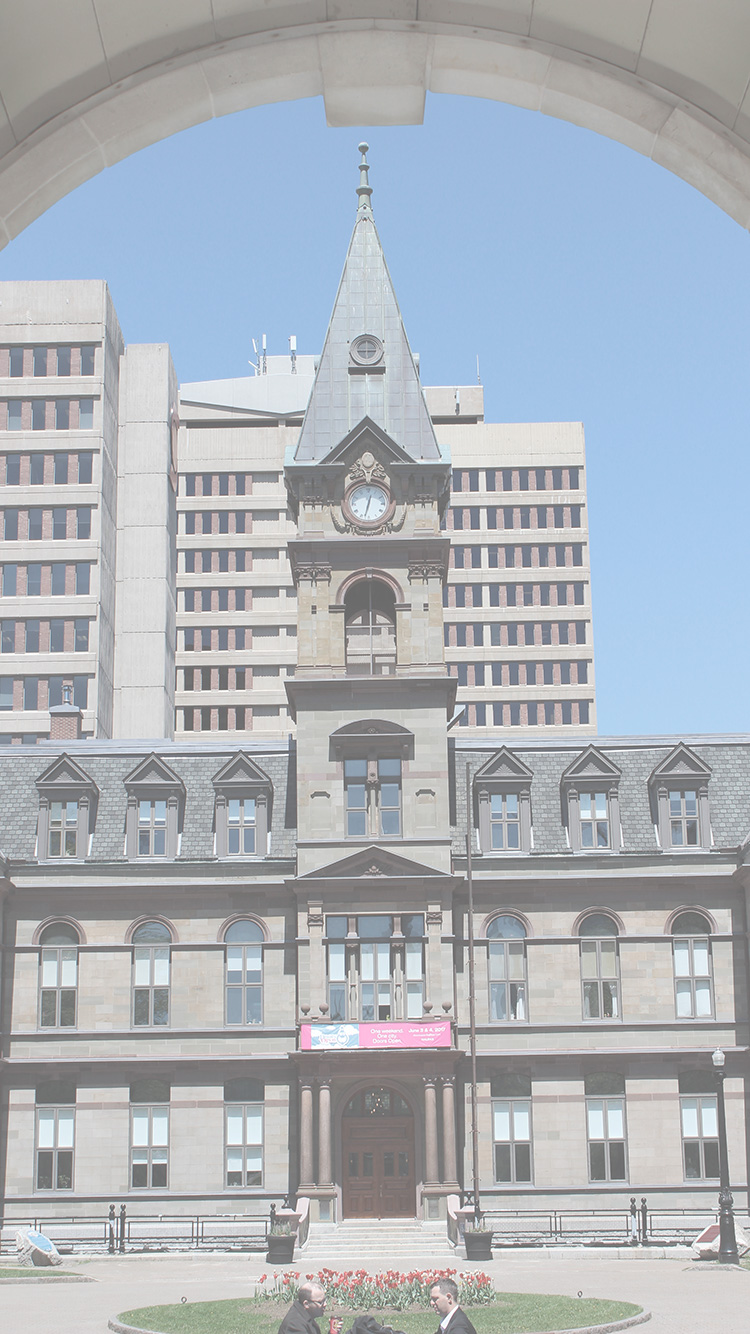
  3. “The new clock has two faces, one that shows the correct time, and another that will remain at four minutes and 35 seconds after nine o’clock. That’s the exact time of the accident known as the Halifax Explosion.” (See: CBC news, 5 June 1999. “New City Hall Clock Commemorates Explosion.” http://www.cbc.ca/news/canada/new-city-hall-clock-commemorates-halifax-explosion-1.185826)

  4. The most recent estimate of the death toll of the Halifax Explosion is 1952. The number has been updated multiple times as studies continue to refine the available data.

  5. “Met trains to bring doctors etc., Asked what doctors they were R. P. said he did not know. “Was feeling all in then, and pretty grumpy. Didn’t talk to them at all.” “ From the personal narrative of Ralph Proctor, describing his duties the Saturday (8th December 1917) after the blast. (See: Personal Narrative of Mr. Ralph Proctor, #216, MG1 vol 2124, Archibald MacMechan fonds, Nova Scotia Archives, Halifax, Nova Scotia, Canada.)

43 “Among sailors Halifax was reputed to be one of the wildest seaports in North America; it had the added virtue of being one of the least violent.” (See: Laura MacDonald, “Curse of the Narrows: The Halifax Explosion 1917,” (Toronto, ON: Harper Collins): p. 7.)

44 The story of the South African war veteran who took his squad of Cape Breton recruits to the pub is taken from the work of Robert N. Clements, who served in the 25th Battalion Nova Scotia Rifles. The version told here is the same version he gives in his work, “Preparing for War: The 25th Battalion in Halifax, 1914-15”. (See: Robert N. Clements, “Preparing for War: The 25th Battalion in Halifax, 1914-1915.” Ed. Brian Douglas Tennyson, (Canadian Military History 20, no1, winter 2011): 61-73.)

1 sound

DOWNLOAD OUR APP TO DISCOVER THIS TOUR AND MANY OTHERS.

play-storeapp-store

Or start creating tours, treasure hunts, POI maps... Just let your imagination guide you.


Other walks nearby


Are you a creator?

START HERE

Privacy & cookie policy / Terms and conditions

© ECHOES. All rights reserved / ECHOES.XYZ Limited is a company registered in England and Wales, Registered office at Merston Common Cottage, Merston, Chichester, West Sussex, PO20 1BE

v2.5.15 © ECHOES. All rights reserved.