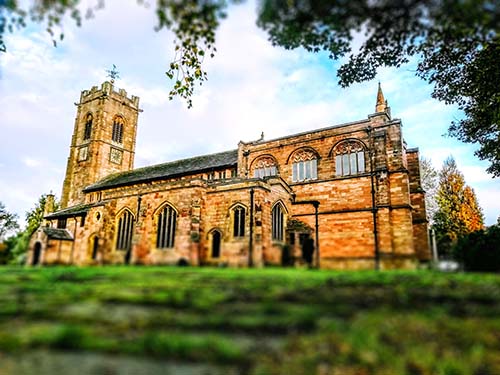
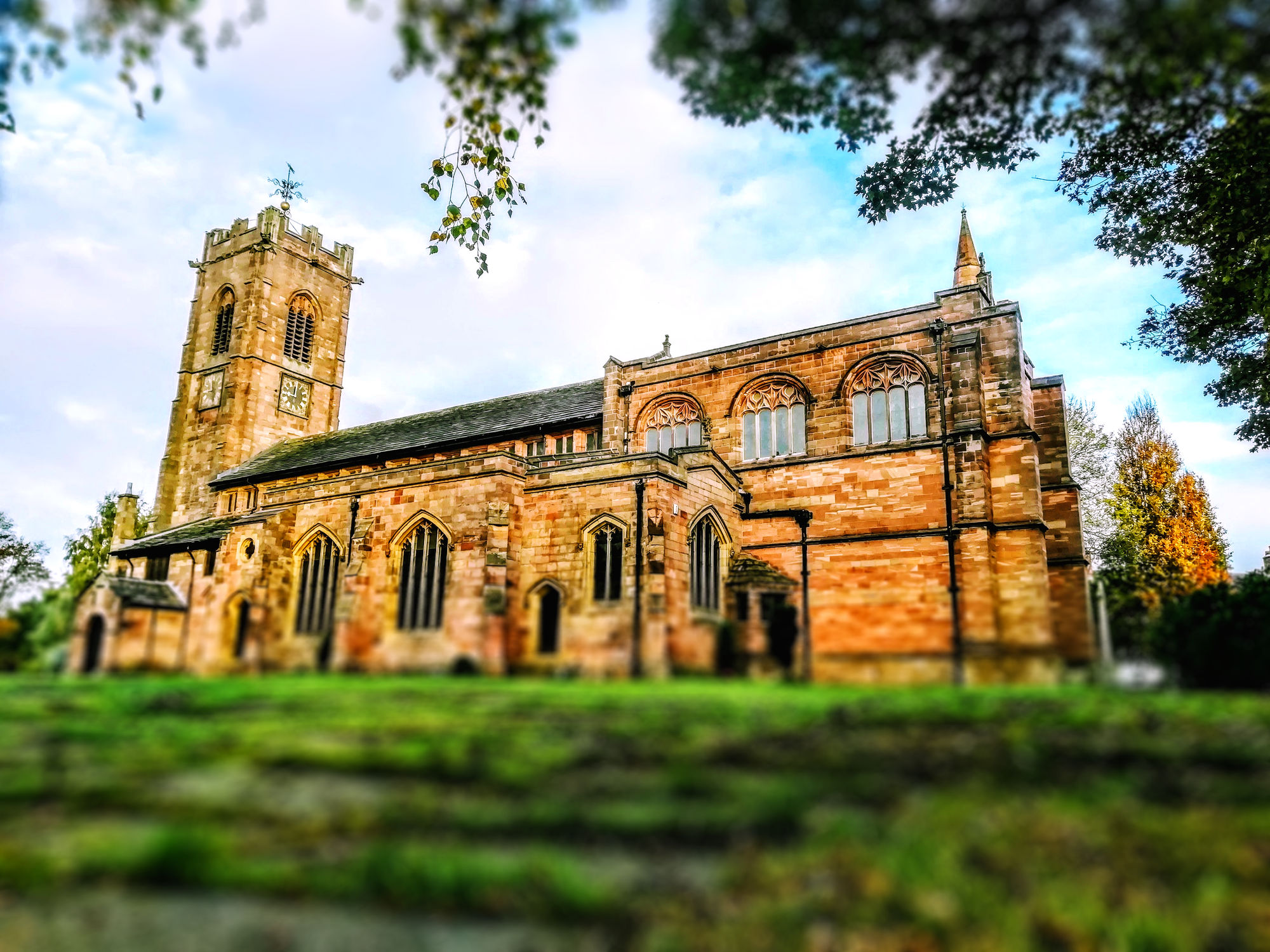
Churchyard Tour of St Mary's, Prestwich

23 ECHOES

Location: Manchester, Greater Manchester, England, United Kingdom

Prestwich Sloopy
Prestwich Sloopy
Hanging about in Prestwich.... more info at prestwich.org.uk/history

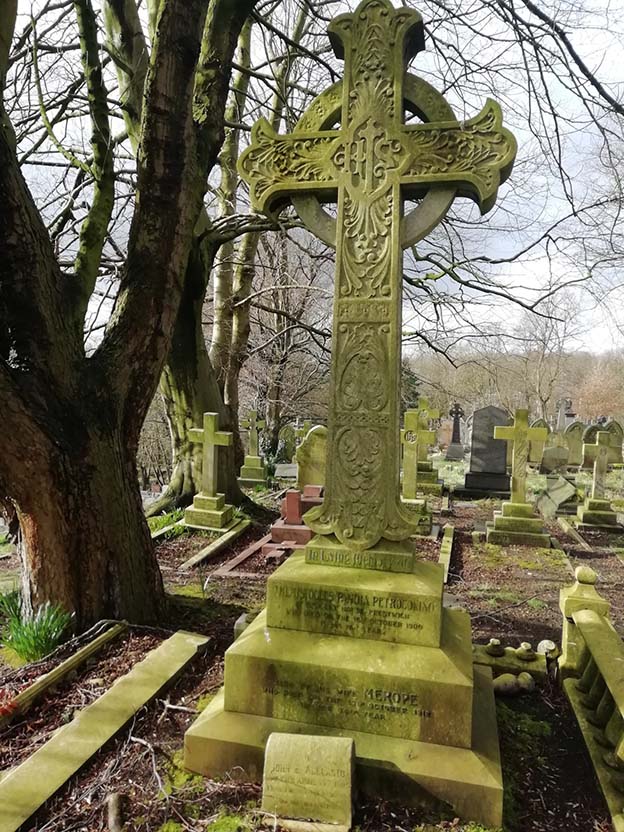
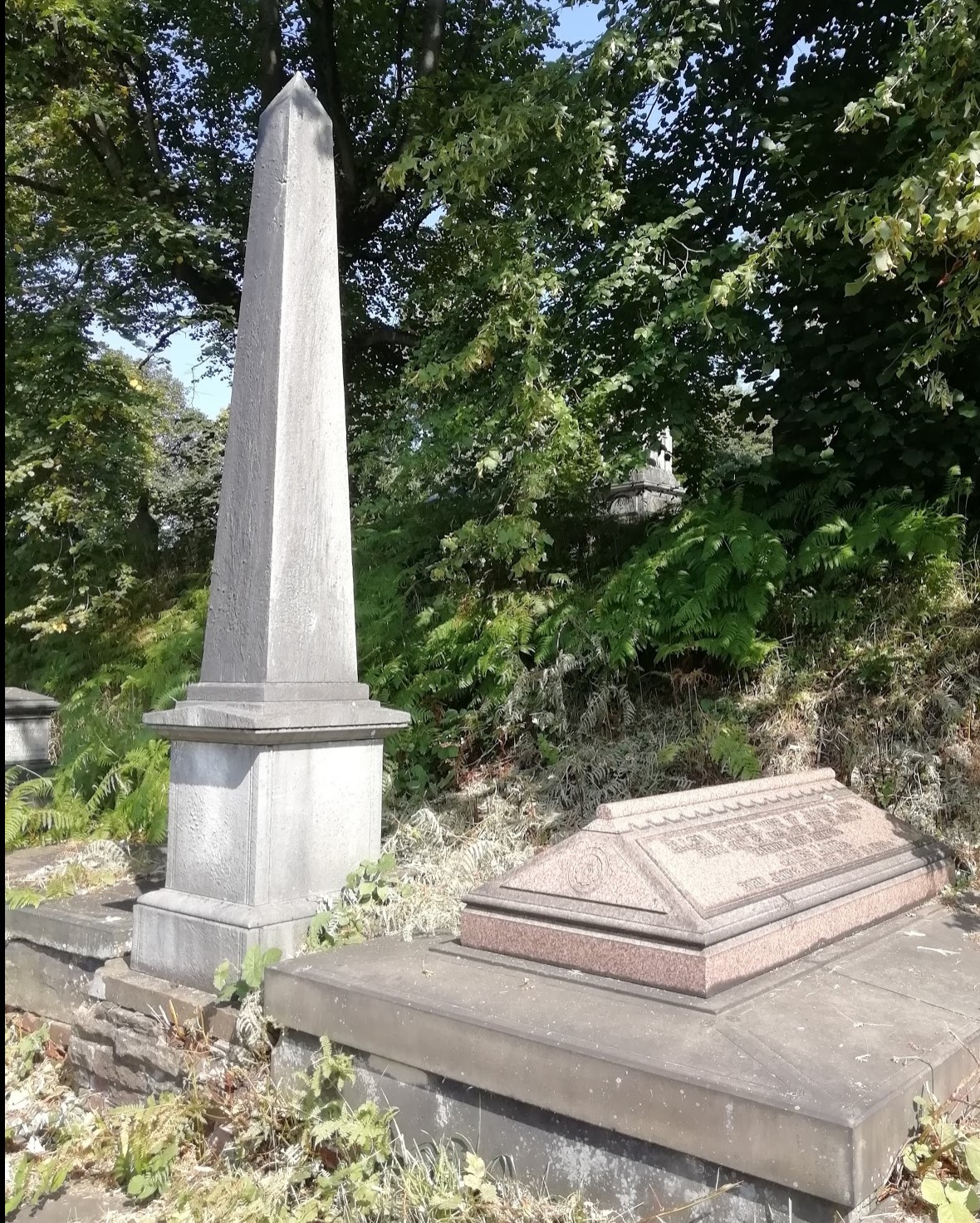
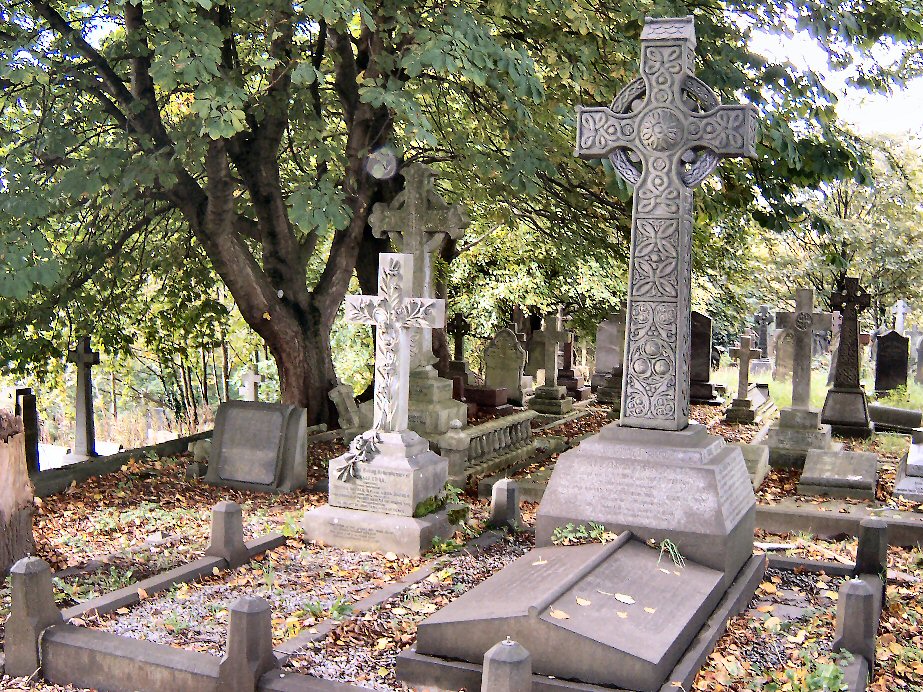
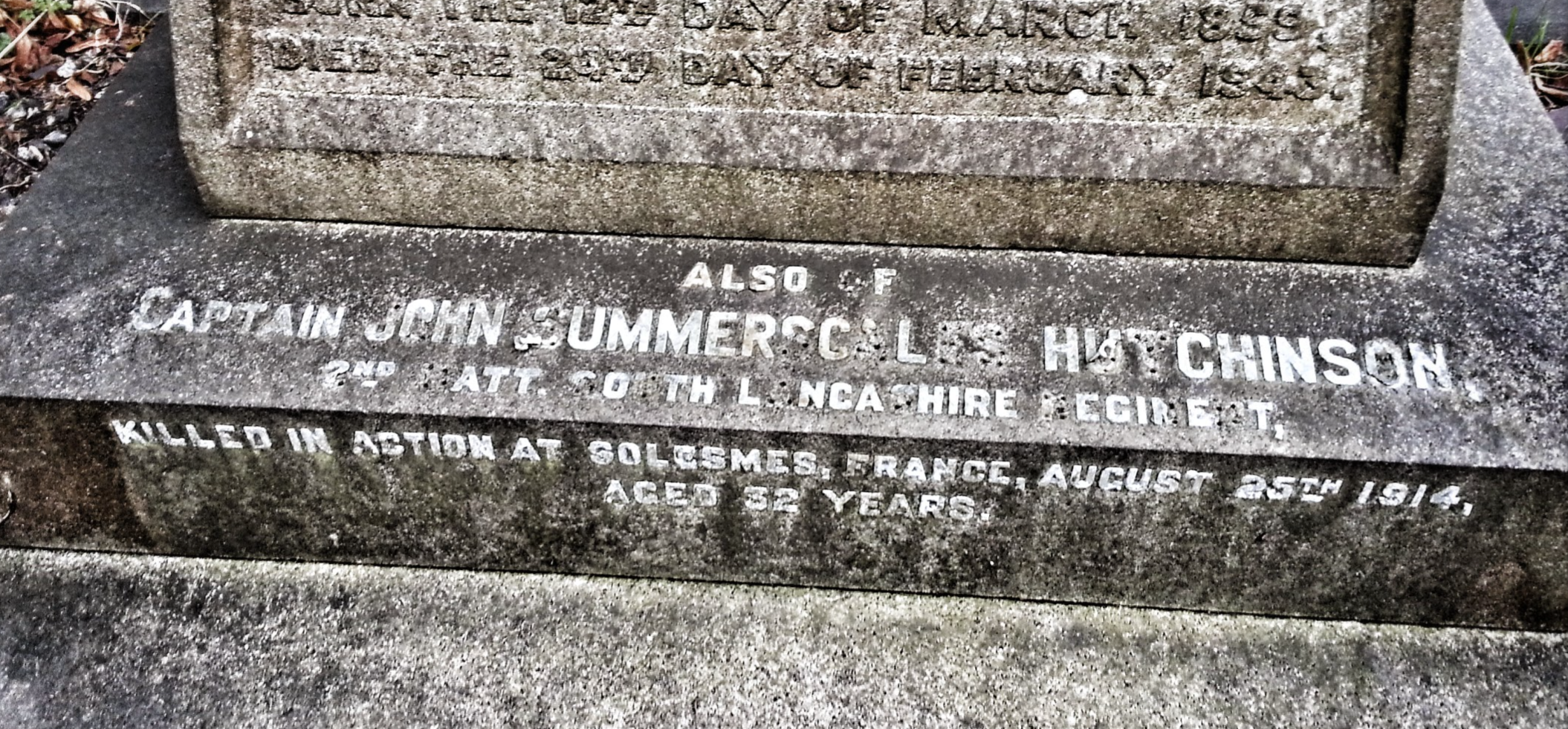
A fantastic audio tour of the Churchyard of St Mary's, Prestwich. Charting over 400 years of the social history of Prestwich, Manchester and beyond. Read more at people.prestwich.org.uk PLEASE START THE APP BEFORE APPROACHING THE CHURCHYARD TO GET YOUR GPS POSITION ACCURATE

Credits: Ian Pringle - Saint Mary Prestwich ; A Description of the Churchyard http://www.prestwichheritage.co.uk/saint-mary-prestwich-a-description-of-the-churchyard/ The Oldham Tinkers - Peterloo - https://youtu.be/RgLpCjL7X-M

Welcome to St Mary's in Prestwich

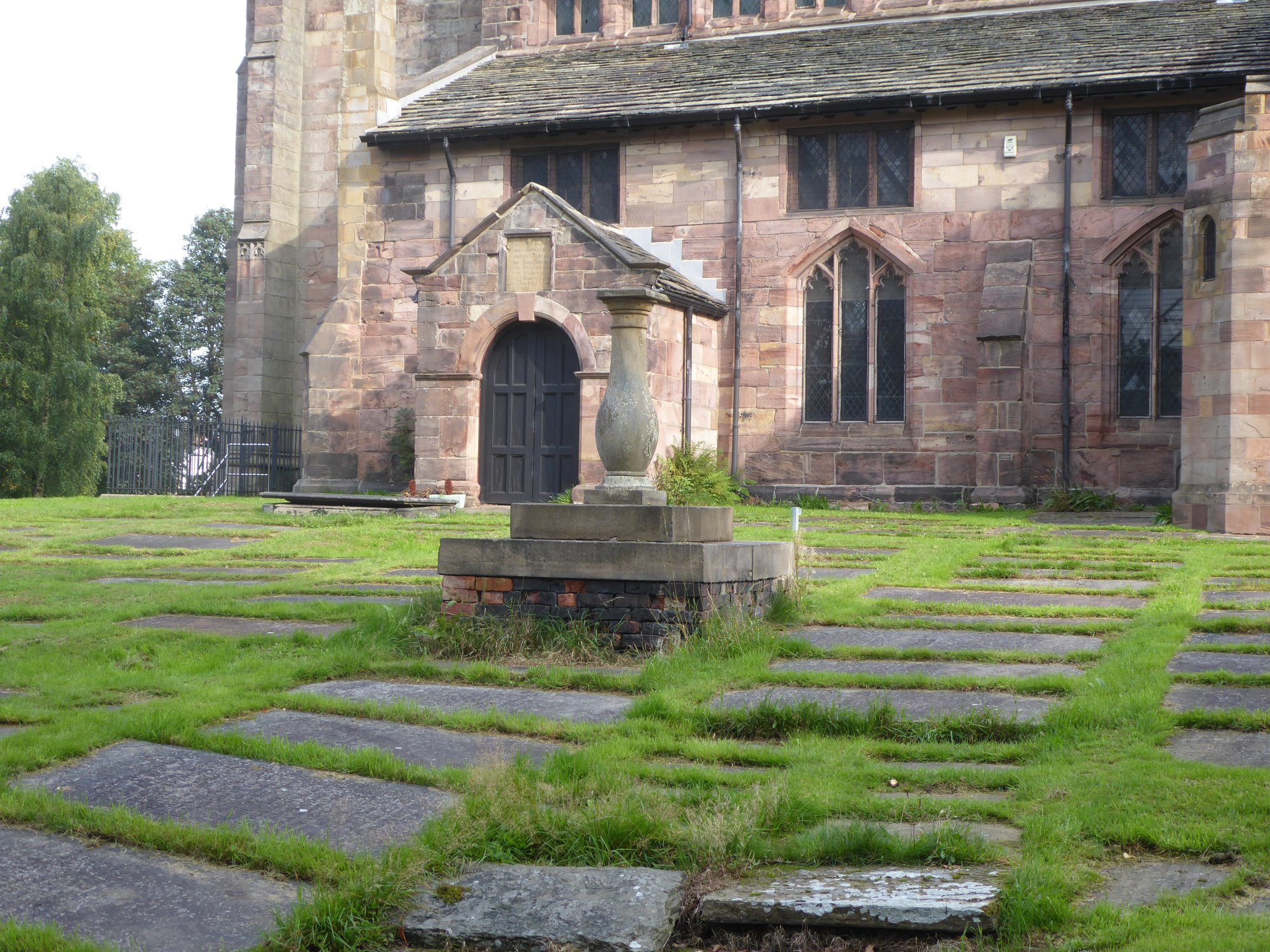
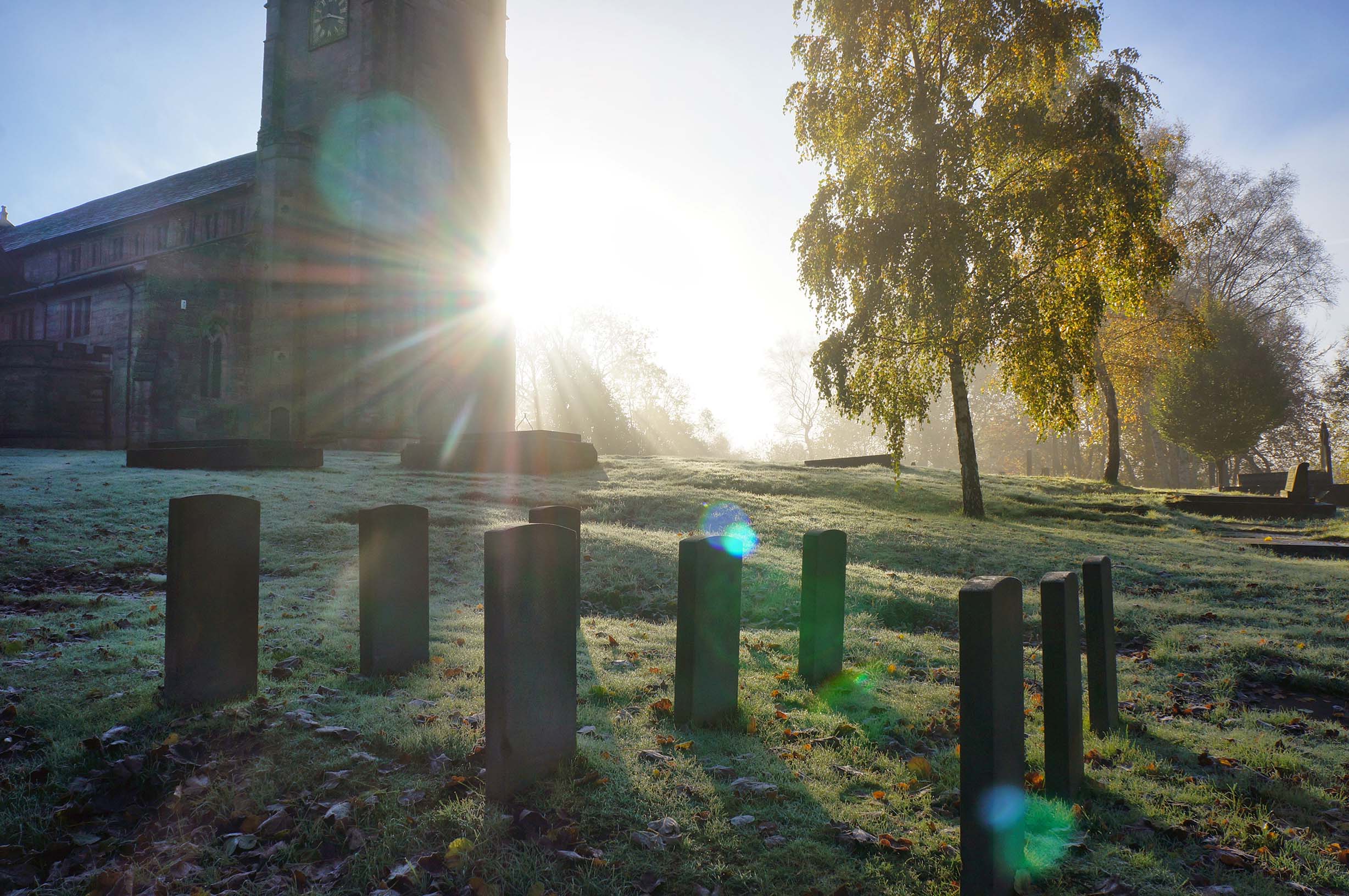
Welcome to the historical churchyard of Saint Mary's in Prestwich.

Please take care while visiting the churchyard. The stones can be very slippy and trip hazards await the unsuspecting. Try and stay to the grass as it can provide more grip, and do not visit alone.

Bring a graveyard buddy !

The volunteers do a great job maintaining the churchyard, performing tasks such as gardening, litter picking, weeding, pruning, an even minor stonework and pathway repairs. You can help or just come along for a chat and a brew with the volunteers on Tuesday mornings from 9 a.m., there is even cake !

Now, I've convinced you to volunteer, even if it is only for the cake, let's get started !

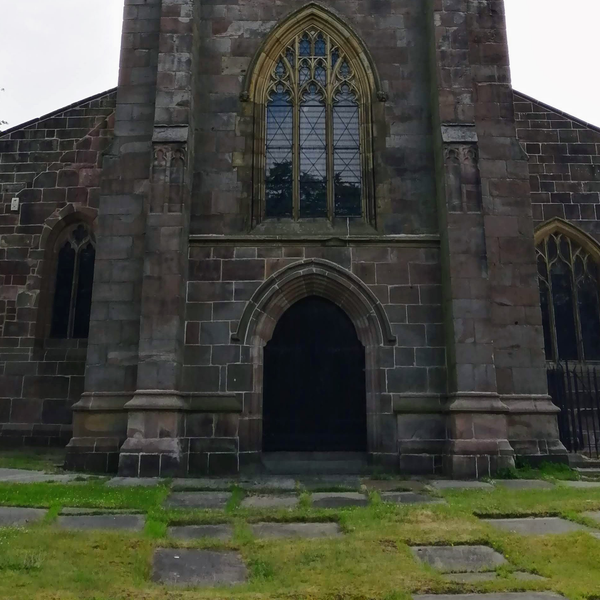
The Churchyard gates were taken for the war effort in 1940 and what you see today are modern replacements, apart from the sadly damaged gate piers.

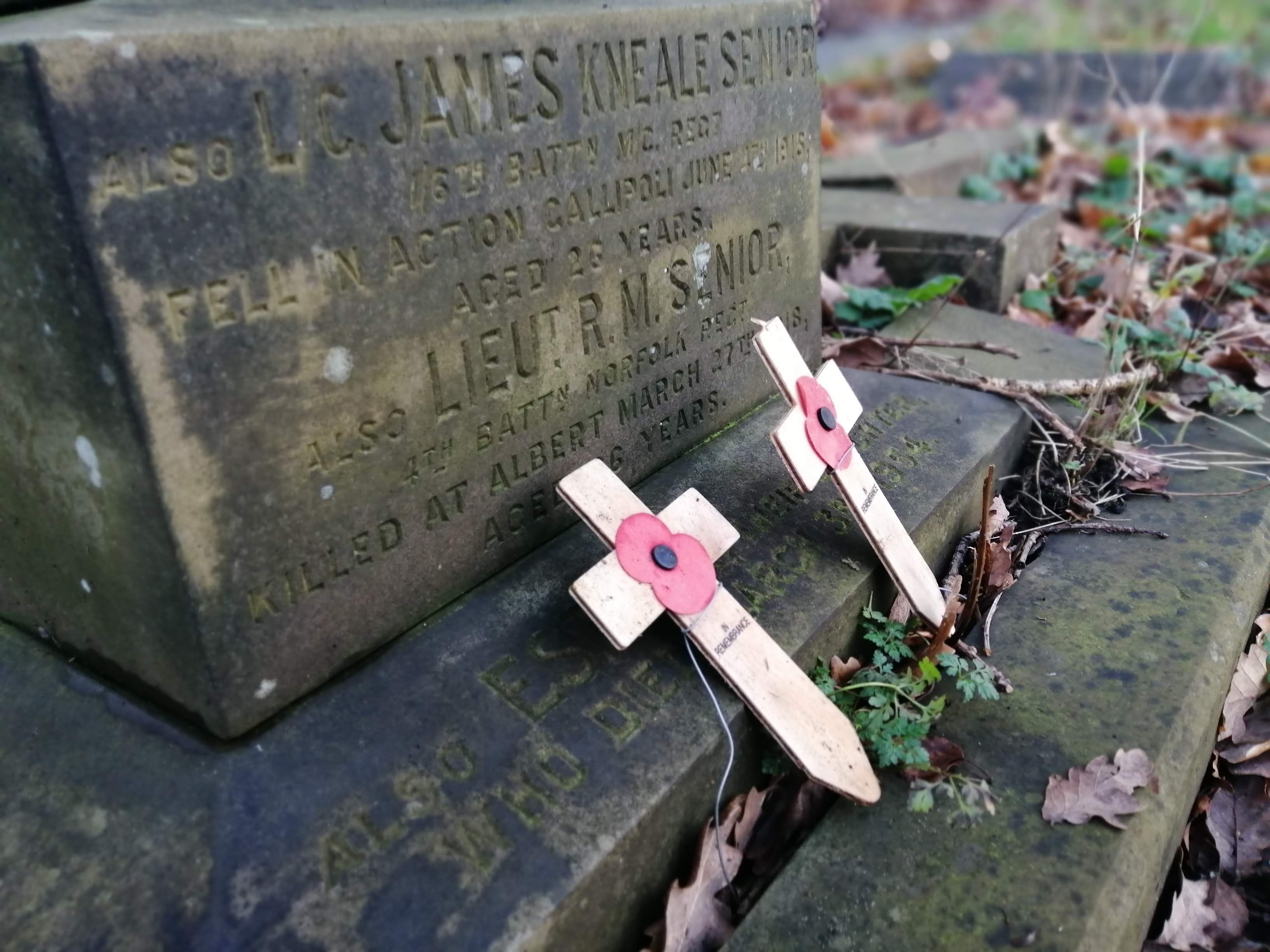
Let's go back further in time. The war memorial cross, of Portland stone on an octagonal base, was unveiled in 1921. It was designed by the architect, Isaac Taylor, as an exact replica of the memorial crosses designed by Sir David Bronifield for the British cemeteries in France. In the same year, a war memorial screen was placed in the Wilton Chapel, the gift of the Mothers of the Fallen, with panels of names around a central image of the Risen Christ, painted by E.W. Tristram.

A plaque in the wall beside the gates commemorates the enclosure of the Churchyard in 1827 just under 200 years ago, but let's go back even further!

The Hearse House and mortuary, now used as storage were built in 1801, but beside the gates stands a mounting block that dates from 1678. That's nearly 340 years ago !

But look up to the tower that The Earl of Derby had built in or about 1500 A.D. , quick maths tells me that's over 600 years ago !

But we could travel even further back in time as the circular boundry of the churchyard still visible today, hints at a much earlier date, maybe over 1000 years ago !

oh, I nearly forgot ! If you find me talking too much, or too fast, then you can use the pause button on the screen to take a break. I won't be offended. We all need to take a break from each other at sometime !

Back to the present day, let's head along the path to the left of the War Memorial and walk toward the south side of the church.


1 sound

Female Mason & Juliet

Historically, the South side of a church was the area used for community gatherings, fetes, festivals and celebrations. Hopefully you have found it on a sunny day, and can enjoy the area as the locals did all those hundreds of years ago.

The table tomb nearer the railing is in memory of Mary Diggle, and has a relief carving. It is listed grade two, as a rare example from this era of a monument carved by a female stone mason, Sarah Patefield. Inscribed on the tomb is a lovely verse from Mary's husband.

oh cruel Death that would not spare, Nor yet thy Dart remove. Thus to divide a happy Pair, Whose Days were spent in Love.

Pause to examine the carving and find the inscription of the mason's name.

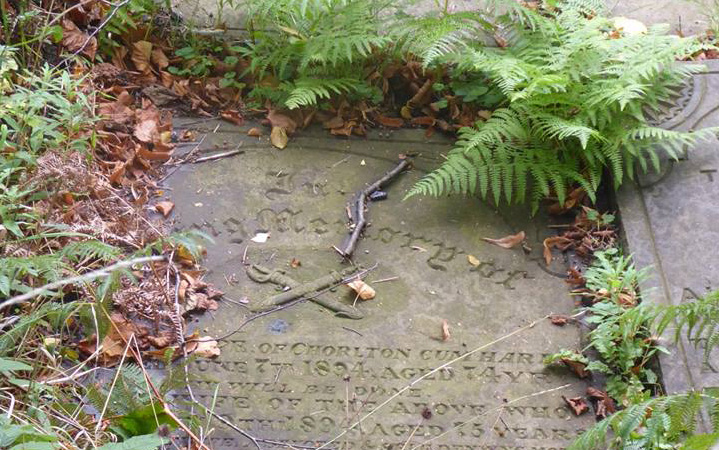
Near to the railing and at the foot of the large tree sadly peppered with scars from Ash Dieback, is the grave of Julia, wife of Charles Mayne Young, a celebrated stand up and actor of his day.

Julia and Charles met playing Romeo and Juliet on stage, and visited Prestwich whilst working at the New Theatre Royal , in Spring Gardens, Manchester. Julia loved the beauty of this part of the churchyard, which then looked out over farmers fields, and requested that she be buried here. She died within the year, shortly after childbirth. The eulogy, written by Mr. Aston, editor of the Manchester Herald, and carved upon her grave stone:

Such is the ease with them, that wish to paint, In honest verse, devoid of flattery’s leaven. Her, who is now - so pure she was - a saint Unchanged an Angel - Julia still in Heaven.

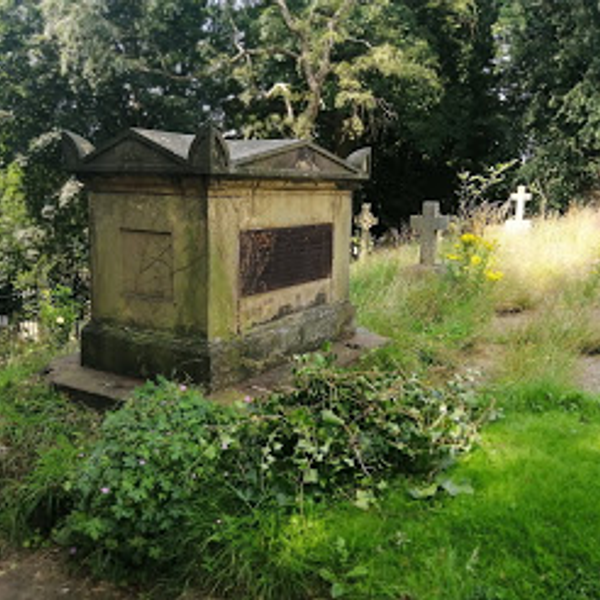
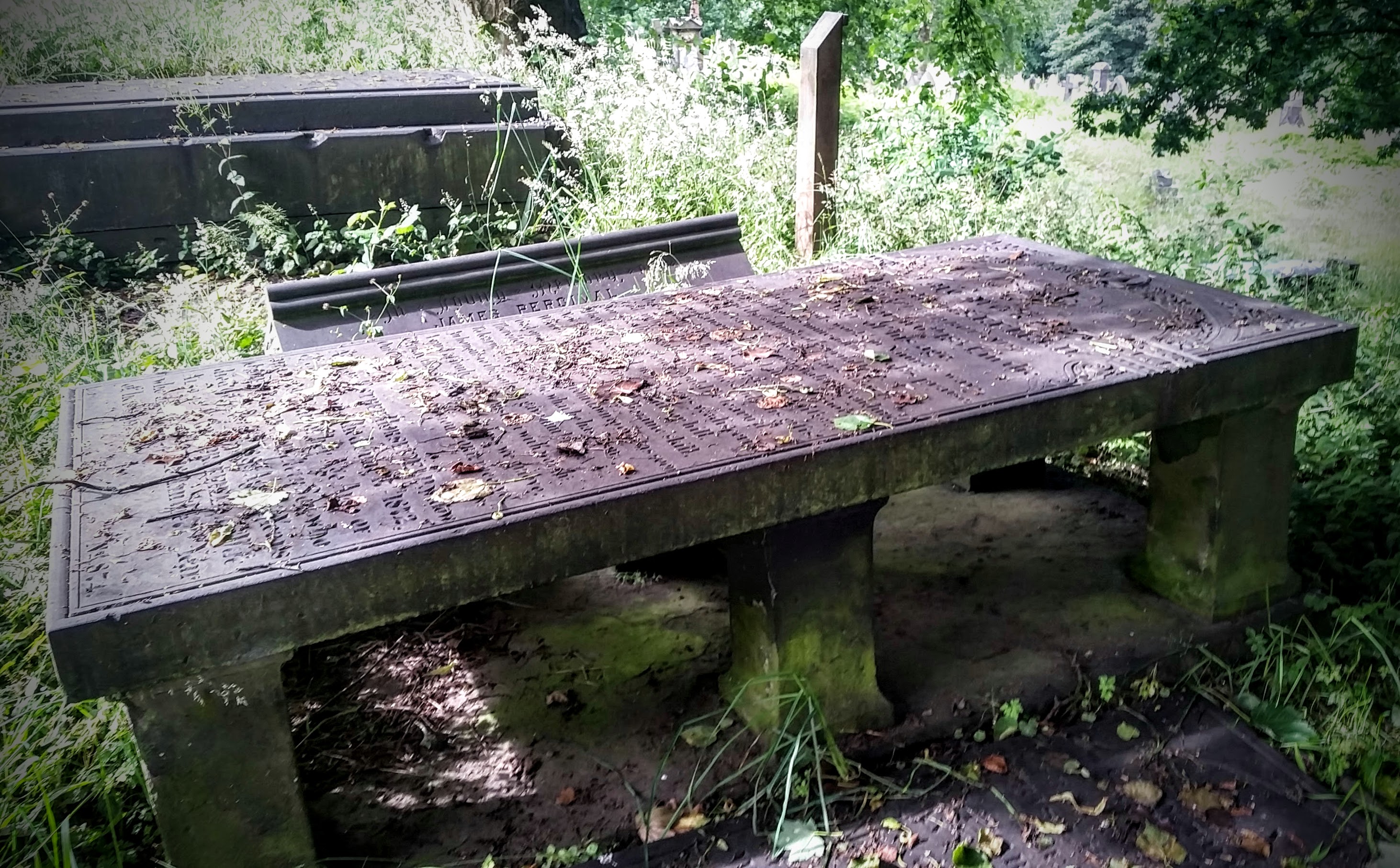
Across the pathway stands a chest tomb with iron plaques on it.

It is barely readable now, but the rust hised the name of Lawrence Fort, business partner of Richard Cob den of the Free Trade and Anti Corn Law League. Lawrence died after being found collapsed at home with cuts to his neck, and was rumoured to haunt the ruins of his home, Sedgeley Hall, which was destroyed in a fire.

Please be careful of the substantial drop at the boundary wall.

With your back to the chest tomb head towards the church.

1 sound

The Electrician, the Engineer, the Canon and Brooks

This area of the churchyard reflects the changing nature of Prestwich and the Church in the 19th Century as the former rural and craft-based economy gave way to the wealth of the industrial revolution.

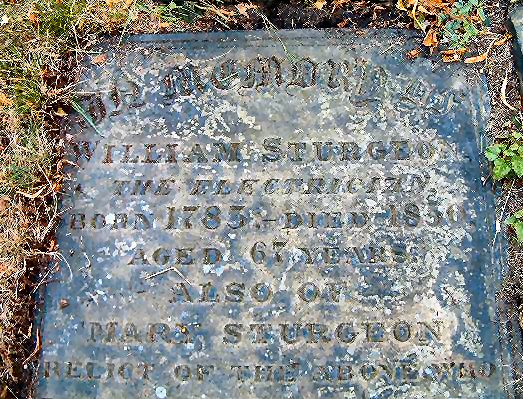
At the corner of the pink tomb, lies the sloping grave slab of William Sturgeon, simply described on the stone as "The Electrician". William invented the electro magnet which led to many aspects of modern life such as starter motors, washing machines, MRI scanners and hi-fi speakers. Technology which allows you to listen to me today. Sadly William died a pauper.

Beyond the pink tomb is a grey tomb in the shape of an anvil, and the grave of another inventor, and Engineer, Sir William Fair bairen. He worked on the Conway and Mennai Straits bridges with Robert Stephenson as well as building the first steel hulled ship. His funeral procession, set off from Ardwick and is claimed to have been witnessed by 50,000 people.

This tall monument to the west of the Church Tower is the Brooks memorial, and is listed grade 2 star. It is made from Sicilian marble and Aberdeen granite. John Brooks was Secretary to the Anti-Corn Law league. The monument, was designed by John Thomas, who also worked on Buckingham Palace, Windsor Castle and the Houses of Parliament. One of the four statues, Charity (which faces the church) was exhibited at the Great Exhibition in 1851. The other 3 statues are Integrity, Commerce and Industry, but I will leave you to decide which is which !

Face the church tower, that birch tree with seven white trunks should still be on your right.

To your left now, are three trees showing where the old circular boundary would have been, you need to head over to the second of those trees on your left.

1 sound

Naturalists & John Slagg

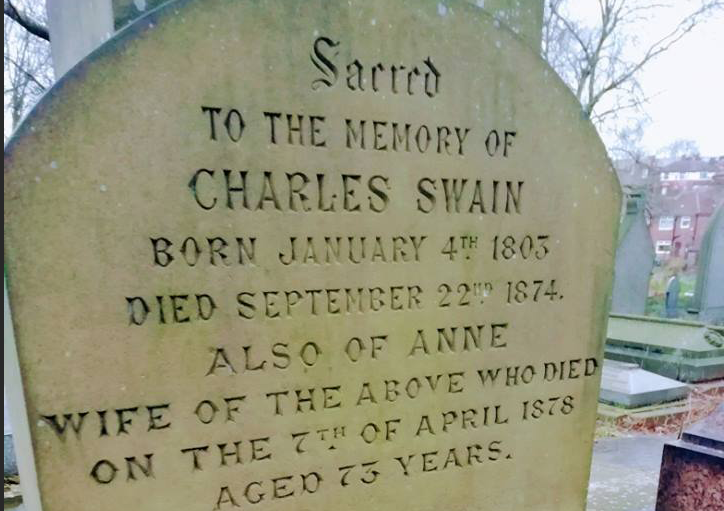
A six legged table tomb, marks the resting place of John Horsefield. He was a hand loom weaver from Whitefield, who as well as being president of the Prestwich Botanical Society, propagated a new variety of daffodil, Narcissus Horsefieldii. Bulbs have been planted around his grave. The poem as epitaph for Horsefield was penned by The Manchester Poet, Charles Swain and resulted in the grave being listed grade two.

Ye who behold God's works in Nature's ways, And find in flowers mute anthems to His praise. Who read the volume of eternal love, In seeds of earth as in the stars above. Here read a name whose fame shall long endure, One of poor birth, but Gifted although poor. God – unlike man – the humblest spirit lifts, Nor asks his wealth before He sends His gifts! Where'er Botanic science could be learn'd, New links disclosed – new species yet discerned. Where'er by wood or lane or heath or hill, God op'ed the book that taught Botanic skill. There HORSEFIELD's foot from dawn to eve was seen, to learn – to teach – to be what he has been. An honour to the soil that gave him birth. Oh, may that spirit for whose loss we grieve, Our God accept – our Saviour Lord receive.

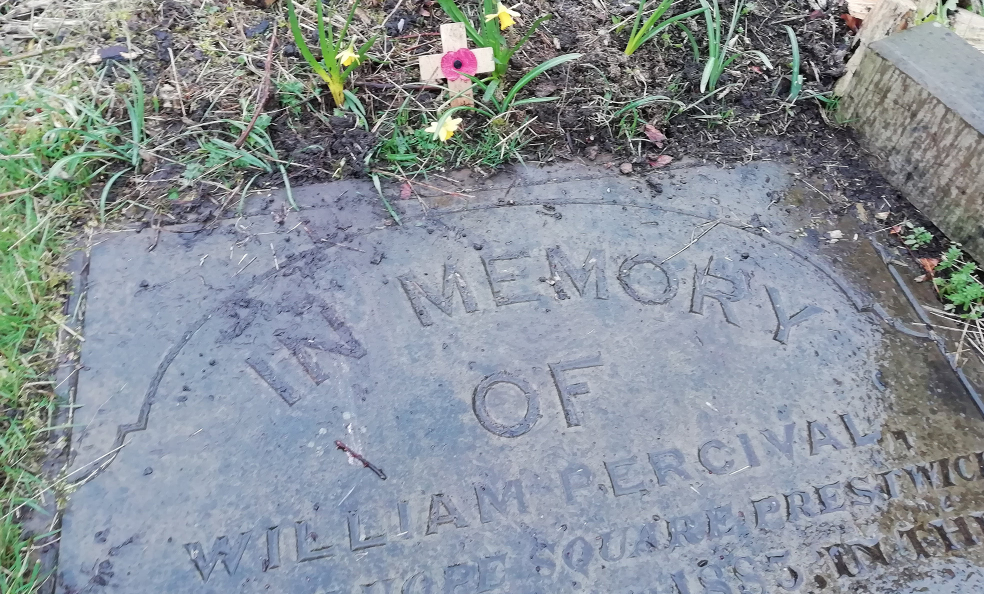
Next to Horsefield lies James Percival, who lived at Hope Square, near where the Friendship Inn now stands. He became president of the Lancashire Botanical Society and his grave is inscribed "He had no favourite flower but loved them all". The grave of Richard Buxton, a third Natualist can be seen in the lower section below the slope.

Head South along the tree line, keeping the slope to your right.

The listed Venetian Gothic Chest Tomb belongs to John Slagg, born in Prestwich 18 08, merchant, justice of the peace, and friend of John Cobden of the Anti-Corn Law League. It was designed by Alfred Waterhouse in 1863. Waterhouse is best known for his design of Manchester Town Hall and the Natural History Museum in London.

Take the path down the slope to your right heading away from the church.

1 sound

DOWNLOAD OUR APP TO DISCOVER THIS TOUR AND MANY OTHERS.

play-storeapp-store

Or start creating tours, treasure hunts, POI maps... Just let your imagination guide you.


Other walks nearby

Heaton Park Sound Walk

Heaton Park Sound Walk

Manchester
Today Heaton Park is the largest urban park in the UK, covering over 600 acres. Grade II listed by the English Heritage Register of Parks, the park contains a number of features including, a golf course, boating lake, animal farm, ornamental gardens, woodlands, adventure playground and bowling greens. In 1772 Sir Thomas Egerton commissioned James Wyatt to design a home for his family. Heaton Hall was completed in 1789. James Wyatt also designed some of the other buildings around the park. Sir Thomas later employed William Emes to landscape the park. The estate remained in the Egerton family until 1902 when the 5th Earl of Wilton decided to sell the hall and park. Manchester Corporation bought the estate for £230,000 and provided a number of public facilities. During WWI the park was used as a training ground for the Manchester Pals battalions and the hall became a military hospital. During WWII the Royal Air Force used the park to train aircrew and a barrage balloon was placed there. The park was restored in a partnership between the Heritage Lottery Fund and Manchester City Council. This recreated some of the original Emes landscape around the Hall and restored four of the Wyatt buildings. The sound walk can follow all of the stops; or you can customise the walk to visit the locations of your choice. You can even make a stop at one of the 4 cafés in the park; located at the stables, the boathouse, Heaton Park garden centre and Heaton Park golf centre. The audio clips for this sound walk are from the Manchester Oral Histories collection (UAP007) held at Archives+, Manchester Central Library and from Manchester Studies collection (UAP008) held at Tameside Local Studies and Archives Centre, Ashton.
free

Are you a creator?

START HERE

Privacy & cookie policy / Terms and conditions

© ECHOES. All rights reserved / ECHOES.XYZ Limited is a company registered in England and Wales, Registered office at Merston Common Cottage, Merston, Chichester, West Sussex, PO20 1BE

v2.5.15 © ECHOES. All rights reserved.