Shoreham Woods - The Woodpecker Walk

45 ECHOES

Location: Sevenoaks, Kent, England, United Kingdom

NWKCP
NWKCP

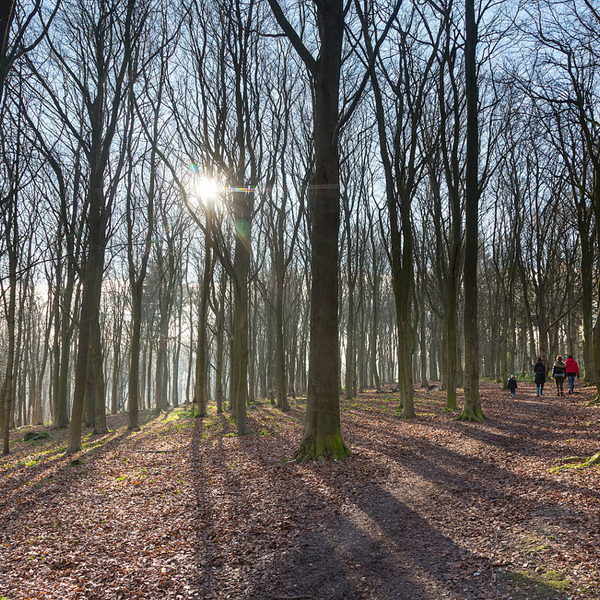
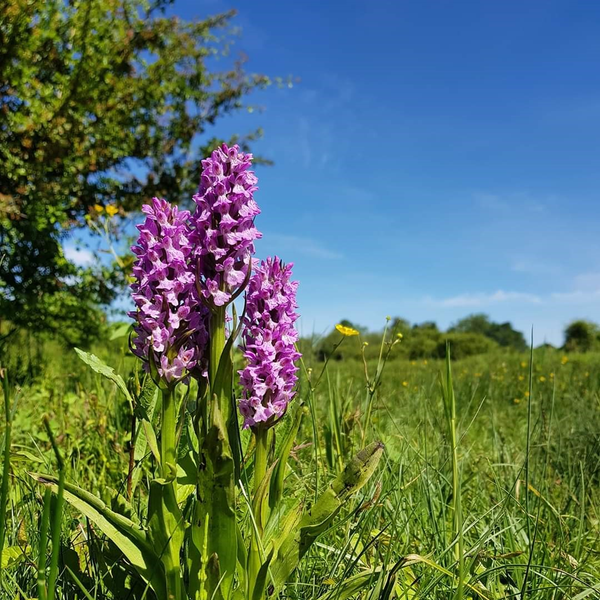
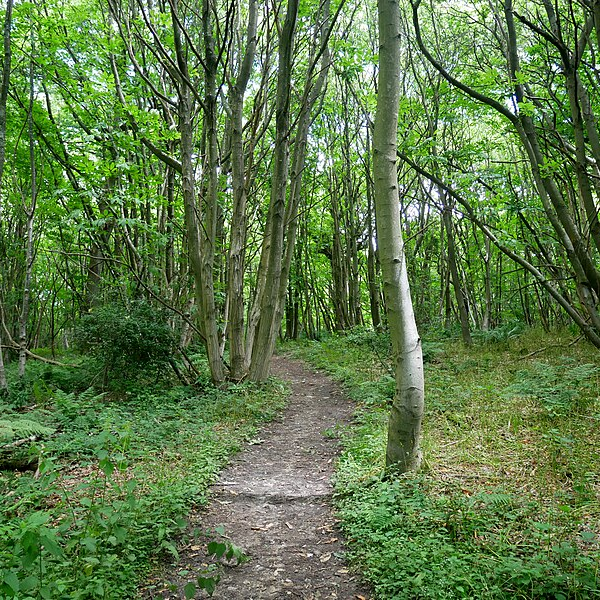
The Woodpecker Walk is a scenic route, with some steep inclines, steps and stiles, which may be challenging for some people. The walk is around 4 miles long and takes around 2 hours. Along the way, you will hear about how Shoreham Woods is managed as well as local history and wildlife.

This audio trail was made possible with funding from the Kent Downs National Landscape and the National Lottery Heritage Fund. Thanks to National Lottery players. Please give feedback here: https://forms.office.com/e/feuVCsVikj

Intro
00:00--:--

L- Viewpoint - Filston Hall

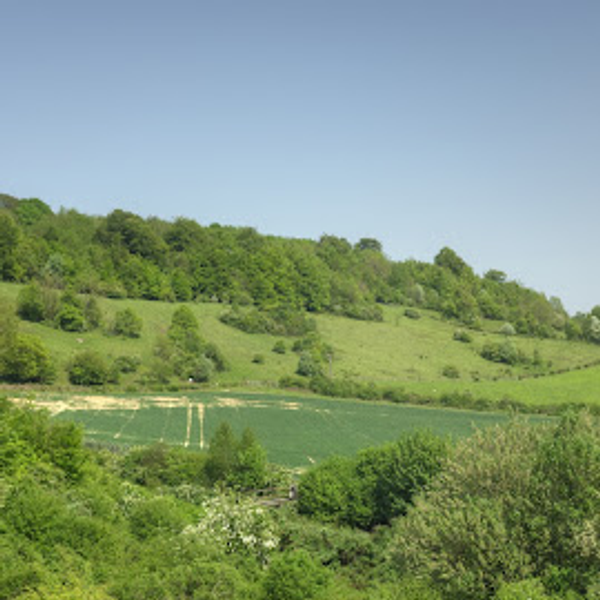
From this viewpoint you can see the old moated manor house at Filston Hall. You may want to pause here, perhaps take a seat on the bench, as this next section of the trail is a little longer than the others. In 1878, Mary Colgate an American student from Vassar College in New York, wrote about Filston Hall in the Vassar Miscellany, the oldest student newspaper in the world. In the article she describes her emotions on seeing Filston Hall for the first and only time, and how the experience stayed with her for many years. "I saw the old house only once; yet even now it is as distinctly before me as in that midsummer day, years ago." Mary had family connections to the house. Her grandfather had owned it but left Britain to go to America to escape what Mary describes as ‘political troubles’. She gives a vivid description of the area: "Filston Hall is in the midst of a picturesque and interesting country. A mile or two away is Shoreham, a quaint little village, which looks as if it had been napping for a century. About, five miles toward the south is the town of Seven Oaks, whose chief attraction is the Knowle House, a grand specimen of architecture, famous for its antiquity." She describes seeing the hops, which she at first mistakes for lima beans, and the oddly shaped oast houses. She doesn’t appear too impressed with the Darent, but was enchanted by the moat at Filston. "At the foot of a meadow lying behind the old house runs the Darrent, a picturesque little stream, which the English dignify by the name of river….But it was the moat which chiefly interested me. It is no grass-grown trench, but a real moat, filled with water by a tiny tributary of the Darrent. I lost myself in revery, and woke with a start to find that I was living in the nineteenth instead of the thirteenth century" Further descriptions of the house lead into an account of her grandfather’s story: "He was a radical, with views too liberal to suit the Government of his day, and at the time of the Revolutionary war he illuminated his house when the Americans gained a victory. This so enraged his neighbours that one night they marched to Filston with sticks and stones, and broke in his windows. But the resolute old gentleman, nothing daunted, persisted again and again in his illuminations, until finally he was met by the alternative of leaving the country or losing his life." The room at Filston she describes in most detail is the kitchen, which she viewed as having quite backward cooking facilities: "The kitchen was the queerest place imaginable. Opposite the door was a huge fireplace, with a crane hanging over the logs. Everything was picturesque, but very inconvenient. I wondered how long the most poverty-stricken family in America would endure, a crane as a substitute for a stove; yet the idea of changing in the slightest degree their mode of living seems never to cross the minds of these well-to-do English people." She concludes her account with a description of her parting glimpse of her ancestral home: "We walked up the grassy lane leading from the gate to the train road. As we turned a corner we caught one last glimpse of the old place. The trunks of the over-arching trees made a perfect frame for the picture."

1 sound

DOWNLOAD OUR APP TO DISCOVER THIS TOUR AND MANY OTHERS.

play-storeapp-store

Or start creating tours, treasure hunts, POI maps... Just let your imagination guide you.


Other walks nearby

Talking chairs: Voices for the future of the planet

Talking chairs: Voices for the future of the planet

Poets and authors of the sound installation: Sara Capoccioni (poet) Galen Cranz (author of The Chair) Lidia Popolano (poet) Mariapia Quintavalla Elena Ribet (poet) Chelsea Rushton (poet) Angela Schiavone (poet) Marco Sonzogni (poet) Matilde Tortora (poet) Music by Lucio Lazzaruolo and Notturno Concertante Using Louis ghost chairs, the installation Talking chairs by Giovanna Iorio combines the transparency of this iconic chair created by designer Philippe Starck to the colours and sound of her unique voice portraits, spectrograms of the human voice. Chairs and human voices will be the only protagonists of this new sound installation that aims to reflect on the possibility of dialogue in a time of isolation. Philippe Starck described his transparent chair in these terms: “You are not sure exactly what it is but everyone recognises it and sees it as something familiar. It’s here when you want to see it and you can blend it in if you want to be discreet. It is half disappearing, dematerialising. Like all the production of our civilisation.” Through the “transparent design furnishings” the aesthetic aspect of transparency became accepted globally. In a society where everything that counts must be visible, the invisible becomes a valid alternative. Words, being a product of civilisation, disappear and dematerialise everyday leaving human beings every day more silent in a world of noises. Starck said that “the universal success of the Louis Ghost chair does not come from its design but from collective memory. The Louis Ghost chair was produced by our collective subconscious and it is only the natural result of our past, our present and our future.” In this installation we await for curious visitors to sit on the invisible chairs, blended in nature and only revealing the invisible colours of the human voice. Ten authors from Italy, USA and New Zealand have sent their message and voices to reflect on past, present and future. Talking chairs invites visitors to a place where chairs will no longer be chairs, but imaginary islands for urban sailors.


free
Lee Green Open Studios: The Metalization of a Dream by Duncan MacLeod

Lee Green Open Studios: The Metalization of a Dream by Duncan MacLeod

London
The Metalization of a Dream by Duncan MacLeod (2019-2022) feat. Galvanize Ensemble. The Metalization of a Dream is an open form soundwalk responding to the dada and surrealist-inspired collages of Eduardo Paolozzi (1924-2005). A pioneer of pop art, Paolozzi’s practice drew inspiration from artists that utilise similar collage and cut-up techniques such as Charles Ives and William S. Burroughs. As such, these relationships are explored within this work through John Cage’s concept of the coexistence of dissimilars, where the notion of harmoniously blended elements is eschewed in favour of collage-like juxtapositions ‘that fuse in the ear of the listener’. Like Paolozzi’s collages, this work incorporates ‘found objects’ in this case John Taverner’s In Nomine and the writings of Gertrude Stein that are reimagined, juxtaposed and intertwined with composed and indeterminate materials alongside soundscape recordings to form an equivocal sound world. Commissioned by Galvanize Ensemble with funding from the Arts Council of England, PRS Foundation, RVW Trust, and support from Britten Pears Arts (Creative Retreats). Biographies Duncan MacLeod is a composer whose practice utilises both acoustic and electronic forces. His outputs encompasses concert music, sound installations, music for stage, interdisciplinary collaborations, and participatory arts. His work has been commissioned, commercially recorded, and broadcast internationally by various ensembles and soloists. Duncan is Reader of music composition at the University of Nottingham and is co-artistic director of Nottingham Forum for Artistic Research (NottFAR). Website: www.duncanmacleod.org Twitter: @Leod\_Music Galvanize Ensemble is an ensemble of musicians who work with composers, artists, film and text to create installations, cross disciplinary performances & exhibitions. https://www.galvanizeensemble.co.uk Joel Bell (guitar), Sarah Dacey (voice), Kate Halsall (keyboards), Stephen Hiscock (percussion), and Phil Maguire (electronics). Unless credited otherwise all works composed by Duncan MacLeod ©2022. Unauthorised copying, hiring, lending, public performance and broadcasting of this recording strictlty prohibited.
free

Are you a creator?

START HERE

Privacy & cookie policy / Terms and conditions

© ECHOES. All rights reserved / ECHOES.XYZ Limited is a company registered in England and Wales, Registered office at Merston Common Cottage, Merston, Chichester, West Sussex, PO20 1BE

v2.5.15 © ECHOES. All rights reserved.